
a voice of one crying out in the desert
 Early in the liturgical season of Advent, the Church’s readings at Mass turn toward the witness of John the Baptist as the voice of one crying out. In the readings we see both the original prophecy from the Book of Isaiah 40:3 (NABRE) and also the restatement in the Gospel According to Luke 3:4 (NABRE). Interestingly, these two versions of the same text seem to have fairly different meanings as a result of where punctuation is placed.
In the New American Bible Revised Edition (NABRE), the text from the Book of Isaiah is translated as: “A voice proclaims: In the wilderness prepare the way of the LORD!” while the text from the Gospel According to Mark is translated as: “A voice of one crying out in the desert: Prepare the way of the Lord.” The difference in punctuation shifts the meaning. In the passage as recorded in the Book of Isaiah, the desert is the place to make preparations. The people were in Exile, and the view here is that a straight pathway back to the Promised Land would be created in the wilderness. In the same passage in the Gospel According to Luke, the desert is seen as the place of the voice with which John the Baptist is identified, and so it is the place where John is preaching. The location for the preparation of the way is unspecified. Interestingly, neither of these original texts has punctuation as we know it today, and so either reading could be seen as correct.
Consider how the potential meaning of this text shifts depending on how an interpreter views the way of the Lord. If a physical road is intended, of course it would need to lead through the wasteland back toward Judah. As Christians, we treat the way toward God as a less tangible thing, and that favors instead placing the voice, John the Baptist, in the desert where he spoke.
How does the meaning change if the two readings are seen the same way, and we’re challenged to see the place of our preparation for God’s coming as a wilderness or a desert? What might such a reading suggest for how we can best approach the Advent season?
you also may like our study of the book of Exodus
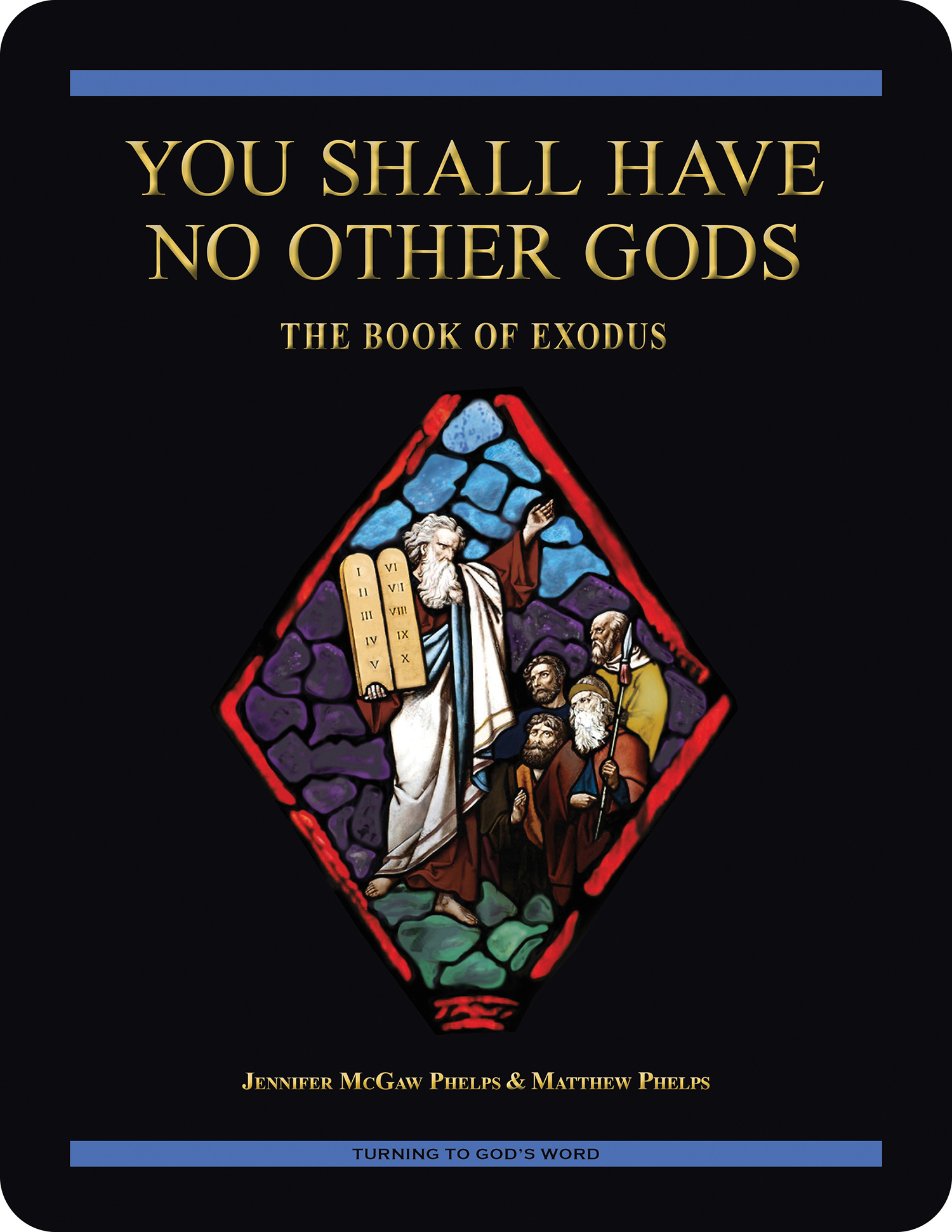 You Shall Have No Other Gods: The Book of Exodus, a 28-lesson Catholic Bible study with an imprimatur, provides an in-depth look at how significant events in biblical history that occurred thousands of years ago to descendants of Jacob remain relevant and even critical for present-day Christians to understand. The deliverance of the Hebrews from slavery in Egypt and the giving of Ten Commandments are examined along with the development of Moses’ relationship to God. Click here to view a sample of the first lesson.
 Click on the picture of the statue of Moses with horns (above) to learn more about Lost in Translation. A new entry is archived each Monday. Contact us to receive Lost in Translation by email every week. You may use any of the contact links on our website to ask Matthew a question.