breathe/breathing
 The book of Genesis 2:7–9 (NABRE) contains an account of the Creation of the first person. In this account, God forms man out of clay and breathes into him as the means of giving him life. This passage is tremendously significant from a theological perspective, and much has been written about all aspects of this Creation. One interesting point worth consideration is the implication in the Hebrew text about humanity as described in the animation of the first man.
The book of Genesis 2:7 (NABRE) includes several words having to do with breathing and breath. In this verse, God breathes, נָפַח (naphach), into the clay. This word has a straightforward meaning that refers to the act of blowing air. As a result of this breathing, the text tells us that the man became a “living being.” The word here translated as “being” or sometimes “soul”, נֶפֶשׁ (nephesh), is related to a word for breathing. A living thing in this context is something that breathes, and far from conveying some deep spiritual sense can refer to any breathing, living creature.
What’s interesting here from a theological point of view is that the breath this first man breathes is from God breathed into him by God. This man’s breath is not a purely earthly thing by virtue of where it came from. From his Creation, man shares in the breath and by extension in the life of God. As such, human beings embody a meeting of heaven (breath) and earth (clay or dust).
you also may like our study of Saul, David & Solomon (digital only)
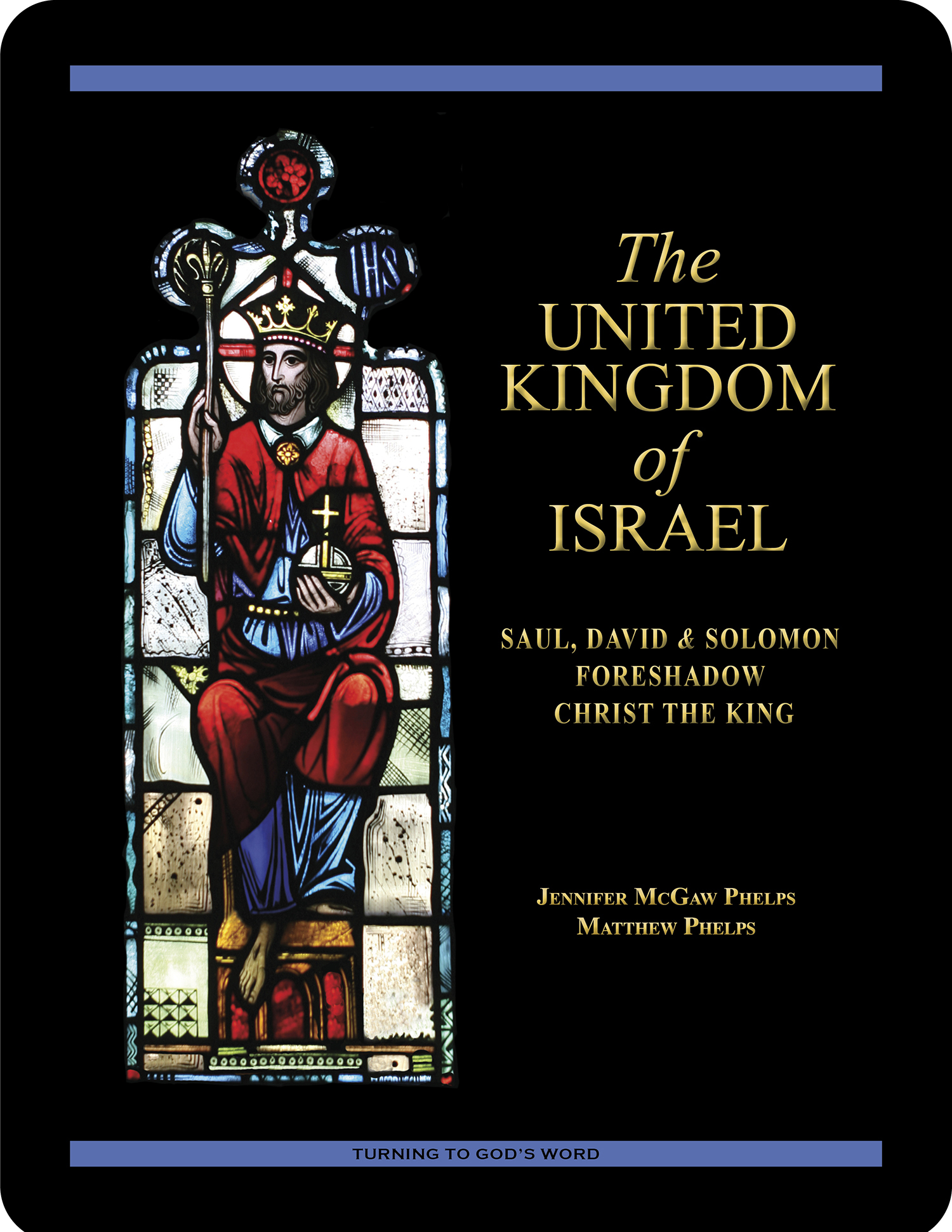 The United Kingdom of Israel: Saul, David & Solomon Foreshadow Christ the King, a 28-lesson Catholic Bible study with an imprimatur, provides an in-depth look at the First and Second Books of Samuel to learn how the lives of the monarchs Saul, David, and Solomon point ahead to the kingdom of heaven. The unified reign of King David is seen as a foreshadowing or type of the unity that is one of the four marks of the Church—the kingdom of God—established by Jesus Christ. Click here to view a sample of the first lesson.
 Click on the picture of the statue of Moses with horns (above) to learn more about Lost in Translation. A new entry is archived each Monday. Contact us to receive Lost in Translation by email every week. You may use any of the contact links on our website to ask Matthew a question.