
faith (2)
 In the first and second chapters of the Book of Habakkuk (NABRE), the prophet encourages faith among the people who feel that the LORD isn’t listening to their cry. The prophet urges patience and ultimately faith. We’ve previously examined the root and origin of the Greek word for faith at its relationship to trust. This week we’ll look at the Hebrew meaning as a complement to that view.
The Hebrew word אֱמוּנָה (emuwnah) is the word translated as faith in the Book of Habakkuk. At it’s root, it means “firmness” or “steadfastness.” The Hebrew view of faith, then, is one of being unwavering or constant. The prophet Habakkuk urges this particular view of faith as a means of relying on God and God’s promises even when it looks as though God isn’t delivering.
This Hebrew view of steadfastness or firmness clearly was shaped by the many challenges and trials faced by God’s people. Trusting or relying on God’s promise even when all seems lost became the mark of a true follower and remains so for us as Christians today.
The Litany of Trust is a related prayer written by the Sisters of Life (www.sistersoflife.org) asking Jesus for deliverance from the things that hold us bound, and placing our trust in Jesus’ promises. This is the basis for the Hebrew view of faith.
related topics: belief; believe in Jesus; faith; justification; little faith
you also may like our free year-long study of Scripture & the Rosary (digital only)
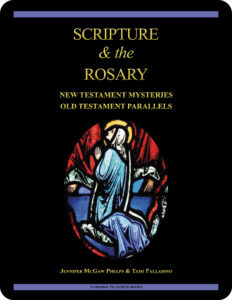 Scripture & the Rosary: New Testament Mysteries, Old Testament Parallels, a 26-lesson Catholic Bible study with an imprimatur, looks at the biblical foundations of the Rosary. The study includes lessons on Pope St. John Paul II’s Rosarium Virginis Mariae (Rosary of the Virgin Mary), the Apostles’ Creed, and the Luminous Mysteries as well as the original 15 Mysteries of the Rosary. Color photographs of stained glass windows depict key scenes in the lives of Jesus and Mary. In lieu of a sample, check out our free digital lessons.
 Click on the picture of the statue of Moses with horns (above) to learn more about Lost in Translation. A new entry is archived each Monday. Contact us to receive Lost in Translation by email every week. You may use any of the contact links on our website to ask Matthew a question.