
healing
 In the Gospel According to Matthew 9:20–22 (NABRE), Jesus heals a woman who has been suffering from a hemorrhage for 12 years. One of the most interesting aspects of this passage is lost in English translations. The word used to describe what the woman is seeking when she approaches Jesus for healing also is the root word behind the Christian view of salvation.
The Greek verb sozo has a range of possible meanings. The core concept seems to be one of safety or freedom from the threat of harm or especially death. This idea carries over into the similar notion of being preserved from injury or illness. It’s from this concept that we also derive our view of salvation, eternal safety from harm or death.
Other accounts of healing recorded in the Gospel According to Matthew use different language that is more medical in nature to describe healing. Moreover, one way of translating Jesus’ comment in the Gospel According to Matthew 9:29 (NABRE) is: “Your faith has saved you.” Jesus uses a verb in the perfect tense implying that the salvation had begun in the past and continued to that point in time.
This passage is noteworthy because it seems as though the topic of discussion could be the broader Christian view of salvation. How do you think that a broader interpretation of what is meant by salvation changes what is happening in the passage?
related topics: disease; freedom; illness; salvation; sin
you also may like our free year-long study of Scripture & the Rosary (digital only)
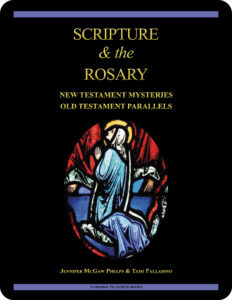 Scripture & the Rosary: New Testament Mysteries, Old Testament Parallels, a 26-lesson Catholic Bible study with an imprimatur, looks at the biblical foundations of the Rosary. The study includes lessons on Pope St. John Paul II’s Rosarium Virginis Mariae (Rosary of the Virgin Mary), the Apostles’ Creed, and the Luminous Mysteries as well as the original 15 Mysteries of the Rosary. Color photographs of stained glass windows depict key scenes in the lives of Jesus and Mary. In lieu of a sample, check out our free digital lessons.
 Click on the picture of the statue of Moses with horns (above) to learn more about Lost in Translation. A new entry is archived each Monday. Contact us to receive Lost in Translation by email every week. You may use any of the contact links on our website to ask Matthew a question.