I am not
 The first chapter of the Gospel According to John (NABRE) contains John’s testimony about himself when priests and Levites are sent to question him about the basis for his ministry and baptism. This entire exchange is incredibly interesting, but one line in particular stands out in the Gospel According to John 1:20 (NABRE): “[H]e admitted and did not deny it, but admitted, ‘I am not the Messiah.'” The RSVCE translates the same passage as: “He confessed, he did not deny, but confessed, “I am not the Christ.'” Both Christ, derived from the Greek, and Messiah, from Hebrew, mean “Anointed One.”
The first interesting point is that John’s statement that he isn’t the Messiah is seen as an admission or confession rather than as a denial. Grammatically, we typically would expect a negative statement in the form “I am not …” to be a denial. Here it’s instead seen as a positive assertion about John’s identity. Somehow this statement that’s grammatically negative is nonetheless a positive statement.
The statement itself—”I am not the Messiah”—suggests several other statements made in the Gospel According to John by Jesus, the so-called I Am statements through which Jesus describes some aspect of his divinity. These statements point back to God’s name as described in the book of Exodus 3:14: “I am who I am.” John’s statement can be viewed as an affirmation because John understands that he fundamentally isn’t the same as the one who is coming as God. John’s admission that he isn’t the Messiah contains a profound witness to his understanding that the Messiah is God himself. While in hindsight this may not seem like a huge revelation, at the point it occurs in the narrative, it’s of incredible significance that someone other than Jesus recognizes Jesus as divine.
This perhaps is why the Gospel According to John never describes John as John the Baptist even though all three of the synoptic Gospels refer to John that way. John’s key role in the Fourth Gospel is to serve as a witness, and his statement—”I am not the Messiah”—is John’s key testimony about who the Messiah is.
you also may like our study of the book of Genesis
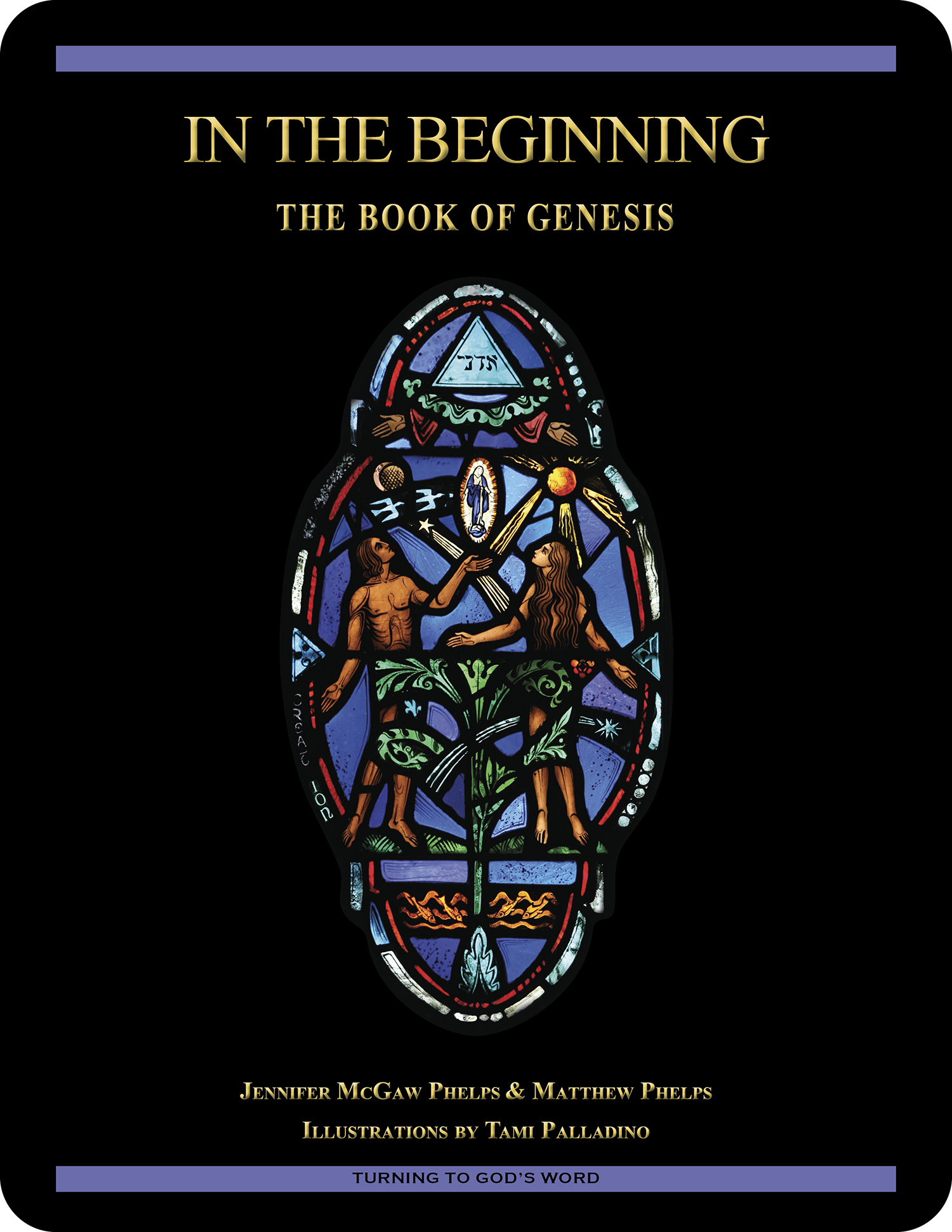 The first seven lessons of In the Beginning: The Book of Genesis, a 28-lesson Catholic Bible study with an imprimatur, provide an in-depth look at the very earliest biblical history—including the two accounts of Creation, events surrounding the Fall of Adam and Eve, the relationship between Cain and Abel, and the baptismal foreshadowing present in the account of Noah and the Flood. Remaining lessons look at lives of the patriarchs Abraham, Isaac, Jacob, and Joseph. Click here to view a sample of the first lesson.
 Click on the picture of the statue of Moses with horns (above) to learn more about Lost in Translation. A new entry is archived each Monday. Contact us to receive Lost in Translation by email every week. You may use any of the contact links on our website to ask Matthew a question.