
insipid
 The Gospel According to Matthew 5:13 (NABRE) offers a difficult issue for translators. The tricky part falls in the section I think is best translated as “If salt becomes insipid, in what respect will it be salted?” The word I translated as insipid is from the Greek verb μωραίνω (moraino). This word is from a root that is connected to the idea of foolishness. Clearly, though, there is a contextual problem with this root meaning. Salt doesn’t act foolishly.
It’s certainly possible that there are other similar uses of this word in ancient literature, but I couldn’t find any. It’s equally possible that the word had another use that was not preserved in extant literature. Either way, we’re left having to guess.
After looking and thinking about options, I chose insipid because it likewise has a double meaning in English (“lacking flavor” and “lacking vigor”)—though lacking in vigor is not exactly consistent with the meaning of foolishness suggested by this Greek verb.
related topic: parables
you also may like our study of Saul, David & Solomon (digital only)
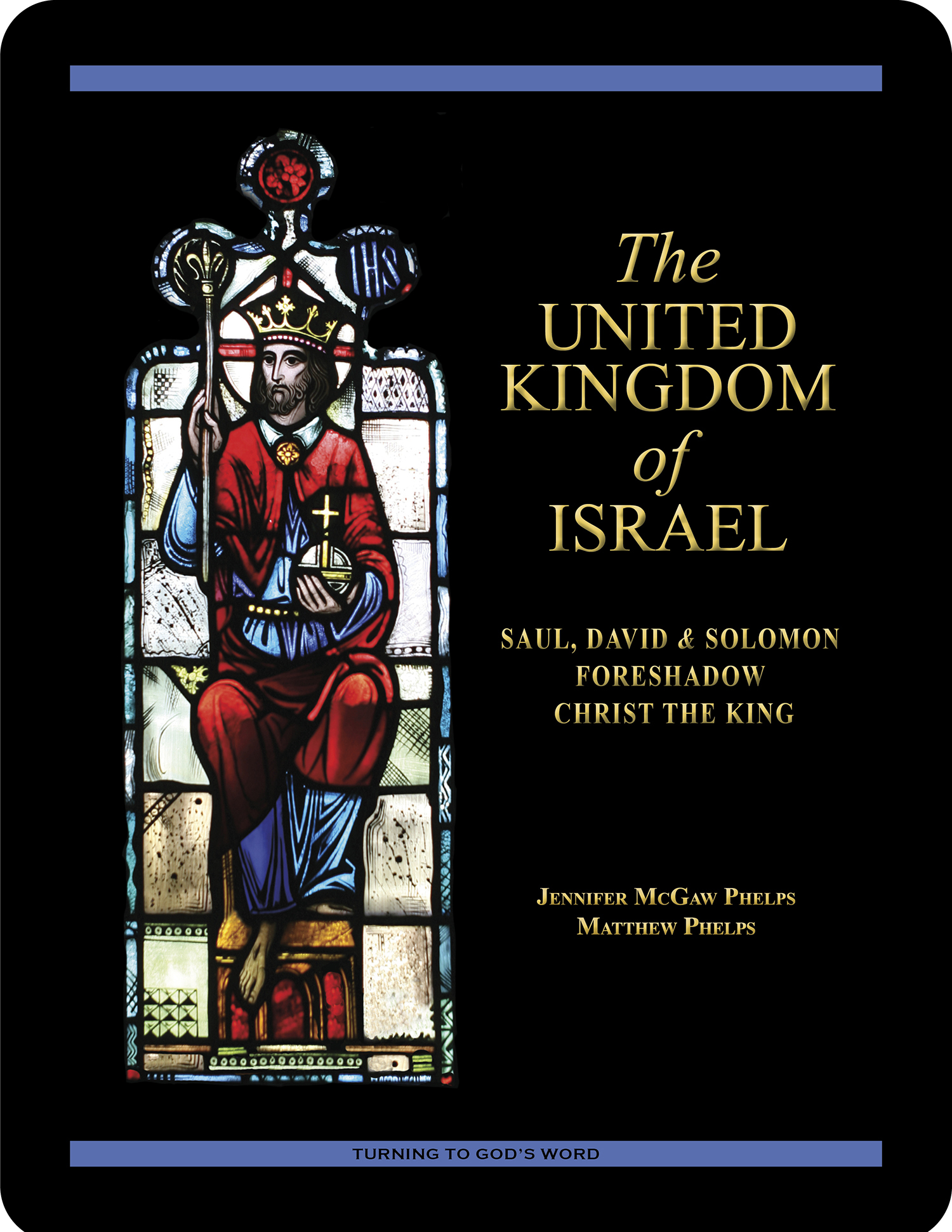 The United Kingdom of Israel: Saul, David & Solomon Foreshadow Christ the King, a 28-lesson Catholic Bible study with an imprimatur, provides an in-depth look at the First and Second Books of Samuel to learn how the lives of the monarchs Saul, David, and Solomon point ahead to the kingdom of heaven. The unified reign of King David is seen as a foreshadowing or type of the unity that is one of the four marks of the Church—the kingdom of God—established by Jesus Christ. Click here to view a sample of the first lesson.
 Click on the picture of the statue of Moses with horns (above) to learn more about Lost in Translation. A new entry is archived each Monday. Contact us to receive Lost in Translation by email every week. You may use any of the contact links on our website to ask Matthew a question.