Lord & God
 The Old Testament uses a variety of different words to refer to God. Some of them are fairly similar to words used to describe other deities, while some clearly set God apart as unique. We can find many different words to describe God in one passage in the book of Deuteronomy 10:17 (NABRE): “For the LORD (Yahweh) your God (Elohim) is God (Elohim) of gods (Elohim) and Lord (Adonai) of lords (Adonai), a great God (Elohim)…”. I’ve added an English transliteration of the word used in each case.
Yahweh is the most sacred name of God. This word not only describes him as a divinity but is his name and identification, I AM. This name is reserved for the God of Israel, the one God. Some translations, including the Revised Standard Version Catholic editions (RSVCE and RSV2CE) and the New American Bible (NAB), translate Yahweh as LORD using small capital letters.
When God is identified as God in the more generic sense of deity, the word Elohim is used and derives from a root likely having to do with strength. While technically a plural meaning “gods,” this word frequently is used in the Old Testament to refer to God as a singular in a plural form. This is not an entirely unprecedented occurrence. Some common Old Testament names, including Ephraim and Abraham, also are grammatically plural.
Lord or Adonai is another word frequently used to refer to God. This word, like the Greek kyrios and the Latin dominus, refers to a master in any sense. The deity Baal has a name with a similar meaning from another root. Lord can refer to God but can also be used to describe people in positions of authority. Some versions of the Old Testament translate Adonai as Lord set in regular type to distinguish it from Yahweh (LORD).
Consider why you think there are so many different words used to refer to God. Which seems most comfortable to you? How do you tend to refer to and think about God in prayer?
related topics: “I Am”; Lord; YHWH
you also may like our study of the book of Genesis
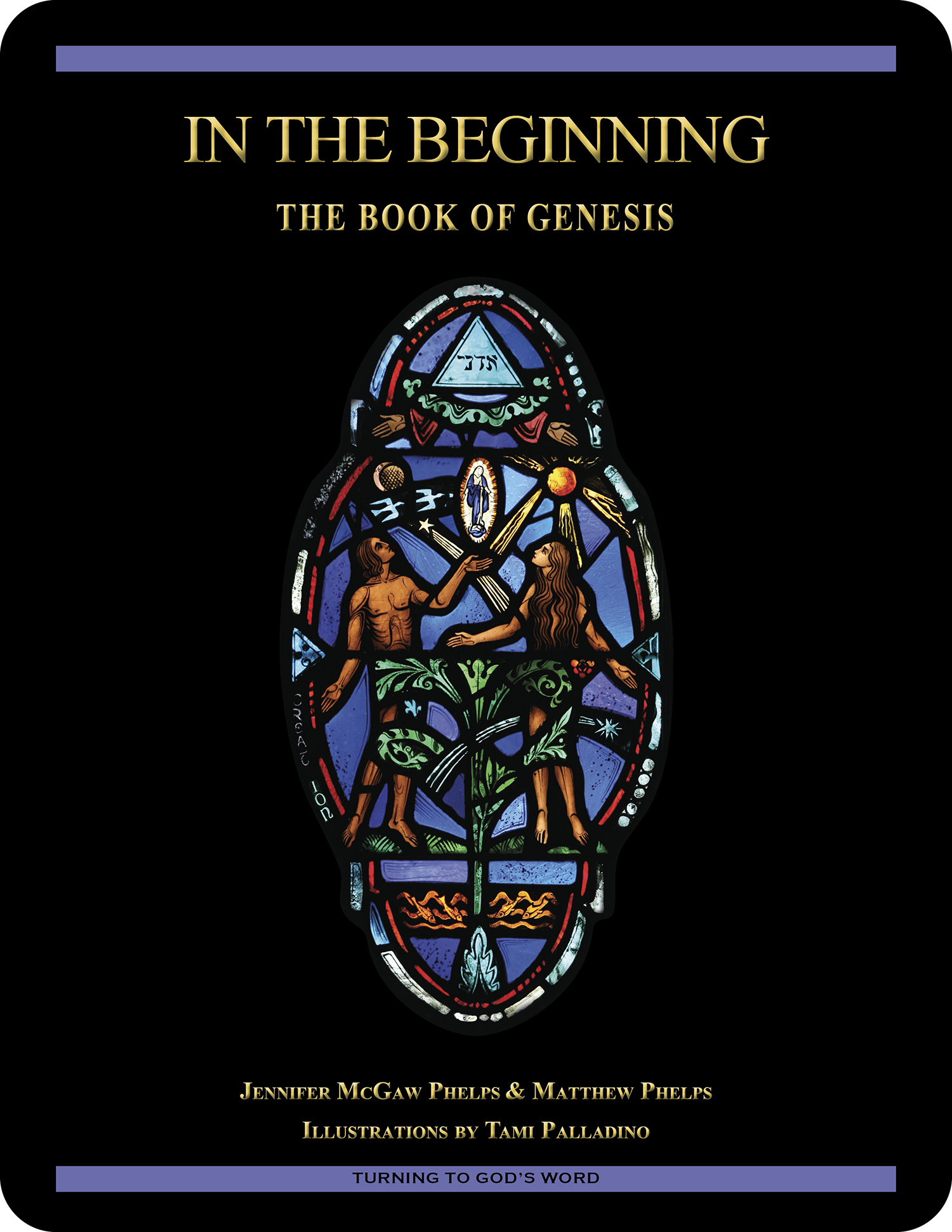 The first seven lessons of In the Beginning: The Book of Genesis, a 28-lesson Catholic Bible study with an imprimatur, provide an in-depth look at the very earliest biblical history—including the two accounts of Creation, events surrounding the Fall of Adam and Eve, the relationship between Cain and Abel, and the baptismal foreshadowing present in the account of Noah and the Flood. Remaining lessons look at lives of the patriarchs Abraham, Isaac, Jacob, and Joseph. Click here to view a sample of the first lesson.
 Click on the picture of the statue of Moses with horns (above) to learn more about Lost in Translation. A new entry is archived each Monday. Contact us to receive Lost in Translation by email every week. You may use any of the contact links on our website to ask Matthew a question.