
mammon
 The Gospel According to Luke 16:13 (NABRE) contains Jesus’ familiar statement: “You cannot serve both God and mammon.” Within the context of the passage, it’s clear that mammon here concerns wealth, but something unusual is also going on with this term that explains why translators don’t frequently translate it into English as wealth or money.
The Greek word μαμωνᾶ (mamona) or μαμμωνᾷ (mammona) is only present in surviving ancient Greek literature of the Gospels. Its Hebrew equivalent also is not present in the Old Testament, which makes these Gospel accounts unique. The two spellings provide some possible clue to the word’s origin and meaning. The first spelling suggests an Aramaic word that means “wealth” while the second spelling suggests a Syrian deity who was concerned with wealth. Both obviously have to do with the idea of wealth and possessions, though the view of wealth as a deity plays well into the contrast Jesus makes between serving God and mammon. Money and wealth are painted as an idol or false God. Obviously the Syrian deity is not a real god anymore than wealth, but wealth easily can rise to such a status and take the position of something that we worship in our lives. We can make wealth a god even when it isn’t.
What God or gods do you serve? How is that service evident from your life?
you also may like our study of the book of Genesis
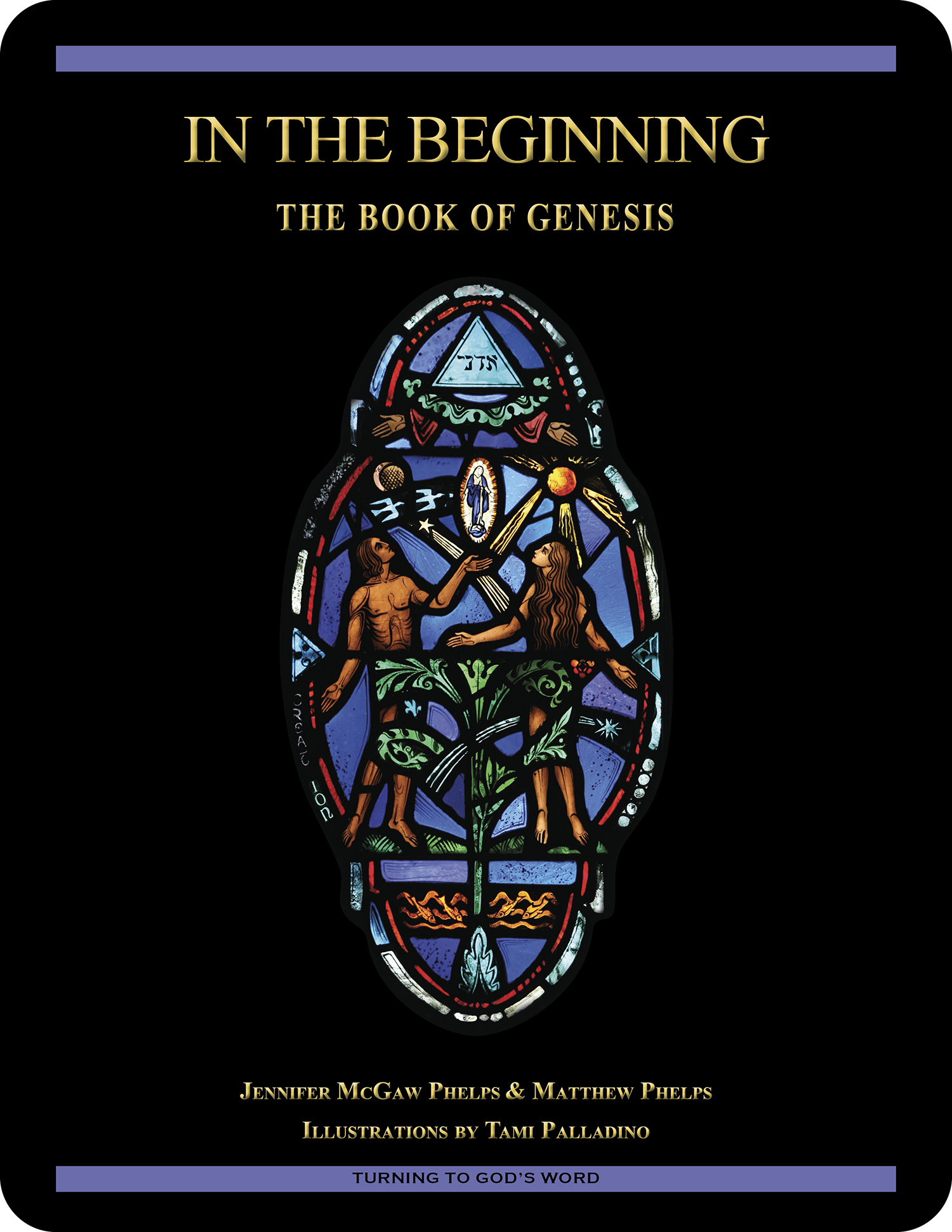 The first seven lessons of In the Beginning: The Book of Genesis, a 28-lesson Catholic Bible study with an imprimatur, provide an in-depth look at the very earliest biblical history—including the two accounts of Creation, events surrounding the Fall of Adam and Eve, the relationship between Cain and Abel, and the baptismal foreshadowing present in the account of Noah and the Flood. Remaining lessons look at lives of the patriarchs Abraham, Isaac, Jacob, and Joseph. Click here to view a sample of the first lesson.
 Click on the picture of the statue of Moses with horns (above) to learn more about Lost in Translation. A new entry is archived each Monday. Contact us to receive Lost in Translation by email every week. You may use any of the contact links on our website to ask Matthew a question.