
offering
 The Letter to the Hebrews 9:28 (NABRE) contains a description of what Jesus Christ achieved in his first coming and a promise of what he will bring when he comes again: “So also Christ, offered once to take away the sins of many, will appear a second time, not to take away sin but to bring salvation to those who eagerly await him.” In the Greek text, there’s an interesting connection between the idea of being offered and taking away sin. Both words are built on the same root, φέρω (fero), a word that means “carry.”
The word translated as offering, προσφέρω (prosfero), starts with a preposition that means “to” or “toward” and so means “bring to.” An offering is something we bring and the act of offering is the act of bringing something. The word translated as “take away,” ἀναφέρω (anafero), comes from the same root with the addition of a prefix meaning “up.” This word means “pick up” or “bear.”
The sense in which Jesus “takes away” our sins is that he himself picks them up and carries them. The connection of these words through their root implies that our sins become a part of the offering Jesus makes to God. He has picked them up and carried them to God. By his own sacrifice, Jesus is able to make our sins and transgressions an acceptable and pleasing offering to God.
related topic: guilt offering
you also may like our study of the book of Revelation
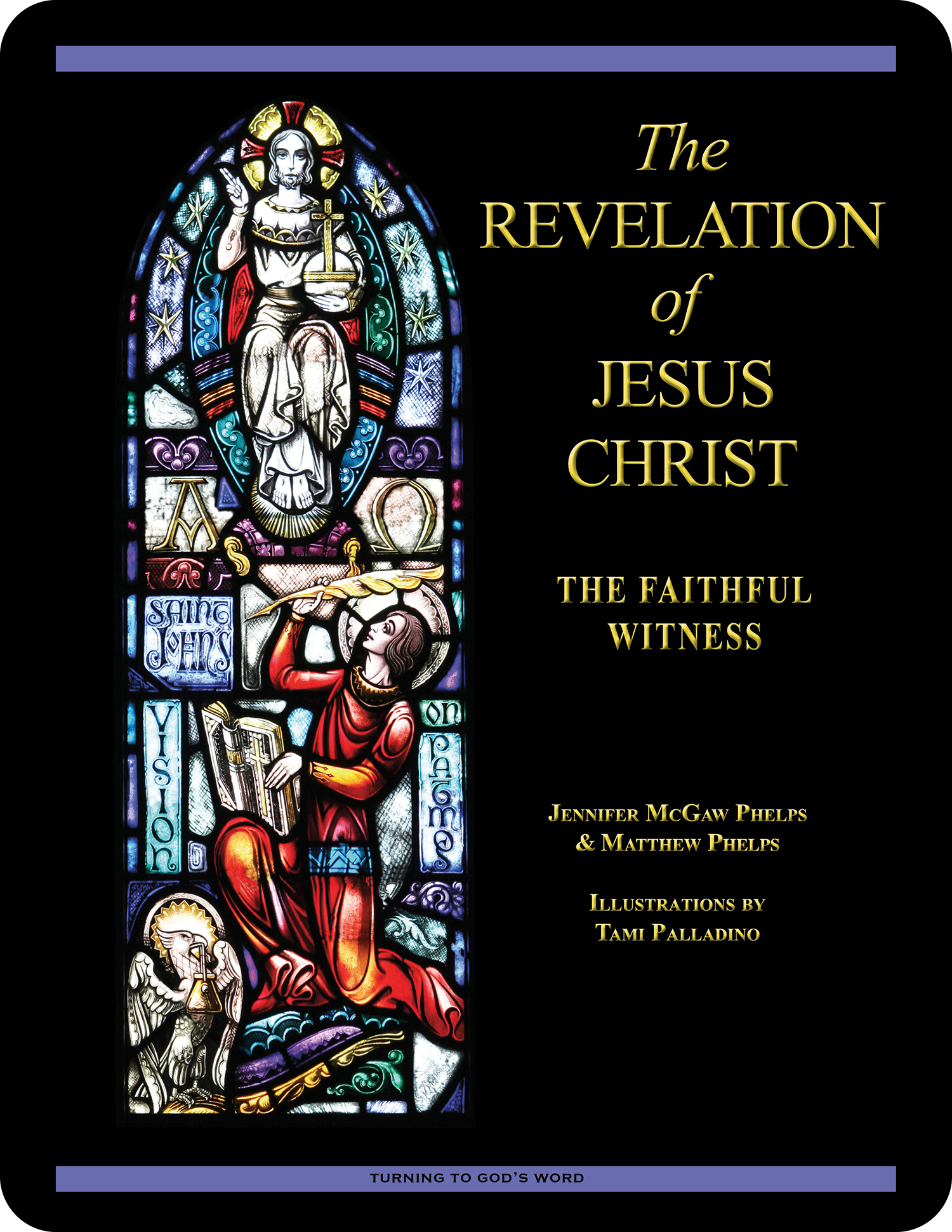 The Revelation of Jesus Christ: The Faithful Witness, a 23-lesson Catholic Bible study with an imprimatur, examines ways in which our traditional Christian view of heaven is built on Hebrew apocalyptic visions recorded in the Old Testament. This recently revised study includes maps and additional commentary and takes a close look at the role of the prophets in present-day Christianity. Illustrations by Tami Palladino depict the often-misunderstood images in the book of Revelation. Click here to view a sample of the first lesson.
 Click on the picture of the statue of Moses with horns (above) to learn more about Lost in Translation. A new entry is archived each Monday. Contact us to receive Lost in Translation by email every week. You may use any of the contact links on our website to ask Matthew a question.