
stewardship
 In the Gospel According to Luke 16:1–13, (NABRE), Jesus presents a parable about stewardship. The word that the evangelist uses for stewardship, οἰκονομία (oikonomia) is a complex Greek word that defies simple translation. Looking with more detail into this word and its usage can give us a fuller and richer understanding of what Jesus means by his parable.
Oikonomia derives from two roots, οἶκος (oikos) and νόμος (nomos). Oikos is a word that has multiple meanings. It can mean “home” in the sense of the building or it can mean the abstract concept. It also can mean “household” in the sense of an estate or the goods and possessions of the house, and it also means “house” in the sense that we would talk about a ruling house to refer to a politically powerful family or a dynasty. Nomos refers to a “custom,” “rule,” or “law.” These roots combine in oikonomia to mean “the law or management of a house,” typically referring to house in the sense of an estate. Oikonomia came to have a primarily financial sense, though the broader meanings of oikos also can apply. The English word economy derives from oikonomia.
In this Sunday’s parable, Jesus is describing a steward who is entrusted to manage a household, and oikonimia is used as an image of management of more important things. Why do you think Jesus chose to use this parable?
you also may like our free Lenten study of Jesus’ Passion (digital only)
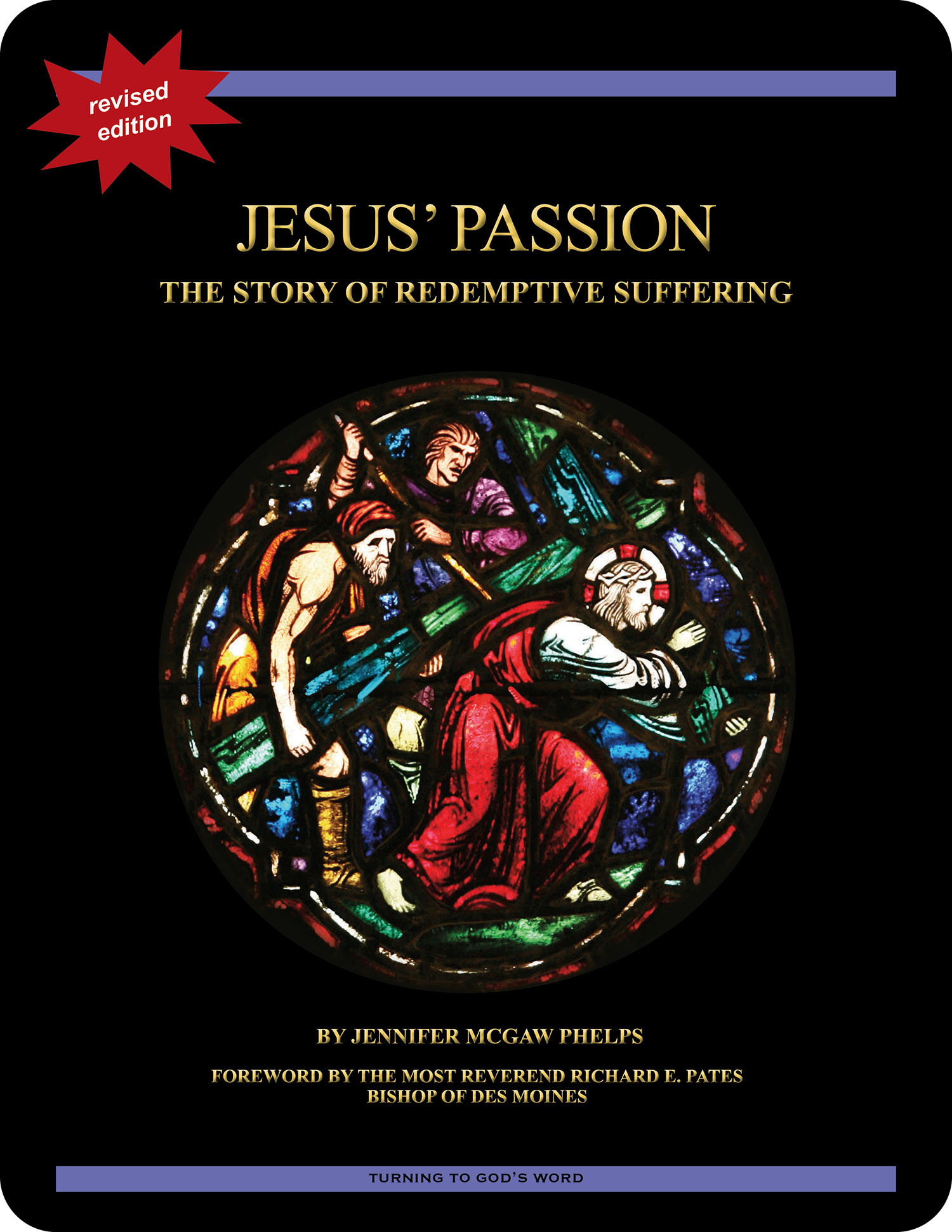 Jesus’ Passion: The Story of Redemptive Suffering is a five-lesson Catholic Bible study offering an in-depth look at the biblical foundations of the movie The Passion of the Christ. This revised study, which has been granted an imprimatur, contains all of the original material of the 2004 edition as well as many new features in an improved, reader-friendly format. Free digital lessons of Jesus’ Passion: The Story of Redemptive Suffering are available on our website during Lent. Click here to view a sample of the first lesson.
 Click on the picture of the statue of Moses with horns (above) to learn more about Lost in Translation. A new entry is archived each Monday. Contact us to receive Lost in Translation by email every week. You may use any of the contact links on our website to ask Matthew a question.