
 The Gospel According to Mark:
A Look at the Son of God
Lesson 12 More Parables
the Gospel According to Mark 12:1–44
Revised Standard Version Catholic Edition (RSVCE)*
New American Bible Revised Edition (NABRE)*
Catechism of the Catholic Church
ex libris (in our library)
glossary for the Gospel According to Mark
cross references in the Gospel According to Mark
next lesson: ‘What I Say to You I Say to All: Watch’
This material coordinates with Lesson 12, “More Parables,” on pages 56–60 in The Gospel According to Mark: A Look at the Son of God.
Now after John was arrested, Jesus came into Galilee, preaching the gospel of God, and saying,
“The time is fulfilled, and the kingdom of God is at hand; repent, and believe in the gospel.”
—the Gospel According to Mark 1:14–15
welcome to our in-depth study of the Gospel According to Mark
We invite interested groups and individuals to check out the sample introduction and first lesson from this 17- lesson Turning to
  God’s Word Catholic Bible study based on Scripture that is the source of most of the Sunday Gospel readings for Liturgical Year B. These online study pages link to an online glossary and cross references in the biblical text. Other study aids include maps, additional commentary, and prayers based on the primary Scripture in each lesson. The Gospel According to Mark: A Look at the Son of God and the other two synoptic studies are being submitted for imprimaturs. This study will be available from our website shop about three months before the start of liturgical Year B in 2026. If you have a Bible-related question or comment, click on one of the “ask us your question” or “what do you think” buttons on any online study page.
open with prayer
It’s always wise to begin any Bible study with prayer, whether reading the Scriptures alone or meeting with others in a discussion study group. You can pray using your own words or use one of the opening prayers on our website. We especially like the following:
Lord Jesus, you promised to send your Holy Spirit to teach us all things.
As we read and study your word today,
allow it to touch our hearts and change our lives. Amen.
let’s review—the Gospel According to Mark 11:1–33
Lesson 11 Jesus Cleanses the Temple is an account recorded by all four Evangelists. While all of the synoptic Gospel writers, including Mark, set the event at the beginning of Holy Week, the Evangelist John recounts it at the beginning of Jesus’ ministry. The most important detail Mark records appears to be Jesus citing the writings of the Old Testament prophets Isaiah and Jeremiah, which serves to establish Jesus as fulfillment of their prophesies. When he cleanses the Temple, the Jewish religious leaders question Jesus’ authority, but fear of his popularity with the crowds makes them reluctant to attack Jesus further. Mark also records details surrounding Jesus’ entry into Jerusalem on what is now known as Palm Sunday, as well as the somewhat confusing story of Jesus cursing a fig tree. The eleventh chapter ends with the religious leaders once more questioning Jesus’ authority, and with Jesus turning the tables on them by asking the source of John’s baptism.
to whom do these pronouns refer?
The Evangelist frequently fails to clearly identify the persons referred to by some of the pronouns in the Gospel According to Mark. This especially is the case after breaks between chapters. (Such breaks don’t occur in any of the original manuscripts of biblical text.) Readers are advised to backtrack until a first reference is located for the pronoun in question. In the opening verses in the twelfth chapter in the Gospel According to Mark (“them” in the first verse, “you” in the tenth verse, and “they” in the twelfth verse), the unclear pronouns all refer to “the chief priests and the scribes and the elders” in the Gospel According to Mark 11:27. (“They” in the parable of the vineyard refers to the “tenants” mentioned in the Gospel According to Mark 12:1–2.)
 from Matthew—a lie about the truth
Turning to God’s Word author Matthew Phelps notices that a theme from the previous chapter in the Gospel According to Mark continues in this lesson.
“The Jewish religious leaders’ convictions are once again limited by the crowd. They’re determining right and wrong according to their desire for power and public opinion. What room is there for God in that? Their reaction to the parable proves it correct. Their reasoning is baffling—They think Jesus is accusing them of not being good stewards of what God has given then and of abusing those who tell them that they aren’t being good stewards. The chief Jewish priests, scribes, and elders then determine that they should arrest and harm Jesus in an effort to prove that Jesus is wrong.”
 more from Matthew—entrapping Jesus
In the Gospel According to Mark 12:13, the Evangelist explains that the Jewish religious leaders seek to “entrap” Jesus. Matthew points out that what they should instead be seeking truth and a better understanding of God.
“These religious authorities obviously don’t recognize the truth of who Jesus really is or they wouldn’t be trying to “catch” him. They’re liars, and ironically the lie they’re telling is about truth itself. What they say is true, but it’s not what they think. The religious leaders are trying to get Jesus to answer in a specific way. They think Jesus will side against Rome an Caesar to avoid losing the crowd. He doesn’t.”
inheritance—you could look it up in our archives
 The idea of the descendants of Jacob receiving an inheritance from God appears throughout the Old Testament. It comes as no surprise when Jesus includes it in his parable in the Gospel According to Mark 12:1–11. To learn about the the word inheritance, read Lost in Translation, a weekly online column in which Turning to God’s Word author Matthew Phelps helps readers connect with ideas expressed in the original languages of the Scriptures. New Lost in Translation entries are posted on Mondays, and past entries are archived on our website. Contact us if you’d like to receive Lost in Translation by email every week.
 ? Why might the idea of receiving eternal life as an “inheritance” be important to present-day Christians?
? What is implied when eternal life is considered as an “inheritance”?
? How does the idea of Jesus being involved in determining whether a person is granted eternal life change how you think about your own eligibility?
Christian Connection—let’s examine some of Jesus’ parables
One of the difficulties with biblical parables is that most Christians already are familiar with them, and so we believe that we understand what they mean.
? Which of Jesus’ parables in the twelfth chapter in the Gospel According to Mark speaks most clearly to you?
? Which of these parables surprised you the most?
? What does Jesus seem to be saying about material wealth?
? What does Jesus seem to be saying about marriage?
? What does Jesus seem to be saying about the Messiah being a son of David?
? What does Jesus seem to be saying about religious leaders of his time?
? How do you think that each of Jesus’ parables in the twelfth chapter in the Gospel According to Mark relate to present-day Christians?
more from Matthew—about those Sadducees
After Jesus’ run-in with the other religious leaders in Jerusalem, a group of Sadducees approaches him with another question. Matthew observes that this group seems to have a different agenda.
“It seems that the Sadducees are looking for someone to validate their view about the resurrection of the body. (They don’t include it in their worship practices because it isn’t mentioned in the first five books of Hebrew Scripture—the Torah, traditionally credited to Moses.) They’ve developed a convoluted scenario to prove their point, but they don’t seem to be trying to trip up Jesus as much as some of the other religious leaders. If Jesus agrees with the Sadducees, that doesn’t necessarily harm him—although their question still is phrased in such a way that they’re wrong. The Sadducees are a lot more like everyone else coming to Jesus—they aren’t seeking truth, just validation.
“In the Gospel According to Mark 12:24, Jesus reprimands the Sadducees for knowing neither Scripture nor the ‘power of God.’ Interestingly, Jesus doesn’t call them hypocrites (or any other names), but he does accuse them of being ignorant.”
more from Matthew—a profound teaching
Matthew considers the Gospel According to Mark 12:27 perhaps to be the most profound thing Jesus has said so far in this Gospel.
“As clear as Jesus seems to think this statement is, it’s not at all an obvious insight from the Old Testament. In this incident, Jesus is teaching the Sadducees because they’re merely ignorant—not liars. How people approach Jesus shapes how he responds to them. The same is true in the present-day. How we approach Jesus shapes how he responds to us.”
more from Matthew—let’s look at these commandments
Matthew notices that when Jesus responds to a question from a scribe about which commandment is first (and then volunteers which one is second), Jesus doesn’t actually list any directly included in the Ten Commandments.
“Neither of these commandments is negative. Present-day Christians frequently focus almost entirely on what not to do, but Jesus’ focus is more on what to do. One of the ways people really miss the point of Christianity is by reducing it to strict moralism and rules about actions to avoid rather than focusing on correct behavior.
“After hearing Jesus’ response to his question, the scribe announces that what Jesus has said is accurate. It’s somewhat surprising that Jesus doesn’t rebuke the scribe for doing this. Instead, Jesus lauds the guy. This scribe represents someone seeking the truth from Jesus, and—in an important contrast to the questioners who came before him—this guy receives a different reception.
“The guy passes judgment on the accuracy of Jesus’ response, and Jesus doesn’t rebuke him for it. This represents a third case of someone actually seeking the truth and who thinks that he’s found some of it. And Jesus lauds this guy—a different approach to Jesus, so he gets a different reception.”
who are the Herodians?
The online glossary for The Gospel According to Mark: A Look at the Son of God defines “Herodians” as  members of a sect of Hellenistic Jews who combined traditional Judaism with aspects of Greek culture. This group of Jews supported the Rome-backed dynasty of Herod and his family—even though Herod was an Edomite and so were his descendants. Although the Herodians often clashed with the Pharisees, the two groups were aligned in opposition to Jesus. The Evangelist Mark refers to the Herodians in the Gospel According to Mark 3:6 in Lesson 3 as well as in the Gospel According to Mark 12:13 in this lesson. All of the proper nouns from the Gospel According to Mark—as well as a few general terms from the same Gospel—are included in the glossary.
so Matthew asks—what’s going on with this Psalm about David?**
The citation from Psalm 110:1 in the Gospel According to Mark 12:35–37 seems a bit abrupt and out-of-place, and Matthew speculates about why.
“It’s not terribly clear why this is here. It breaks up the flow quite a bit. The theme so far has seemed to be from a teaching perspective, but I suppose that can be thought to continue from the perspective of Jesus criticizing the teaching of the Jewish leaders by highlighting something relevant they’ve misunderstood.
“It’s also possible that the Jewish religious authorities could have been trying to emphasize the point that Jesus isn’t David’s son in order to draw attention to the idea that Jesus can’t be the Messiah. The Gospel According to Mark never mentions that Jesus is descended from David. Had it done so, Jesus could have been considered a ‘son’ of David.”
the best Catholic commentary about Scripture
To find out more about how Church teaching is supported by passages in the Gospel According to Mark, check out the Index of Citations in the Catechism of the Catholic Church. Links to each lesson’s primary Scripture passages (from the Revised Standard Version Catholic Edition [RSVCE*]) that are cited in relevant paragraphs in the Catechism are provided here. Not every passage in the Gospel According to Mark is referenced in a Catechism paragraph.
the Gospel According to Mark 12:17—paragraph 450
the Gospel According to Mark 12:24—paragraph 993
the Gospel According to Mark 12:25—paragraph 1619
the Gospel According to Mark 12:27—paragraph 993
the Gospel According to Mark 12:28–34—paragraph 575
the Gospel According to Mark 12:29—paragraph 228
the Gospel According to Mark 12:29–30—paragraph 202
the Gospel According to Mark 12:29–31—paragraphs 129, 2196
the Gospel According to Mark 12:35–37—paragraph 202
the Gospel According to Mark 12:38–40—paragraph 678
the Gospel According to Mark 12:41–44—paragraph 2444
ways our glossary might prove helpful
In addition to providing extra information about geographical locations, our glossary also points out persons or places mentioned in the biblical text under more than one name or more than one spelling. If you can remember a name but aren’t sure in which lesson it shows up, you can find it in the glossary, which lists every proper noun that appears in the biblical text for every lesson in The Gospel According to Mark: A Look at the Son of God. A few general terms also are included that may be unfamiliar or whose meaning may be unclear to readers.
to learn more, read more Scripture
If you’re having difficulty with a passage of Scripture, it can be helpful to read the relevant  cross references—but looking these up can take time. To make that easier, we’ve compiled the cross references from the Revised Standard Version Second Catholic Edition (RSV2CE)—the translation that we reprint in our study books. A link to these cross references can be found at the top of every online study page; the list includes each of the cross references in the primary biblical text for The Gospel According to Mark: A Look at the Son of God.
don’t forget about our indexes & extra online material
If you’re trying to locate information about a specific Scripture passage, you can look it up in the index at the back of the study book. If you want to find a particular commentary, you can look up its title in the topics index. (If you don’t have access to the study book, both indexes are in the sample.) To learn more about another book of the Bible for which there’s a Turning to God’s Word study, visit the online study directories to read the commentaries and watch any accompanying videos. Finally, if you have a question or would like to make a comment about any of our studies, you can use one of the “ask us your question” or “what do you think” buttons to email our authors.
ex libris—Church documents & books about religious topics
Link to magisterial documents referred to in our Bible studies at ex libris—magisterial documents.  This listing includes significant recent encyclicals as well as a number of historical Church documents. Recommended books related to Scripture study can be found at ex libris—main bookshelf.
wondering how to pronounce some of these words?
The following link is to a reading from the New International Version (NIV) Bible. To listen, open the link and click on the loudspeaker icon above the printed text. Although not taken from translations used in our study materials, the NIV reading provides an audio guide to pronunciation of many words in this lesson’s primary biblical text. A close online version of the translation of the Bible used in Catholic liturgy in the United States and an audio guide for daily Mass readings for the current month can be found on the website of the United States Conference of Catholic Bishops (USCCB).
the Gospel According to Mark 12:1–44 (NIV)
close with Bible-based prayer related to this lesson
Many of our Catholic study groups like to conclude their discussions with a prayer based on the scriptural focus of their lesson, and some participants include Scripture-specific prayer in their individual study. If you’re uncomfortable composing your own Bible-based prayers, you can follow our four easy steps. If you prefer, you can use the following prayer based on this lesson’s text from the Gospel According to Mark.
O God, you sent your Son Jesus to teach us the kind of relationship
you long for with each man and woman.
Teach us to honor Jesus’ parables, and show us
what we must do to establish a proper relationship with you
so that we will be able to enter into the fullness of eternal life. Amen.
Lesson 13 ‘What I Say to You I Say to All: Watch’—the Gospel According to Mark 13:1–37
Lesson 11 Jesus Cleanses the Temple—the Gospel According to Mark 11:1–33
you also may like our two-part study of the prophets
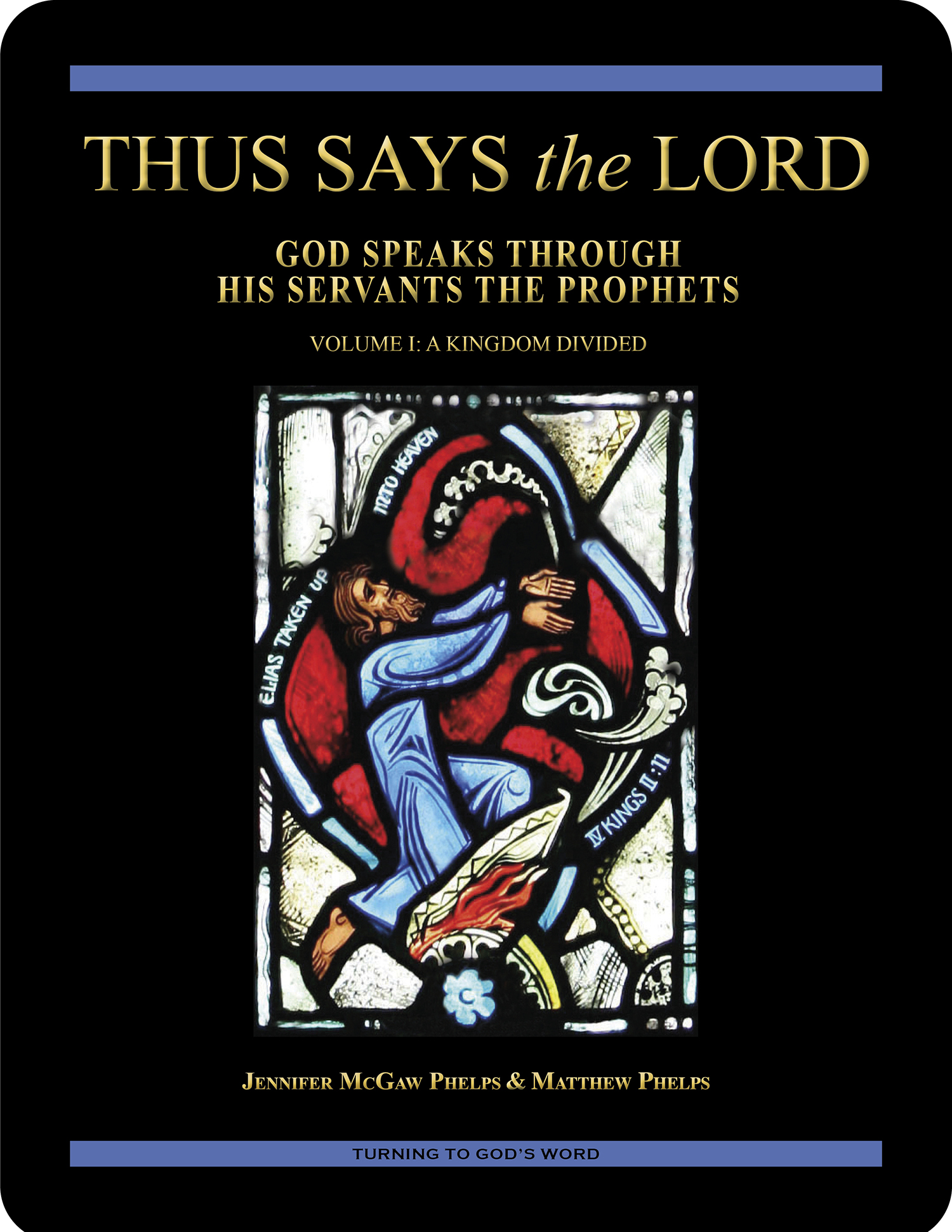 Thus Says the LORD: God Speaks Through His Servants the Prophets—Volume I: A Kingdom Divided examines the prophets in historical context using the First and Second Books of the Kings and other Old Testament passages written before the Babylonian Exile. Volume II: Restoration & Redemption looks at the post-exilic prophets. This 51-lesson Catholic Bible study builds on The United Kingdom of Israel: Saul, David & Solomon Foreshadow Christ the King. Click on these links to view a lesson from Volume I and another from Volume II.
start a Turning to God’s Word Bible study
 Thank you for your interest in our three-part study of the synoptic Gospels.
  More information about beginning a Turning to God’s Word Bible study can be found at start a Bible study, and Tami, Matthew, and I are available to answer questions or discuss concerns. Contact us to start this or one of our other studies or to have your schedule listed with other TtGW study groups on our website. —Jennifer
*There are seven deuterocanonical books in the Old Testament—Baruch, Judith, Sirach, Tobit, Wisdom, and First and Second Maccabees—and there are some deuterocanonical passages in the Books of Daniel and Esther. Protestants usually refer to these works as “apocryphal,” a word that means “outside the (Protestant) canon” because they’re excluded from most Protestant Bibles. Deuterocanonical means “second canon”; Catholics use that word to refer to any section of the Catholic Old Testament for which there are no extant, or existing, Hebrew manuscripts. All of the deuterocanonical books appear in the Septuagint, the earliest remaining versions of which date to the 1st century B.C. This Greek translation of the Old Testament was in common use by Jews at the time of Jesus. Learn more by reading How Do Catholic & Protestant Bibles Differ?
 **You can learn more about the biblical Psalms by viewing a sample lesson from the Turning to God’s Word Catholic Bible study Sing a New Psalm: Communicating with God Through the Prayers of the Church. The first volume covers Psalms prayed at Lauds and Vespers; the second volume covers Psalms prayed at Vigils, Day Prayer, and Compline. Numbering of Psalms and verses may vary in different translations.
Turning to God’s Word printed Bible studies use the 2006 Revised Standard Version Second Catholic Edition (RSV2CE) translation for all Scripture references except those to the Psalms, which are taken from The Abbey Psalms and Canticles, prepared by the Benedictine monks of Conception Abbey and published in 2020 by the United States Conference of Catholic Bishops (USCCB). All Scripture links for the online study pages for The Gospel According to Mark: A Look at the Son of God are to the 1966 Revised Standard Version Catholic Edition (RSVCE) translation. The New International Version (NIV) audio recordings follow the same chapter and verse numbering as the RSV Catholic translations.
The 1966 RSVCE uses archaic pronouns and verb forms such as “thee,” “thou,” and “didst” in the Psalms and in direct quotations attributed to God. The 2006 RSV2CE replaces these with more accessible English. The few significant translation changes in the RSV2CE include rendering almah as “virgin” in the Book of Isaiah 7:14 and restoring the term “begotten” in the Gospel According to John 3:16.
Numbering varies for some passages in this Bible study. Turning to God’s Word studies (print and digital) follow the numbering in the Revised Standard Version Catholic translations (RSV2CE and RSVCE). Discrepancies in the New American Bible Revised Edition (NABRE) are noted in the Index of Scripture Citations in the study book or toward the end of the sample.