
The Gospel According to Mark:
A Look at the Son of God
Lesson 3 Is Jesus Possessed?
the Gospel According to Mark 3:1–35
Revised Standard Version Catholic Edition (RSVCE)*
New American Bible Revised Edition (NABRE)*
Catechism of the Catholic Church
ex libris (in our library)
glossary for the Gospel According to Mark
cross references in the Gospel According to Mark
next lesson: ‘Do You Understand This Parable?’
This material coordinates with Lesson 3, “Is Jesus Possessed?” on pages 17–20 in The Gospel According to Mark: A Look at the Son of God.
Now after John was arrested, Jesus came into Galilee, preaching the gospel of God, and saying,
“The time is fulfilled, and the kingdom of God is at hand; repent, and believe in the gospel.”
—the Gospel According to Mark 1:14–15
welcome to our in-depth study of the Gospel According to Mark
We invite interested groups and individuals to check out the sample introduction and first lesson from this 17- lesson Turning to
  God’s Word Catholic Bible study based on Scripture that is the source of most of the Sunday Gospel readings for Liturgical Year B. These online study pages link to an online glossary and cross references in the biblical text. Other study aids include maps, additional commentary, and prayers based on the primary Scripture in each lesson. The Gospel According to Mark: A Look at the Son of God and the other two synoptic studies are being submitted for imprimaturs. This study will be available from our website shop about three months before the start of liturgical Year B in 2026. If you have a Bible-related question or comment, click on one of the “ask us your question” or “what do you think” buttons on any online study page.
open with prayer
It’s always wise to begin any Bible study with prayer, whether reading the Scriptures alone or meeting with others in a discussion study group. You can pray using your own words or use one of the opening prayers on our website. We especially like the following:
Lord Jesus, you promised to send your Holy Spirit to teach us all things.
As we read and study your word today,
allow it to touch our hearts and change our lives. Amen.
let’s review—the Gospel According to Mark 2:1–28
Lesson 2 The Son of Man Has Divine Authority opens with Jesus being assailed by crowds in Caperna-um. Jesus heals a paralytic lowered down from the roof of Jesus’ home, but first Jesus forgives the man’s sins. Not only does Jesus’ ability to physically heal the paralytic disturb the scribes who are witnessing this miracle, Jesus perceives that his authority to forgive sins is behind the scribes’ questioning in their hearts. Following this event, Jesus calls a tax collector named Levi to be one of his disciples. (Levi is identified as Matthew elsewhere in the synoptic Gospels). Jesus also tells two parables—one cautioning his listeners against mending an old garment with new cloth, and the other cautioning his followers not to put new wine in old wine skins. Jesus also cites a story about David, well-known at that time, to demonstrate that “the Son of man is lord even of the sabbath,” further claiming divine authority.
Christian Connection: a question of whether Jesus is possessed
The third chapter in the Gospel According to Mark deals specifically with whether Jesus is possessed by a demon, something Jesus denies. Jesus follows this denial with a stern warning that blasphemy against the Holy Spirit will not be forgiven. Jesus’ words about blasphemy as the unforgivable sin have disturbed many Christians. What Jesus seems to be talking about is the importance of using grace and common sense to discern the meaning of various events in life and the best Christian response to these events. It appears to be a serious (and unforgivable) offense to ignore promptings of the Holy Spirit.
 ? What sort of issues have you experienced in which the Holy Spirit has seemed to be offering guidance?
? Did you act on the Holy Spirit’s counsel?
? Why or why not?
? When and how did you determine that the Holy Spirit was involved?
? What advice would you give to others regarding how to discern when the Holy Spirit is attempting to act in their lives?
ex libris—two books about spiritual direction
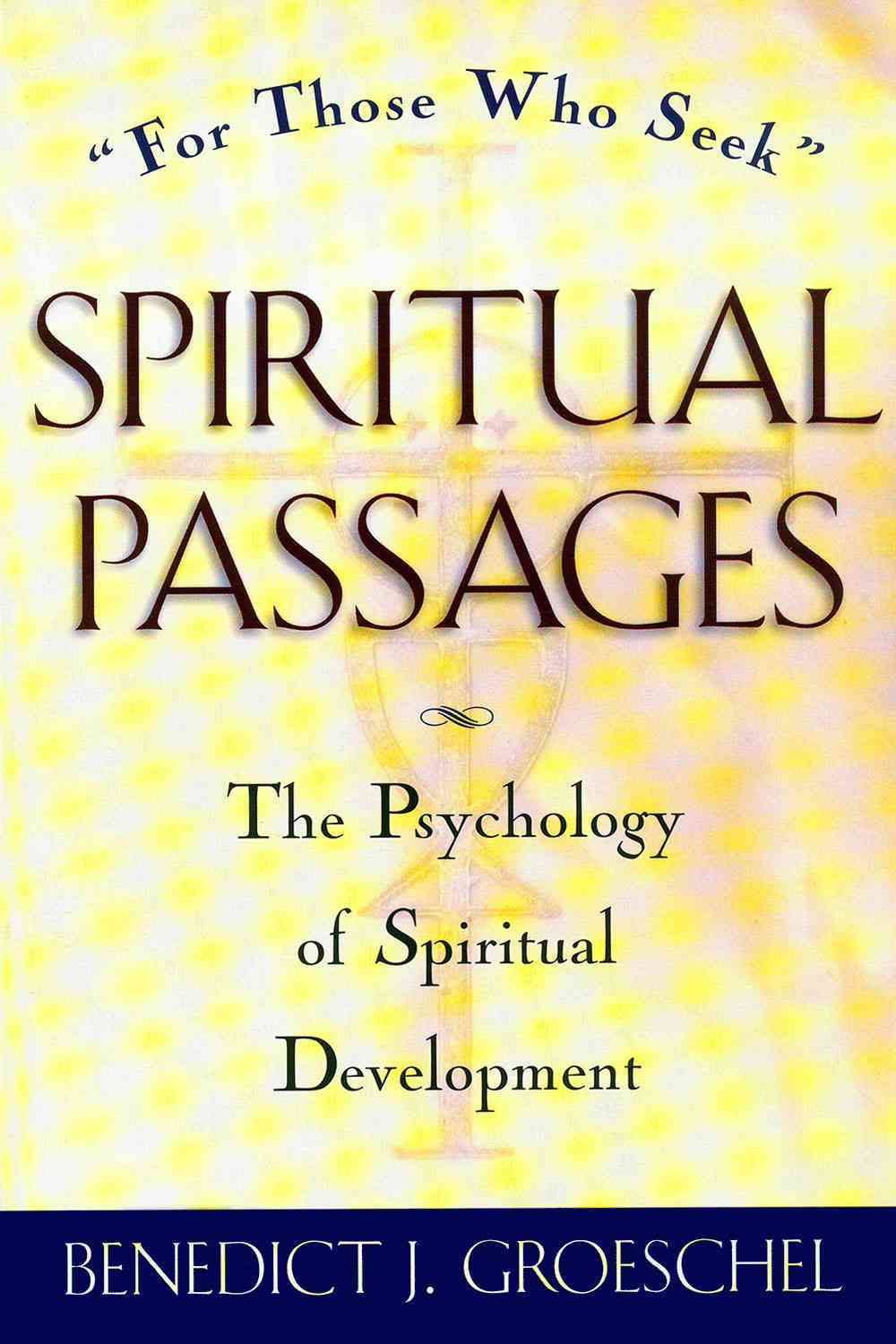
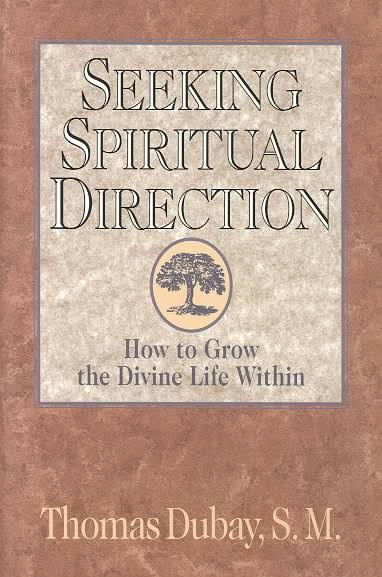 Two of the best books we’ve come across that discuss the practical ins and outs of discernment are Spiritual Passages by Benedict Groeschel, C.F.R., and Seeking Spiritual Direction by Thomas Dubay, S.M.
  Both authors have written other excellent books as well, but people interested in learning more about spiritual direction may find these two titles particularly insightful. At ex libris—main bookshelf, you can read excerpts from both of these books by Catholic priests, and you also can learn more about other works related to Catholic Bible study.
scriptural basis of a famous speech
The Gospel According to Mark 3:22–27 is the basis for Abraham Lincoln’s famed Gettysburg Address, given on November 19, 1863.
? Think about what it means that the president at that time not only knew Scripture but was familiar enough with it to quote Jesus’ words.
? Consider the dangers of a house being unable to stand if it is divided against itself.
? Can you think of any positive aspects of division?
? What dangerous divisions do you see in present-day society?
? What dangerous divisions do you see in the Church?
? How can you avoid endorsing dangerous divisions within the Church?
? What can you do to help others to avoid supporting such dangerous divisions?
? Why might Jesus have chosen that particular time to caution against division?
a reminder for discussion groups
This should go without saying, but there have been recent instances in which people have repeated things said in Bible study to others outside of their discussion group. What’s said in Bible study stays in Bible study. There are two reasons for this: 1) People are much less likely to comment if they think there’s a chance that their words are going to be discussed by others when they aren’t present. This is especially true when someone chooses to share personal information relative to their spiritual life. 2) When discussing interpretations of Scripture there always is a chance that what someone says will be misquoted and misunderstood. It’s natural to want to share things you’ve been learning in Bible study, however. Here are guidelines about how to do that:
- There are no restrictions on expressing your own viewpoint about Scripture any time and any place.
- It’s also fine to quote Turning to God’s Word materials—the study books, the online pages, and the videos. If you are going to refer to these materials, please be sure to use direct quotes. This will eliminate a great deal of confusion about what Matthew and I actually have written or said. Anything directly quoted from one of our study books also carries an imprimatur, while indirectly quoted material does not.
- If you wish to credit someone else for something you’ve heard them say in Bible study, please first obtain permission.
sabbath—you could look it up in our archives
 The Gospels frequently describe Jesus and the Jewish religious leaders debating whether Jesus’ authority extends to performing miracles on the sabbath. At issue is whether the miracles Jesus performs constitute labor. To learn more, read Lost in Translation, a weekly online column in which Turning to God’s Word author Matthew Phelps helps readers connect with ideas expressed in the original languages of the Scriptures. New Lost in Translation entries are posted on Mondays, and past entries are archived on our website. Contact us if you’d like to receive Lost in Translation by email every week.
read the Catechism—Jesus changed how Christians practice the sabbath
How Christian Sunday practices differ from those connected to the Jewish sabbath is discussed in paragraphs 2175 and 2176 in the Catechism of the Catholic Church. The quotation at the end of paragraph 2175 is from Saint Ignatius of Antioch, an early martyr of the Church.
2175 Sunday is expressly distinguished from the sabbath which it follows chronologically  every week; for Christians its ceremonial observance replaces that of the sabbath. In Christ’s Passover, Sunday fulfills the spiritual truth of the Jewish sabbath and announces man’s eternal rest in God. For worship under the Law prepared for the mystery of Christ, and what was done there prefigured some aspects of Christ.
[“]Those who lived according to the old order of things have come to a new hope, no longer keeping the sabbath, but the Lord’s Day, in which our life is blessed by him and in his death.[“]
2176 The celebration of Sunday observes the moral commandment inscribed by nature in the human heart to render to God and outward, visible, public, and regular worship “as a sign of his universal beneficence to all.” Sunday worship fulfills the moral command of the Old Covenant, taking up its rhythm and spirit in the weekly celebration of the Creator and Redeemer of his people.
read the Catechism—what does the Church teach about Mary’s virginity?
The idea that Mary was a virgin when she gave birth to Jesus and remained a virgin all of her life can be difficult for men and women to accept. This of course would have precluded her bearing any other children. Paragraphs 499 and 500 in the Catechism of the Catholic Church address Church teaching on issues raised by the Gospel According to Mark 3:31–35.
499 The deepening of faith in the virginal motherhood led the Church to confess Mary’s real and perpetual virginity even in the act of giving birth to the Son of God made man. In fact, Christ’s birth “did not diminish his mother’s virginal integrity but sanctified it.” And so the liturgy of the Church celebrates Mary as Aeiparthenos, the “Ever-virgin.”
500 Against this doctrine the objection is sometimes raised that the Bible mentions brothers and sisters of Jesus. The Church has always understood these passages as not referring to other children of the Virgin Mary. In fact James and Joseph, “brothers of Jesus,” are the sons of another Mary, a disciple of Christ, whom St. Matthew significantly calls “the other Mary.” They are close relations of Jesus, according to an Old Testament expression.
Greek language is at the heart of the matter
It’s little wonder so many people are confused. Not even experts have the necessary language background to know what the heck the Evangelist Mark meant. The trouble hinges on the Evangelist’s use of the Greek word for “brethren,” and modern theologians cannot say precisely what that word meant at the time. The first biblical definition most experts accept is “a brother, whether born of the same two parents or only of the same father or mother.” This doesn’t prove very helpful; a number of other definitions are suggested, and Greek doesn’t have a word for step-brother. In short, it’s impossible to know the original meaning of the Greek word translated as “brethren” in the Gospel According to Mark 3:31–35, and in this passage, the word “brethren” shouldn’t necessarily be taken to mean a full brother in the sense that we understand the term. The Church clearly regards Mary as ever-virgin, and clearly teaches that Jesus had no brothers or sisters. This shouldn’t pose a problem for faithful Catholics.
The important thing for present-day Christians to remember is that the Gospel According to Mark 3:31–35 isn’t about whether Mary is ever-virgin or Jesus had any brothers and sisters. The important thing to take away from this passage is something repeated throughout the New Testament—it’s possible to be adopted into the family of God. Jesus explains how. Why not take a moment to reflect on how well we professed Christians are doing at obeying the will of God the Father?
Jesus already used parables in the Gospel According to Mark
In the Gospel According to Mark 2:18–22, Jesus suggests that unshrunken (new) cloth should not be used to mend fabric in older garments, and that new wine should not be placed in old wine skins. Both of these scriptural stories, though not labeled as such, are parables—stories Jesus uses to make a moral or spiritual point. He will introduce the concept of a parable in the third chapter of the Gospel According to Mark. You can learn more in the vocabulary box “Parable” on page 20 in The Gospel According to Mark: A Look at the Son of God.
Incidents described only in the Gospel According to Mark
There are a small number of events and descriptions connected with Jesus’ life that are found only in the Gospel According to Mark. These include Jesus calling 12 of his disciples to preach and cast out demons, an account found in the Gospel According to Mark 3:13–19; Jesus’ friends attempting to restrain him, found in the Gospel According to Mark 3:20–21; and Jesus renaming the disciples James and John—the sons of Zebedee—as “Boanerges,” an account found in the Gospel According to Mark 3:17. Other passages found only in the Gospel According to Mark will be addressed as they occur.
? What does the name “Boanerges” mean?
? Consider why Jesus chose to call the sons of Zebedee by this name.
? What might be the reason that Mark is the only Evangelist to record this?
disciples versus apostles
Generally, the word “disciples” describes followers of Jesus who wish to learn from him; the word”apostle” means “one who is sent,” and is used to describe those people Jesus sends out to preach and to cast out demons. The Gospel According to Mark 3:13–19 records Jesus preparing to send out 12 of his closest followers, but this passage fails to describe them either as disciples or as apostles—and it also fails to record that Jesus actually sent out any of these disciples.
another reason to check out the glossary
When reading the New Testament, it can be easy to get confused by all of the people named Simon.  Learn to differentiate between Simon the Cananaean (also called Simon the Zealot) mentioned in the Gospel According to Mark 3:18 and Simon (the brother of Andrew) who was renamed Simon Peter by Jesus. Other Simons mentioned in the synoptic Gospels include Simon of Cyrene and Simon the leper. Refer to the online glossary to help keep track of who’s who.
the best Catholic commentary about Scripture
To find out more about how Church teaching is supported by passages in The Gospel According to Mark: A Look at the Son of God, check out the Index of Citations in the Catechism of the Catholic Church. Links to each lesson’s primary Scripture passages (from the Revised Standard Version Catholic Edition [RSVCE*]) that are cited in relevant paragraphs in the Catechism are provided here. Not every passage in the Gospel According to Mark is referenced in a Catechism paragraph.
the Gospel According to Mark 3:1–6—paragraph 574
the Gospel According to Mark 3:4—paragraph 2173
the Gospel According to Mark 3:5—paragraph 591
the Gospel According to Mark 3:5–6—paragraph 1859
the Gospel According to Mark 3:6—paragraphs 574 and 591
the Gospel According to Mark 3:10—paragraph 1504
the Gospel According to Mark 3:13–14—paragraph 858
the Gospel According to Mark 3:13–19—paragraphs 551 and 787
the Gospel According to Mark 3:14–15—paragraph 765
the Gospel According to Mark 3:14–19—paragraph 1577
the Gospel According to Mark 3:15—paragraph 1673
the Gospel According to Mark 3:16—paragraph 552
the Gospel According to Mark 3:22—paragraphs 548 and 574
the Gospel According to Mark 3:27—paragraph 539
the Gospel According to Mark 3:29—paragraph 1864
the Gospel According to Mark 3:31–35—paragraph 500
ways our glossary might prove helpful
In addition to providing extra information about geographical locations, our glossary also points out persons or places mentioned in the biblical text under more than one name or more than one spelling. If you can remember a name but aren’t sure in which lesson it shows up, you can find it in the glossary, which lists every proper noun that appears in the biblical text for every lesson in The Gospel According to Mark: A Look at the Son of God. A few general terms also are included that may be unfamiliar or whose meaning may be unclear to readers.
to learn more, read more Scripture
If you’re having difficulty with a particular passage of Scripture, it can be helpful to read the relevant  cross references—but looking these up can take time. To make that easier, we’ve compiled the cross references from the Revised Standard Version Second Catholic Edition (RSV2CE)—the translation that we reprint in our study books. A link to that list can be found at the top of every online study page; the list features links to cross references in the primary biblical text in the study book The Gospel According to Mark: A Look at the Son of God.
don’t forget about our indexes & extra online material
If you’re trying to locate information about a specific Scripture passage, you can look it up in the index at the back of the study book. If you want to find a particular commentary, you can look up its title in the topics index. To learn more about another book of the Bible for which there’s a Turning to God’s Word study, visit the online study directories to read the commentaries and watch any accompanying videos. Finally, if you have a question or would like to make a comment about any of our studies, you can use one of the “ask us your question” or “what do you think” buttons to email our authors.
ex libris—Church documents & books about religious topics
Link to magisterial documents referred to in our Bible studies at ex libris—magisterial documents. This listing includes significant recent encyclicals as well as a number of historical Church documents. Recommended books related to Scripture study can be found at ex libris—main bookshelf.
wondering how to pronounce some of these words?
The following link is to a reading from the New International Version (NIV) Bible. To listen, open the link and click on the audio icon above the printed text. Although not taken from the translations used in our study materials, the NIV reading provides an audio guide to pronunciation of words in this lesson’s primary biblical text. A close online version of the translation of the Bible used in Catholic liturgy in the United States as well as an audio guide for daily Mass readings for the current month can be found on the website of the United States Conference of Catholic Bishops (USCCB).
the Gospel According to Mark 3:1—35 (NIV)
 close with Bible-based prayer related to this lesson
Many of our Catholic study groups like to conclude their discussions with a prayer based on the scriptural focus of their lesson, and some participants include Scripture-specific prayer in their individual study. If you’re uncomfortable composing your own Bible-based prayers, you can follow our four easy steps. If you prefer, you can use the following prayer based on this lesson’s text from the Gospel According to Mark.
O God, you sent Jesus to teach us how to live
in harmony with you and with our neighbors.
Increase our faith and grant that we may learn
to trust in your mercy and great love—
and help us to cast aside our fear
and value what is important.
We ask this in the name of your Son Jesus. Amen.
Lesson 4 ‘Do You Understand This Parable?‘—the Gospel According to Mark 4:1—41
Lesson 2 The Son of Man Has Divine Authority—the Gospel According to Mark 2:1–28
you also may like our study of Saul, David & Solomon (digital only)
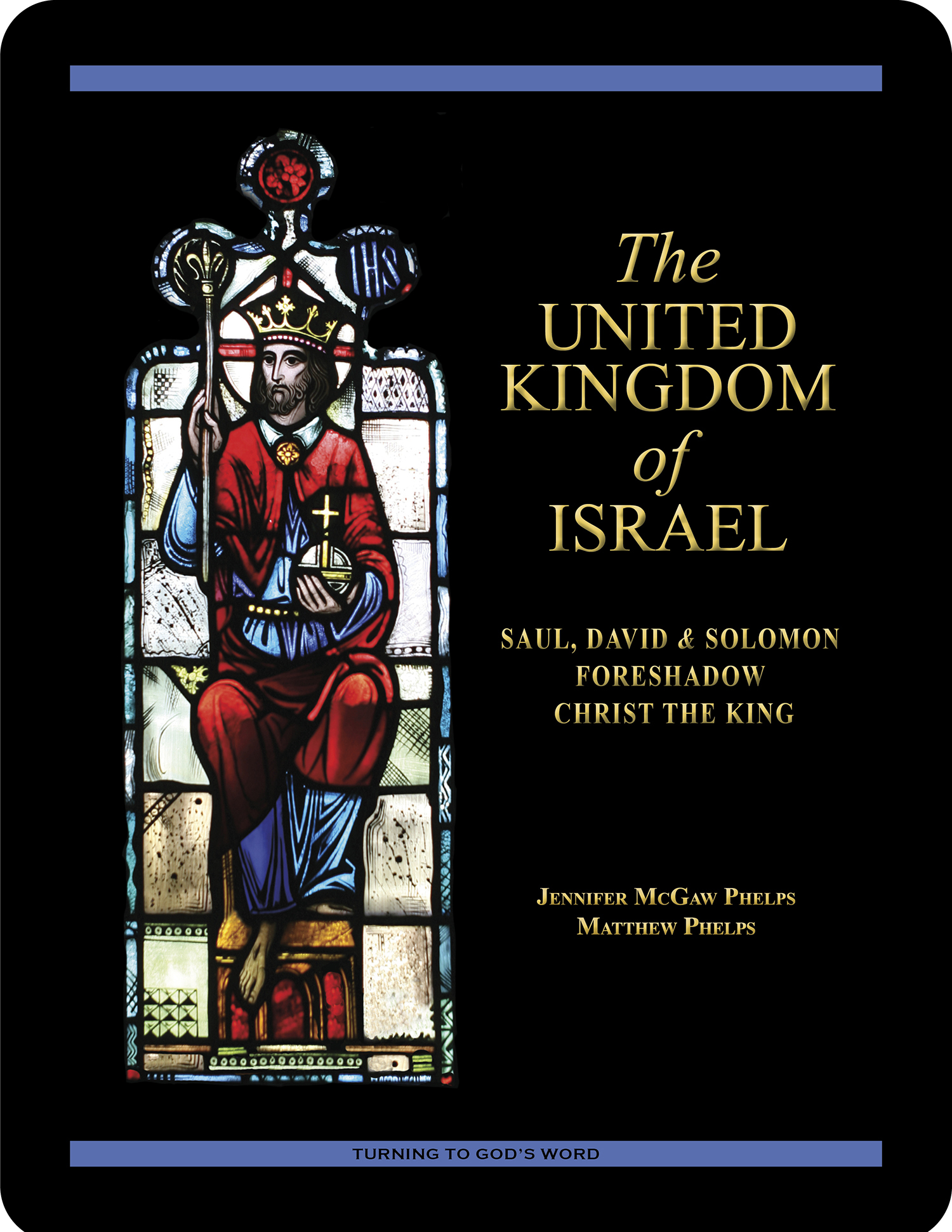 The United Kingdom of Israel: Saul, David & Solomon Foreshadow Christ the King, a 28-lesson Catholic Bible study with an imprimatur, provides an in-depth look at the First and Second Books of Samuel to learn how the lives of the monarchs Saul, David, and Solomon point ahead to the kingdom of heaven. The unified reign of King David is seen as a foreshadowing or type of the unity that is one of the four marks of the Church—the kingdom of God—established by Jesus Christ. Click here to view a sample of the first lesson.
start a Turning to God’s Word Bible study
 Thank you for your interest in our three-part study of the synoptic Gospels.
  More information about beginning a Turning to God’s Word Bible study can be found at start a Bible study, and Tami, Matthew, and I are available to answer questions or discuss concerns. Contact us to start this or one of our other studies or to have your schedule listed with other TtGW study groups on our website. —Jennifer
*There are seven deuterocanonical books in the Old Testament—Baruch, Judith, Sirach, Tobit, Wisdom, and First and Second Maccabees—and there are some deuterocanonical passages in the Books of Daniel and Esther. Protestants usually refer to these works as “apocryphal,” a word that means “outside the (Protestant) canon” because they’re excluded from most Protestant Bibles. Deuterocanonical means “second canon”; Catholics use that word to refer to any section of the Catholic Old Testament for which there are no extant, or existing, Hebrew manuscripts. All of the deuterocanonical books appear in the Septuagint, the earliest remaining versions of which date to the 1st century B.C. This Greek translation of the Old Testament was in common use by Jews at the time of Jesus. Learn more by reading How Do Catholic & Protestant Bibles Differ?
Turning to God’s Word printed Bible studies use the 2006 Revised Standard Version Second Catholic Edition (RSV2CE) translation for all Scripture references except those to the psalms, which are taken from The Abbey Psalms and Canticles, prepared by the Benedictine monks of Conception Abbey and published in 2020 by the United States Conference of Catholic Bishops (USCCB). All Scripture links for the online study pages for The Gospel According to Mark: A Look at the Son of God are to the 1966 Revised Standard Version Catholic Edition (RSVCE) translation. The New International Version (NIV) audio recordings follow the same chapter and verse numbering as the RSV Catholic translations.
The 1966 RSVCE uses archaic pronouns and verb forms such as “thee,” “thou,” and “didst” in the psalms and in direct quotations attributed to God. The 2006 RSV2CE replaces these with more accessible English. The few significant translation changes in the RSV2CE include rendering almah as “virgin” in the Book of Isaiah 7:14 and restoring the term “begotten” in the Gospel According to John 3:16.
Numbering varies for some passages in this Bible study. Turning to God’s Word studies (print and digital) follow the numbering in the Revised Standard Version Catholic translations (RSV2CE and RSVCE). Discrepancies in the New American Bible Revised Edition (NABRE) are noted in the Index of Scripture Citations in the study book.
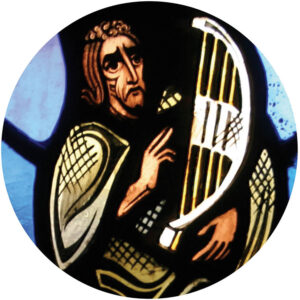 You can learn more about the psalms by viewing a sample lesson from the Turning to God’s Word Catholic Bible study Sing a New Psalm: Communicating with God Through the Prayers of the Church. The first volume covers psalms prayed at Lauds and Vespers; the second volume covers psalms prayed at Vigils, Day Prayer, and Compline. Numbering of psalms and verses may vary in different translations.