
The Gospel According to Mark:
A Look at the Son of God
Lesson 4 ‘Do You Understand This Parable?’
the Gospel According to Mark 4:1–41
Revised Standard Version Catholic Edition (RSVCE)*
New American Bible Revised Edition (NABRE)*
Catechism of the Catholic Church
ex libris (in our library)
glossary for the Gospel According to Mark
cross references in the Gospel According to Mark
next lesson: Demons Are Legion
This material coordinates with Lesson 4, “‘Do You Understand This Parable?’,” on pages 21–24 in The Gospel According to Mark: A Look at the Son of God.
Now after John was arrested, Jesus came into Galilee, preaching the gospel of God, and saying,
“The time is fulfilled, and the kingdom of God is at hand; repent, and believe in the gospel.”
—the Gospel According to Mark 1:14–15
welcome to our in-depth study of the Gospel According to Mark
We invite interested groups and individuals to check out the sample introduction and first lesson from this 17- lesson Turning to
  God’s Word Catholic Bible study based on Scripture that is the source of most of the Sunday Gospel readings for Liturgical Year B. These online study pages link to an online glossary and cross references in the biblical text. Other study aids include maps, additional commentary, and prayers based on the primary Scripture in each lesson. The Gospel According to Mark: A Look at the Son of God and the other two synoptic studies are being submitted for imprimaturs. This study will be available from our website shop about three months before the start of liturgical Year B in 2026. If you have a Bible-related question or comment, click on one of the “ask us your question” or “what do you think” buttons on any online study page.
open with prayer
It’s always wise to begin any Bible study with prayer, whether reading the Scriptures alone or meeting with others in a discussion study group. You can pray using your own words or use one of the opening prayers on our website. We especially like the following:
Lord Jesus, you promised to send your Holy Spirit to teach us all things.
As we read and study your word today,
allow it to touch our hearts and change our lives. Amen.
let’s review—the Gospel According to Mark 3:1–35
Lesson 3 Is Jesus Possessed? Jesus’ difficulties with the Jewish religious leaders continue when Jesus heals a man with a withered hand in a synagogue on the sabbath. Chapter three in the Gospel According to Mark also introduces the Herodians, who are politically opposed to Jesus and who also make brief appearances in the other two synoptic Gospels. Because of the large crowds Jesus is attracting, he resorts to teaching on a boat in the Sea of Galilee; unclean spirits continue to identify Jesus as the Son of God, although he orders them to remain silent. Jesus next goes up a nearby mountain and sends out 12 of his followers to preach and to cast out demons. Those Twelve are: Simon Peter, the brothers James and John, Andrew, Philip, Bartholomew, Matthew, Thomas, James the son of Alphaeus, Thaddaeus, Simon the Cananean, and Judas Iscariot. Jesus himself returns home, where he continues to be mobbed by crowds. His friends attempt to seize him because they think that Jesus is “beside himself”; the scribes believe that Jesus is possessed by Be-elzebul. Jesus refutes these accusations. He next states that blasphemy against the Holy Spirit is an unforgivable sin, and he announces that whoever does the will of God is his brother, sister, and mother.
parables—you could look it up in our archives
 Jesus’ disciples ask him to explain his use of parables that they fail to understand, which he does. Jesus also suggests that he deliberately uses parables to make his message unclear to the crowds. To learn more about the word parables, read Lost in Translation, a weekly online column in which Turning to God’s Word author Matthew Phelps helps readers connect with ideas expressed in the original languages of the Scriptures. New Lost in Translation entries are posted on Mondays, and past entries are archived on our website. Contact us if you’d like to receive Lost in Translation by email every week.
Christian Connection: what is your understanding of Jesus’ parables?
The word “parable” literally means things that are thrown next to one another or that are compared. Jesus’ parables use common, universal experiences to explain God and the reign of God, making the Almighty seem ordinary.
 ? How do Jesus’ comparisons throw different concepts together to offer both truth and confusion?
? Although Jesus’ parables can seem wholly accessible, how does closer examination of them cause confusion?
? Consider whether repeated exposure to Jesus’ parables in the Sunday Mass readings helps or hinders your own understanding of them.
? How does your idea about who God is affect your perception about the meaning of Jesus’ parables?
why might Jesus want to hide the meaning of his parables?
The obvious answer to this is what Jesus tells his disciples in the Gospel According to Mark 4:11–12.  And he said to them, “To you has been given the secret of the kingdom of God, but for those outside everything is in parables; so that they may indeed see but not perceive, and may indeed hear but not understand; lest they should turn again, and be forgiven.” It’s human nature to wonder why Jesus wouldn’t want people to repent and be forgiven.
At the root of his somewhat confusing statement, is the nature of the primary reason for the Incarnation. That reason is listed first in the Catechism of the Catholic Church, which teaches that there are four reasons why God took on human form. These can be found starting with paragraph 457 in the Catechism. The citation included with the paragraph is from Saint Gregory of Nyssa, an early Christian theologian who died in 394.
457 The Word became flesh for us in order to save us by reconciling us with God, who “loved us and sent his Son to be the expiation for our sins”: “the Father has sent his Son as the Savior of the world”, and “he was revealed to take away sins”:
[“]Sick, our nature demanded to be healed; fallen, to be raised up; dead, to rise again. We had lost the possession of the good; it was necessary for it to be given back to us. Closed in the darkness, it was necessary to bring us the light; captives, we awaited a Savior; prisoners, help; slaves, a liberator. Are these things minor or insignificant? Did they not move God to descend to human nature and visit it, since humanity was in so miserable and unhappy a state?[“]
are you still confused?
This is a somewhat tricky point. It may help to remember that God’s ways are mysterious, and the world has been created with divine laws that God chooses not to override. Men and women are left with the idea that in order to have our sins totally forgiven and enter into eternal life, it was necessary for an innocent human to offer himself in atonement for the sins of the world. This divine law required that God become man (in order to become both human and divine) and then that he remain innocent of all sin. For thousands of years, humanity had failed at remaining sinless. Had all men and women repented when they heard the parables of Jesus, that still would not have been enough to ensure that humanity could enter into the divine presence. Jesus, as God, was well aware of the main reason for his Incarnation, but this is not something that would occur to humanity. Even Jesus’ disciples had difficulty accepting who he was and what he came to do—and this after living with Jesus and hearing his teaching for three years.
something people overlook about two of Jesus’ parables
While the point of the parables that compare the kingdom of God to seed scattered on the ground or to a single grain of mustard seed can seem obvious (the kingdom starts small and grows very large), there’s more to it than that. Consider the size limitations imposed by scattered seed or by a single mustard seed. In both cases, the final growth is limited. Once a seed becomes a full-grown plant, that’s it. What do you think Jesus might be suggesting about the size of the kingdom of God?
two more questions to ask about this chapter
In the Gospel According to Mark 4:36, the Evangelist Mark writes that the disciples took Jesus with them in the boat “just as he was.” This leads some readers to ask: How was Jesus? If Mark thought it important enough to mention, people assume it must be a significant detail—but the Evangelist supplies no more relevant details. Another question that remains unanswered also refers to the Gospel According to Mark 4:36. What about the people in the other boats? Did they also react when Jesus calmed the storm, or did the fail to notice?
the best Catholic commentary about Scripture
To find out more about how Church teaching is supported by passages in The Gospel According to Mark: A Look at the Son of God, check out the Index of Citations in the Catechism of the Catholic Church. Links to each lesson’s primary Scripture passages (from the Revised Standard Version Catholic Edition [RSVCE*]) that are cited in relevant paragraphs in the Catechism are provided here. Not every passage in the Gospel According to Mark is referenced in a Catechism paragraph.
the Gospel According to Mark 4:4–7—paragraph 2707
the Gospel According to Mark 4:11—paragraph 546
the Gospel According to Mark 4:15–19—paragraph 2707
the Gospel According to Mark 4:33–34—paragraph 546
ways our glossary might prove helpful
In addition to providing extra information about geographical locations, our glossary also points out  persons or places mentioned in the biblical text under more than one name or more than one spelling. If you can remember a name but aren’t sure in which lesson it shows up, you can find it in the glossary, which lists every proper noun that appears in the biblical text for every lesson in The Gospel According to Mark: A Look at the Son of God. A few general terms also are included that may be unfamiliar or whose meaning may be unclear to readers.
to learn more, read more Scripture
If you’re having difficulty with a particular passage of Scripture, it can be helpful to read the relevant  cross references—but looking these up can take time. To make that easier, we’ve compiled the cross references from the Revised Standard Version Second Catholic Edition (RSV2CE)—the translation that we reprint in our study books. A link to that list can be found at the top of every online study page; the list features links to cross references in the primary biblical text in the study book The Gospel According to Mark: A Look at the Son of God.
don’t forget about our indexes & extra online material
If you’re trying to locate information about a specific Scripture passage, you can look it up in the index at the back of the study book. If you want to find a particular commentary, you can look up its title in the topics index. To learn more about another book of the Bible for which there’s a Turning to God’s Word study, visit the online study directories to read the commentaries and watch any accompanying videos. Finally, if you have a question or would like to make a comment about any of our studies, you can use one of the “ask us your question” or “what do you think” buttons to email our authors.
ex libris—Church documents & books about religious topics
Link to magisterial documents referred to in our Bible studies at ex libris—magisterial documents.  This listing includes significant recent encyclicals as well as a number of historical Church documents. Recommended books related to Scripture study can be found at ex libris—main bookshelf.
wondering how to pronounce some of these words?
The following link is to a reading from the New International Version (NIV) Bible. To listen, open the link and click on the audio icon above the printed text. Although not taken from the translations used in our study materials, the NIV reading provides an audio guide to pronunciation of words in this lesson’s primary biblical text. A close online version of the translation of the Bible used in Catholic liturgy in the United States as well as an audio guide for daily Mass readings for the current month can be found on the website of the United States Conference of Catholic Bishops (USCCB).
the Gospel According to Mark 4:1—41 (NIV)
 close with Bible-based prayer related to this lesson
Many of our Catholic study groups like to conclude their discussions with a prayer based on the scriptural focus of their lesson, and some participants include Scripture-specific prayer in their individual study. If you’re uncomfortable composing your own Bible-based prayers, you can follow our four easy steps. If you prefer, you can use the following prayer based on this lesson’s text from the Gospel According to Mark.
O God, your Son Jesus went about healing
a large number of people—but not everyone.
It was not Jesus’ primary purpose to grant all of humanity
physical healing, but it was his mission to die for our sins
in order that we might enter eternal life.
Give us the faith to cling to Jesus in complete trust,
even when we fail to understand everything about him. Amen.
Lesson 5 Demons Are Legion—the Gospel According to Mark 5:1–43
Lesson 3 Is Jesus Possessed?—the Gospel According to Mark 3:1—35
you also may like our two-part study of the prophets
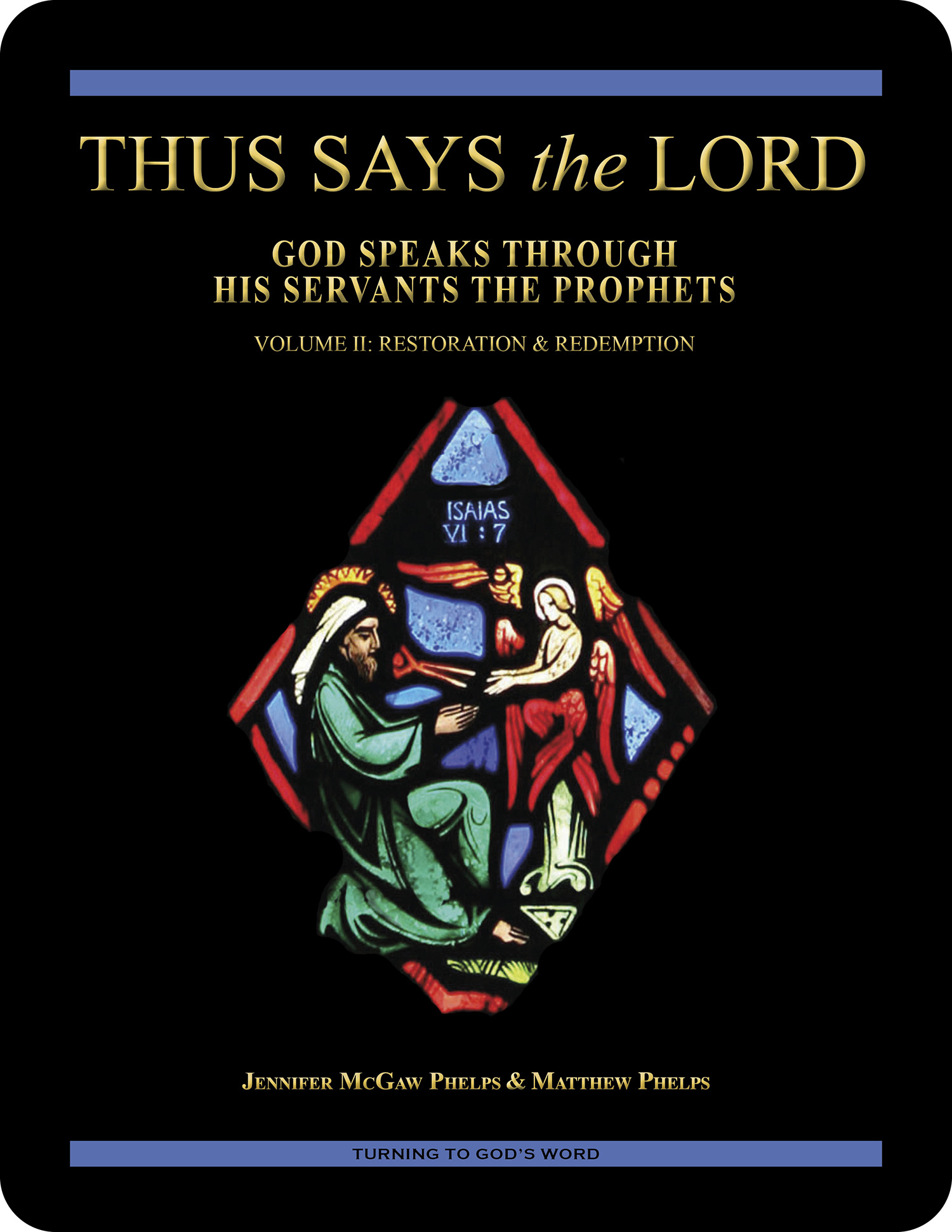
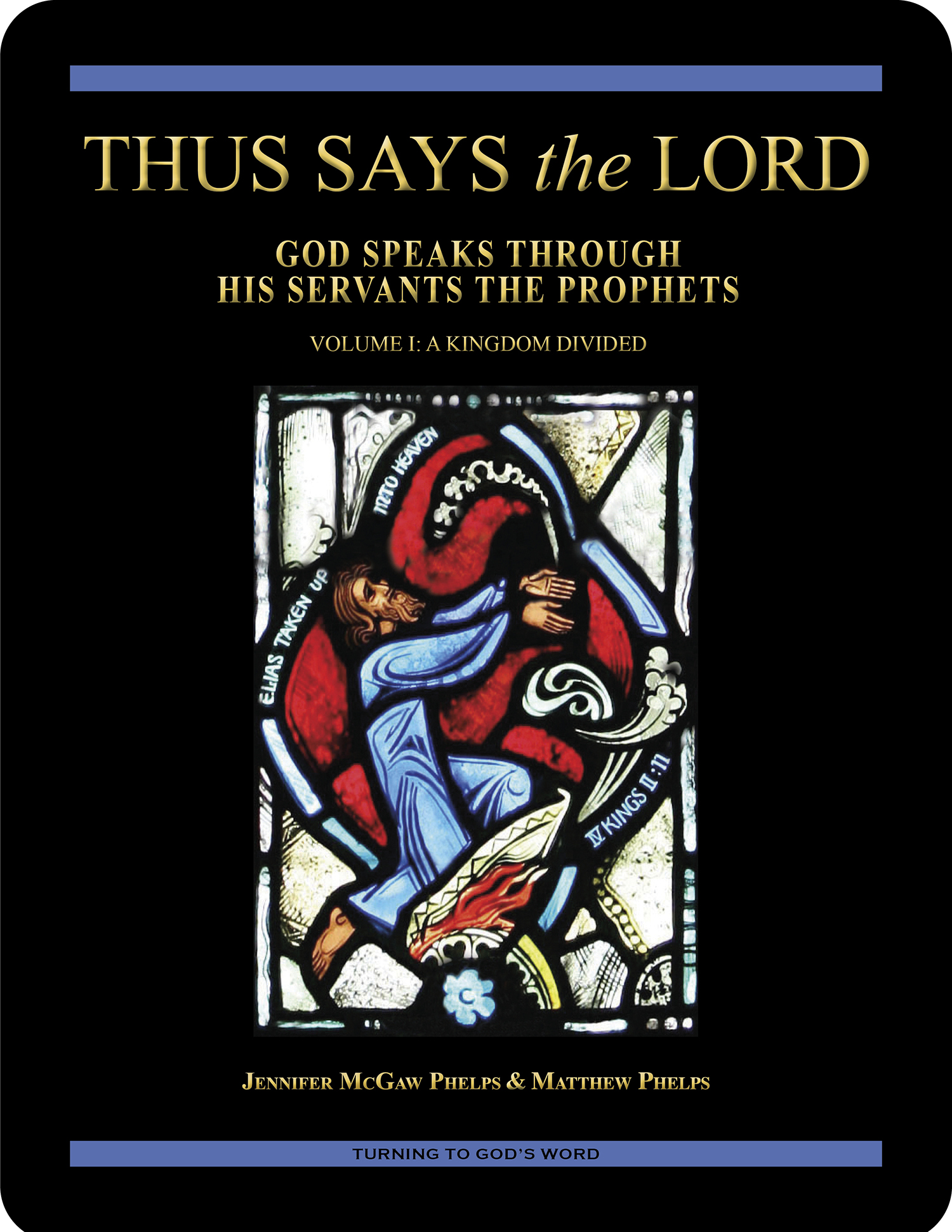 Thus Says the LORD: God Speaks Through His Servants the Prophets—Volume I: A Kingdom Divided examines the prophets in historical context using the First and Second Books of the Kings and other Old Testament passages written before the Babylonian Exile. Volume II: Restoration & Redemption looks at the post-exilic prophets. This 51-lesson Catholic Bible study builds on The United Kingdom of Israel: Saul, David & Solomon Foreshadow Christ the King. Click on these links to view a lesson from Volume I and another from Volume II.
start a Turning to God’s Word Bible study
 Thank you for your interest in our three-part study of the synoptic Gospels.
  More information about beginning a Turning to God’s Word Bible study can be found at start a Bible study, and Tami, Matthew, and I are available to answer questions or discuss concerns. Contact us to start this or one of our other studies or to have your schedule listed with other TtGW study groups on our website. —Jennifer
*There are seven deuterocanonical books in the Old Testament—Baruch, Judith, Sirach, Tobit, Wisdom, and First and Second Maccabees—and there are some deuterocanonical passages in the Books of Daniel and Esther. Protestants usually refer to these works as “apocryphal,” a word that means “outside the (Protestant) canon” because they’re excluded from most Protestant Bibles. Deuterocanonical means “second canon”; Catholics use that word to refer to any section of the Catholic Old Testament for which there are no extant, or existing, Hebrew manuscripts. All of the deuterocanonical books appear in the Septuagint, the earliest remaining versions of which date to the 1st century B.C. This Greek translation of the Old Testament was in common use by Jews at the time of Jesus. Learn more by reading How Do Catholic & Protestant Bibles Differ?
Turning to God’s Word printed Bible studies use the 2006 Revised Standard Version Second Catholic Edition (RSV2CE) translation for all Scripture references except those to the psalms, which are taken from The Abbey Psalms and Canticles, prepared by the Benedictine monks of Conception Abbey and published in 2020 by the United States Conference of Catholic Bishops (USCCB). All Scripture links for the online study pages for The Gospel According to Mark: A Look at the Son of God are to the 1966 Revised Standard Version Catholic Edition (RSVCE) translation. The New International Version (NIV) audio recordings follow the same chapter and verse numbering as the RSV Catholic translations.
The 1966 RSVCE uses archaic pronouns and verb forms such as “thee,” “thou,” and “didst” in the psalms and in direct quotations attributed to God. The 2006 RSV2CE replaces these with more accessible English. The few significant translation changes in the RSV2CE include rendering almah as “virgin” in the Book of Isaiah 7:14 and restoring the term “begotten” in the Gospel According to John 3:16.
Numbering varies for some passages in this Bible study. Turning to God’s Word studies (print and digital) follow the numbering in the Revised Standard Version Catholic translations (RSV2CE and RSVCE). Discrepancies in the New American Bible Revised Edition (NABRE) are noted in the Index of Scripture Citations in the study book.
 You can learn more about the psalms by viewing a sample lesson from the Turning to God’s Word Catholic Bible study Sing a New Psalm: Communicating with God Through the Prayers of the Church. The first volume covers psalms prayed at Lauds and Vespers; the second volume covers psalms prayed at Vigils, Day Prayer, and Compline. Numbering of psalms and verses may vary in different translations.