The Gospel According to Mark:
A Look at the Son of God
Lesson 6 The Death of John the Baptist
the Gospel According to Mark 6:1–56
Revised Standard Version Catholic Edition (RSVCE)*
New American Bible Revised Edition (NABRE)*
Catechism of the Catholic Church
ex libris (in our library)
glossary for the Gospel According to Mark
cross references in the Gospel According to Mark
next lesson: ‘What Defiles Comes from Within’
This material coordinates with Lesson 6, “The Death of John the Baptist,” on pages 29–33 in The Gospel According to Mark: A Look at the Son of God.
Now after John was arrested, Jesus came into Galilee, preaching the gospel of God, and saying,
“The time is fulfilled, and the kingdom of God is at hand; repent, and believe in the gospel.”
—the Gospel According to Mark 1:14–15
welcome to our in-depth study of the Gospel According to Mark
We invite interested groups and individuals to check out the sample introduction and first lesson from this 17- lesson Turning to
  God’s Word Catholic Bible study based on Scripture that is the source of most of the Sunday Gospel readings for Liturgical Year B. These online study pages link to an online glossary and cross references in the biblical text. Other study aids include maps, additional commentary, and prayers based on the primary Scripture in each lesson. The Gospel According to Mark: A Look at the Son of God and the other two synoptic studies are being submitted for imprimaturs. This study will be available from our website shop about three months before the start of liturgical Year B in 2026. If you have a Bible-related question or comment, click on one of the “ask us your question” or “what do you think” buttons on any online study page.
open with prayer
It’s always wise to begin any Bible study with prayer, whether reading the Scriptures alone or meeting with others in a discussion study group. You can pray using your own words or use one of the opening prayers on our website. We especially like the following:
Lord Jesus, you promised to send your Holy Spirit to teach us all things.
As we read and study your word today,
allow it to touch our hearts and change our lives. Amen.
let’s review—the Gospel According to Mark 5:1–43
Lesson 5 Demons Are Legion opens with the story of Jesus healing the Gerasene demoniac by sending a large contingent of demons (who tell Jesus that they are many) into a herd of swine grazing in the area. The swine, that number about 2,000, rush into the Sea of Galilee and are drowned. Before the demons take over the swine, they acknowledge Jesus as the Son of the the Most High God. This event frightens the herdsmen and the inhabitants of the region, who beg Jesus to leave their neighborhood. The former demoniac pleads to stay with Jesus, but Jesus sends him home to tell his friends about God’s mercy. The man goes about the Decapolis doing as Jesus has asked. Jesus crosses the Sea of Galilee and returns to the area of Caperna-um. A leader of the local synagogue approaches asking Jesus to cure his daughter, who is at the point of death. Before Jesus can do that, a woman with a severe hermorrhage touches Jesus’ cloak and is healed. When it turns out that Jesus is aware of the healing, the woman confesses. Jesus announces that her faith has healed her. Although Jesus receives word that the synagogue leader’s daughter has died, he continues on his way to the man’s house. Once there, Jesus announced that the child is not dead but sleeping. After raising the child, Jesus cautions the onlookers not to talk about what has happened.
baptism—you could look it up in our archives
In the synoptic Gospels, John the Baptist primarily is known for initiating a baptism of repentance and  for baptizing Jesus. (In the Fourth Gospel, the emphasis on John’s mission is as a witness to Jesus as the Son of God.) To learn about the difference between sacramental Baptism and John’s baptisms for repentance, read Lost in Translation, a weekly online column in which Turning to God’s Word author Matthew Phelps helps readers connect with ideas expressed in the original languages of the Scriptures. New Lost in Translation entries are posted on Mondays, and past entries are archived on our website. Contact us if you’d like to receive Lost in Translation by email every week.
Christian Connection: what does the sabbath mean to you?
Although Jesus is from Nazareth, his appearance at the synagogue there on a sabbath causes an uproar. Jesus is further met by disbelief, to the extent that he is unable to cure many people in the area.
Humanity’s need for a sabbath day of rest is firmly established in the first account of Creation in the first chapter of the book of Genesis. While the sabbath originally was set on the sixth day (Saturday), almost immediately after the Resurrection of Jesus, Christians began celebrating the new Creation that began with the Resurrection instead of the first Creation described in the book of Genesis.
 ? Explain how Sunday qualifies as the “first and eighth of days” as it is called in the Easter liturgy of the Church.
? What precepts of the Church involve how Catholics are required to behave on Sundays? (If necessary, see paragraphs 2041 through 2043 in the Catechism of the Catholic Church.)
? How do your actions on Sundays, aside from attending Mass and receiving the sacrament of Eucharist, demonstrate an understanding of the sabbath as a day of rest?
? What might you add to your regular Sunday practices to reinforce that you take your faith seriously?
feeding the 5,000
The account of Jesus multiplying five loaves and two fishes to feed 5,000 men appears in the Gospel According to Mark 6:30–44, but all four Evangelists consider it significant enough to record. Parallel synoptic accounts appear in the Gospel According to Matthew 14:13–21 and the Gospel According to Luke 9:10–17. The Gospel According to John 6:1–14 uses this event as a lead-in to the Bread of Life discourse. The Fourth Gospel characterizes the occasion as a test of the disciples’ trust in God. In that account, the sign comes about as a result of Jesus giving thanks over what God already has provided—five loaves and two fishes.
stay tuned for an account of Jesus feeding a different crowd
In the Gospel According to Mark 8:1–9, the Evangelist will record another incident in which Jesus miraculously feeds a crowd of 4,000 people. Although many readers assume that Mark has recorded the same incident twice, there are enough differences in the text to suggest that these are indeed two different events.
miracles & signs
The sixth chapter of the Gospel According to Mark includes an account of Jesus miraculously feeding a crowd of 5,000. All three synoptic Gospels describe Jesus performing miracles, but the Gospel According to John instead refers to these events as “signs,” which by definition point to something else. The miracles in the Gospel According to Mark are similar to the “signs” in the Fourth Gospel, however; they strengthen the faith of those who witness Jesus’ remedial actions.
more about Salome
Although the daughter of Herodi-as is unnamed in the Bible, the historian Josephus identifies her as  Salome in his Jewish Antiquities. Josephus also writes that Salome married her uncle Philip the Tetrarch, a son of Herod the Great. Upon his death, she married one of her cousins, Aristobulus of Chalcis. A different Salome is mentioned in the fifteenth and sixteenth chapters of the Gospel According to Mark as a follower of Jesus. There is historical uncertainty about her relationship to other followers of Jesus. For more information, see the online glossary.
the best Catholic commentary about Scripture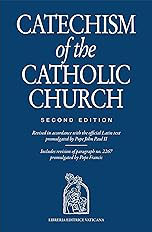
To find out more about how Church teaching is supported by passages in The Gospel According to Mark: A Look at the Son of God, check out the Index of Citations in the Catechism of the Catholic Church. Links to each lesson’s primary Scripture passages (from the Revised Standard Version Catholic Edition [RSVCE*]) that are cited in relevant paragraphs in the Catechism are provided here. Not every passage in the Gospel According to Mark is referenced in a Catechism paragraph.
the Gospel According to Mark 6:3—paragraph 500
the Gospel According to Mark 6:5—paragraph 699
the Gospel According to Mark 6:6—paragraph 2610
the Gospel According to Mark 6:7—paragraphs 765 and 1673
the Gospel According to Mark 6:12–13—paragraph 1506
the Gospel According to Mark 6:13—paragraphs 1511 and 1673
the Gospel According to Mark 6:17–29—paragraph 523
the Gospel According to Mark 6:38—paragraph 472
the Gospel According to Mark 6:46—paragraph 2602
the Gospel According to Mark 6:56—paragraph 1504
ways our glossary might prove helpful
In addition to providing extra information about geographical locations, our glossary also points out persons or places mentioned in the biblical text under more than one name or more than one spelling. If you can remember a name but aren’t sure in which lesson it shows up, you can find it in the glossary, which lists every proper noun that appears in the biblical text for every lesson in The Gospel According to Mark: A Look at the Son of God. A few general terms also are included that may be unfamiliar or whose meaning may be unclear to readers.
to learn more, read more Scripture
If you’re having difficulty with a particular passage of Scripture, it can be helpful to read the relevant  cross references—but looking these up can take time. To make that easier, we’ve compiled the cross references from the Revised Standard Version Second Catholic Edition (RSV2CE)—the translation that we reprint in our study books. A link to that list can be found at the top of every online study page; the list features links to cross references in the primary biblical text in the study book The Gospel According to Mark: A Look at the Son of God.
don’t forget about our indexes & extra online material
If you’re trying to locate information about a specific Scripture passage, you can look it up in the index at the back of the study book. If you want to find a particular commentary, you can look up its title in the topics index. To learn more about another book of the Bible for which there’s a Turning to God’s Word study, visit the online study directories to read the commentaries and watch any accompanying videos. Finally, if you have a question or would like to make a comment about any of our studies, you can use one of the “ask us your question” or “what do you think” buttons to email our authors.
ex libris—Church documents & books about religious topics
Link to magisterial documents referred to in our Bible studies at ex libris—magisterial documents.  This listing includes significant recent encyclicals as well as a number of historical Church documents. Recommended books related to Scripture study can be found at ex libris—main bookshelf.
wondering how to pronounce some of these words?
The following link is to a reading from the New International Version (NIV) Bible. To listen, open the link and click on the audio icon above the printed text. Although not taken from the translations used in our study materials, the NIV reading provides an audio guide to pronunciation of words in this lesson’s primary biblical text. A close online version of the translation of the Bible used in Catholic liturgy in the United States as well as an audio guide for daily Mass readings for the current month can be found on the website of the United States Conference of Catholic Bishops (USCCB).
the Gospel According to Mark 6:1—56 (NIV)
 close with Bible-based prayer related to this lesson
Many of our Catholic study groups like to conclude their discussions with a prayer based on the scriptural focus of their lesson, and some participants include Scripture-specific prayer in their individual study. If you’re uncomfortable composing your own Bible-based prayers, you can follow our four easy steps. If you prefer, you can use the following prayer based on this lesson’s text from the Gospel According to Mark.
O God, you allowed the disciples of your son Jesus
to witness the miracle of him walking on water.
Grant us the grace to allow Jesus to take charge of our lives.
Dispel our fears and help us to trust that when we do so
you will bring us to a place of serenity and peace. Amen.
Lesson 7 ‘What Defiles Comes from Within‘—the Gospel According to Mark 7:1—37
Lesson 5 Demons Are Legion—the Gospel According to Mark 5:1–43
you also may like our study of the Gospel According to John
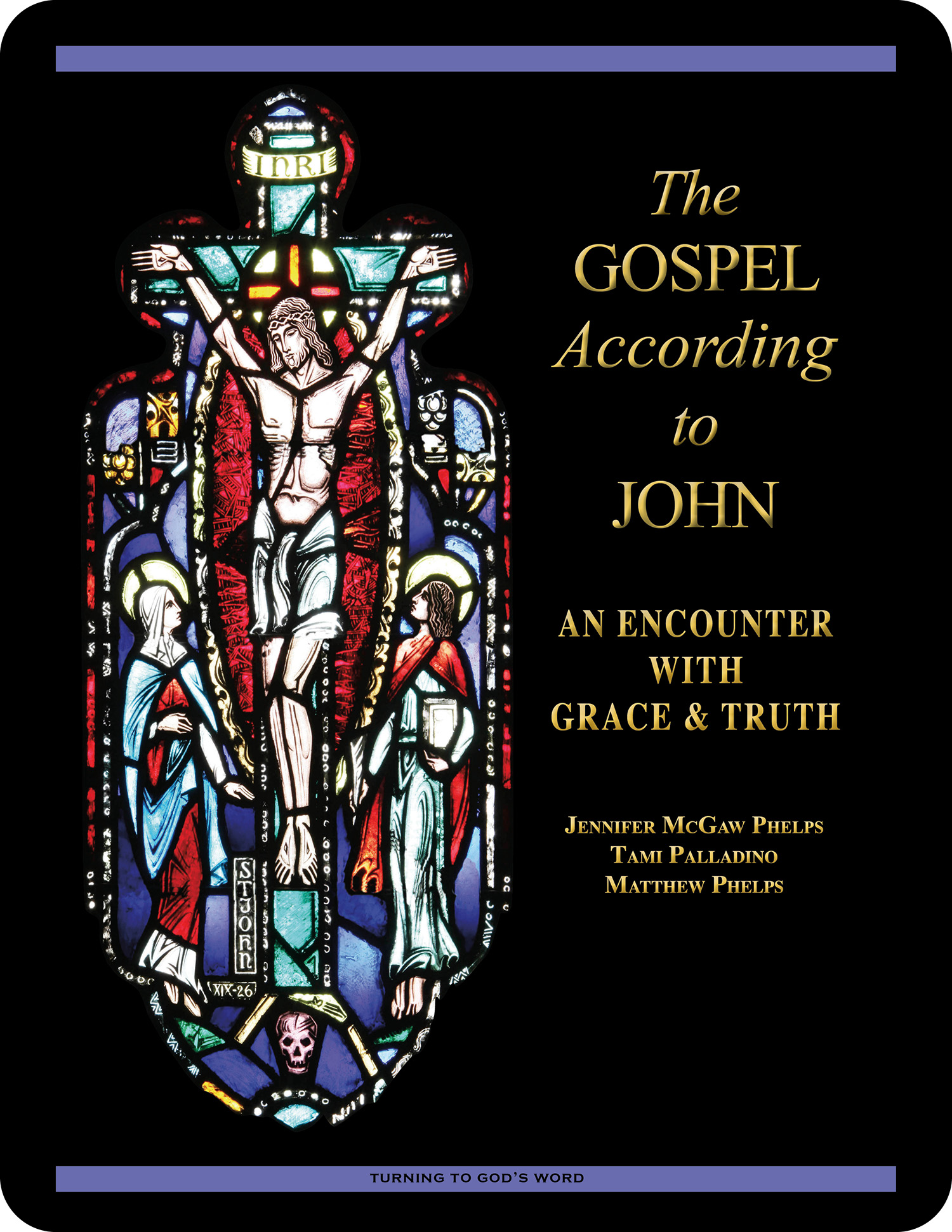 The Gospel According to John: An Encounter with Grace & Truth, a 25-lesson Catholic Bible study with an imprimatur, examines the Fourth Gospel’s view of Jesus Christ as the Son of God, with special emphasis on the institution of the sacraments of the Church as the means by which Christians are purified and made holy. This recently revised study includes maps and additional commentary, and takes a closer look at the way in which Jesus relates to individual men and women. Click here to view a sample of the first lesson.
start a Turning to God’s Word Bible study
 Thank you for your interest in our three-part study of the synoptic Gospels.
  More information about beginning a Turning to God’s Word Bible study can be found at start a Bible study, and Tami, Matthew, and I are available to answer questions or discuss concerns. Contact us to start this or one of our other studies or to have your schedule listed with other TtGW study groups on our website. —Jennifer
*There are seven deuterocanonical books in the Old Testament—Baruch, Judith, Sirach, Tobit, Wisdom, and First and Second Maccabees—and there are some deuterocanonical passages in the Books of Daniel and Esther. Protestants usually refer to these works as “apocryphal,” a word that means “outside the (Protestant) canon” because they’re excluded from most Protestant Bibles. Deuterocanonical means “second canon”; Catholics use that word to refer to any section of the Catholic Old Testament for which there are no extant, or existing, Hebrew manuscripts. All of the deuterocanonical books appear in the Septuagint, the earliest remaining versions of which date to the 1st century B.C. This Greek translation of the Old Testament was in common use by Jews at the time of Jesus. Learn more by reading How Do Catholic & Protestant Bibles Differ?
Turning to God’s Word printed Bible studies use the 2006 Revised Standard Version Second Catholic Edition (RSV2CE) translation for all Scripture references except those to the psalms, which are taken from The Abbey Psalms and Canticles, prepared by the Benedictine monks of Conception Abbey and published in 2020 by the United States Conference of Catholic Bishops (USCCB). All Scripture links for the online study pages for The Gospel According to Mark: A Look at the Son of God are to the 1966 Revised Standard Version Catholic Edition (RSVCE) translation. The New International Version (NIV) audio recordings follow the same chapter and verse numbering as the RSV Catholic translations.
The 1966 RSVCE uses archaic pronouns and verb forms such as “thee,” “thou,” and “didst” in the psalms and in direct quotations attributed to God. The 2006 RSV2CE replaces these with more accessible English. The few significant translation changes in the RSV2CE include rendering almah as “virgin” in the Book of Isaiah 7:14 and restoring the term “begotten” in the Gospel According to John 3:16.
Numbering varies for some passages in this Bible study. Turning to God’s Word studies (print and digital) follow the numbering in the Revised Standard Version Catholic translations (RSV2CE and RSVCE). Discrepancies in the New American Bible Revised Edition (NABRE) are noted in the Index of Scripture Citations in the study book.
 You can learn more about the psalms by viewing a sample lesson from the Turning to God’s Word Catholic Bible study Sing a New Psalm: Communicating with God Through the Prayers of the Church. The first volume covers psalms prayed at Lauds and Vespers; the second volume covers psalms prayed at Vigils, Day Prayer, and Compline. Numbering of psalms and verses may vary in different translations.