The Gospel According to Mark:
A Look at the Son of God
Lesson 9 The Transfiguration
the Gospel According to Mark 9:1–50
Revised Standard Version Catholic Edition (RSVCE)*
New American Bible Revised Edition (NABRE)*
Catechism of the Catholic Church
ex libris (in our library)
glossary for the Gospel According to Mark
cross references in the Gospel According to Mark
next lesson: James & John Seek Glory
This material coordinates with Lesson 9, “The Transfiguration” on pages 42–46 in The Gospel According to Mark: A Look at the Son of God.
Now after John was arrested, Jesus came into Galilee, preaching the gospel of God, and saying,
“The time is fulfilled, and the kingdom of God is at hand; repent, and believe in the gospel.”
—the Gospel According to Mark 1:14–15
welcome to our in-depth study of the Gospel According to Mark
We invite interested groups and individuals to check out the sample introduction and first lesson from this 17- lesson Turning to
  God’s Word Catholic Bible study based on Scripture that is the source of most of the Sunday Gospel readings for Liturgical Year B. These online study pages link to an online glossary and cross references in the biblical text. Other study aids include maps, additional commentary, and prayers based on the primary Scripture in each lesson. The Gospel According to Mark: A Look at the Son of God and the other two synoptic studies are being submitted for imprimaturs. This study will be available from our website shop about three months before the start of liturgical Year B in 2026. If you have a Bible-related question or comment, click on one of the “ask us your question” or “what do you think” buttons on any online study page.
open with prayer
It’s always wise to begin any Bible study with prayer, whether reading the Scriptures alone or meeting with others in a discussion study group. You can pray using your own words or use one of the opening prayers on our website. We especially like the following:
Lord Jesus, you promised to send your Holy Spirit to teach us all things.
As we read and study your word today,
allow it to touch our hearts and change our lives. Amen.
let’s review—the Gospel According to Mark 8:1–38
Lesson 8 ‘But Who Do You Say That I Am?‘ describes a second incidence of Jesus miraculously feeding a large crowd. Although this seems similar to another instance in the sixth chapter of the Gospel According to Mark, there are enough differences that scholars don’t think the Evangelist Mark was simply writing twice about the same event. In the eighth chapter Jesus feeds 4,000 people, while in the sixth chapter he feeds 5,000 men. In the eighth chapter the crowd has been with Jesus three days, in the sixth chapter only one. The number of loaves and fish that Jesus multiplies also varies. Other things recorded in the eighth chapter include Jesus the Pharisees that no sign will be given them. He only references the “sign of Jonah” in the Gospel According to Matthew 12:39 and 16:4. Jesus uses the examples of his miraculous feedings to warn his disciples to beware of the leaven of the Pharisees and the leaven of Herod. After giving a blind beggar sight, Jesus asks his disciples who people say that he is. Peter is recognized for his reply that Jesus is the Christ (the Messiah), but a short time later Jesus chastises him, comparing Peter to Satan. Jesus then teaches his disciples and the multitude following him that it is necessary that they deny themselves if they wish to come after him.
Transfiguration—you could look it up in our archives
 Do you know how to distinguish between Jesus’ Transfiguration and a similar word, “transubstantiation”? Both come from the Latin and feature the prefix trans-. You can learn the difference between Transfiguration and “transubstantiation” by reading Lost in Translation, a weekly online column in which Turning to God’s Word author Matthew Phelps helps readers connect with ideas expressed in the original languages of the Scriptures. New Lost in Translation entries are posted on Mondays, and past entries are archived on our website. Contact us if you’d like to receive Lost in Translation by email every week.
where did the Transfiguration occur?
Although all of the synoptic writers include descriptions of Jesus’ Transfiguration, none of them specify where the Transfiguration occurred. Tradition holds that it happened on Mount Tabor, although another mountain, Mount Hermon, also is a possible location. Mount Hermon is nearer to where Jesus and his disciples were believed to be at the time, and it also is considerably higher than Mount Tabor. Mount Tabor, a prominent hill in Lower Galilee, is relatively high compared to the nearby landscape, and it has the advantage of being considered the traditional site of the Transfiguration since about the fourth century. In addition to the account of the Transfiguration recorded in the Gospel According to Mark 9:2–8, the event also is recorded in the seventeenth chapter of the Gospel According to Matthew and in the ninth chapter of the Gospel According to Luke. The Evangelist John doesn’t mention the Transfiguration.
not the only geographical problem with Scripture
Academic controversy also surrounds the location of the mountain where Moses encountered the burning bush and received the Ten Commandments. Although the traditional site 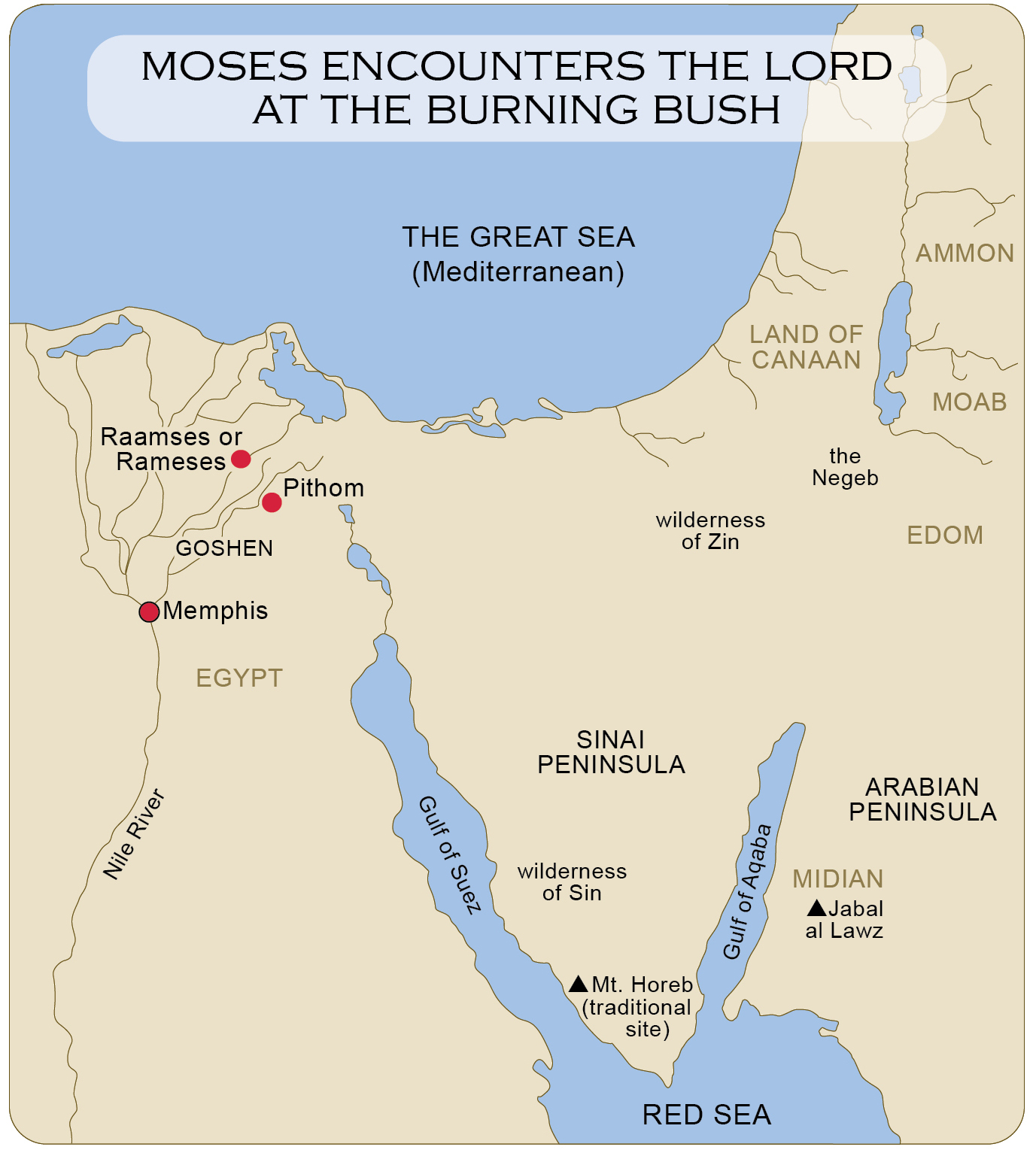 is thought to be Mount Horeb (also called Mount Sinai), some scholars believe that Jahal al Lawz, a mountain located in northwestern Saudi Arabia along the eastern shore of the Gulf of Aqaba, is a more likely site. The book of Exodus 2:15 records that after Moses fled from Egypt, he settled in the land of Midian. The ancient Midianites inhabited the Arabian Peninsula east of the Gulf of Aqaba. The traditional site thought to be the “mountain of God” is Mount Horeb, located across the Gulf of Aqaba from Midian (Mount Horeb also is known as Mount Sinai). It’s debatable whether Moses would have crossed the Gulf of Aqaba with a flock of sheep before encountering God at the burning bush on the Sinai Peninsula. The obscure Jabal al Lawz—for centuries called the “mountain of God” by local Bedoins—also is proposed as a possible site, but government forces in the region discourage archeologists, biblical scholars, and Christian pilgrims from visiting Jabal al Lawa. The precise location of Moses’ encounters with God remains unknown. The map (right) shows both mountains and appears on page 19 in the Turning to God’s Word Bible study, You Shall Have No Other Gods: The Book of Exodus.
an odd omission
Although the disciple John is identified as one of the witnesses to Jesus’ Transfiguration, the Gospel According to John, which is attributed to him, doesn’t include a description of the event.
Christian Connection: how to make your prayers count
In the Gospel According to Mark 9:17–29 records an account of Jesus healing a young man possessed of a deaf and mute spirit. Jesus’ disciples ask him privately why their efforts to cast out the evil spirit failed. In the Gospel According to Mark 9:29 Jesus tells them: “This kind cannot be driven out by anything but prayer and fasting.”
 ? What does Jesus seem to be suggesting about his disciples’ efforts to drive out the deaf and mute spirit?
? What do you think that the disciples were doing wrong or failing to do in their efforts to help the young man?
? What does Jesus seem to be suggesting about the most effective way for present-day Christians to approach prayer?
? What steps can you take to ensure that you are effectively communicating with God when you pray?
? In addition to increasing their prayer efforts, what two things does the Church encourage Christians to do during Lent in order to become more Christlike and draw closer to God? If necessary, refer to the Gospel According to Matthew 6:1-18.
what does this passage really mean?
In the Gospel According to Mark 9:43–48, Jesus instructs his followers to cut off a hand or a foot, or to pluck out an eye, to avoid committing sin.
? Consider what effect doing this might have.
? Do you think someone set on committing sin is likely to be deterred by losing a hand, foot, or eye?
? Do you think that Jesus meant what he said literally?
? Why or why not?
the best Catholic commentary about Scripture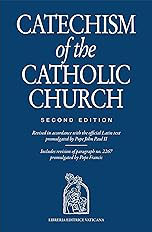
To find out more about how Church teaching is supported by passages in The Gospel According to Mark: A Look at the Son of God, check out the Index of Citations in the Catechism of the Catholic Church. Links to each lesson’s primary Scripture passages (from the Revised Standard Version Catholic Edition [RSVCE*]) that are cited in relevant paragraphs in the Catechism are provided here. Not every passage in the Gospel According to Mark is referenced in a Catechism paragraph.
the Gospel According to Mark 9:2—paragraph 552
the Gospel According to Mark 9:7—paragraphs 151 and 459
the Gospel According to Mark 9:9–31—paragraph 649
the Gospel According to Mark 9:23—paragraphs 1504 and 2610
the Gospel According to Mark 9:24—paragraph 162
the Gospel According to Mark 9:31—paragraph 474
the Gospel According to Mark 9:31–32—paragraph 557
the Gospel According to Mark 9:37—paragraph 1825
the Gospel According to Mark 9:43–49—paragraph 1034
ways our glossary might prove helpful
In addition to providing extra information about geographical locations, our glossary also points out  persons or places mentioned in the biblical text under more than one name or more than one spelling. If you can remember a name but aren’t sure in which lesson it shows up, you can find it in the glossary, which lists every proper noun that appears in the biblical text for every lesson in The Gospel According to Mark: A Look at the Son of God. A few general terms also are included that may be unfamiliar or whose meaning may be unclear to readers.
to learn more, read more Scripture
If you’re having difficulty with a particular passage of Scripture, it can be helpful to read the relevant  cross references—but looking these up can take time. To make that easier, we’ve compiled the cross references from the Revised Standard Version Second Catholic Edition (RSV2CE)—the translation that we reprint in our study books. A link to that list can be found at the top of every online study page; the list features links to cross references in the primary biblical text in the study book The Gospel According to Mark: A Look at the Son of God.
don’t forget about our indexes & extra online material
If you’re trying to locate information about a specific Scripture passage, you can look it up in the index at the back of the study book. If you want to find a particular commentary, you can look up its title in the topics index. To learn more about another book of the Bible for which there’s a Turning to God’s Word study, visit the online study directories to read the commentaries and watch any accompanying videos. Finally, if you have a question or would like to make a comment about any of our studies, you can use one of the “ask us your question” or “what do you think” buttons to email our authors.
ex libris—Church documents & books about religious topics
Link to magisterial documents referred to in our Bible studies at ex libris—magisterial documents.  This listing includes significant recent encyclicals as well as a number of historical Church documents. Recommended books related to Scripture study can be found at ex libris—main bookshelf.
wondering how to pronounce some of these words?
The following link is to a reading from the New International Version (NIV) Bible. To listen, open the link and click on the audio icon above the printed text. Although not taken from the translations used in our study materials, the NIV reading provides an audio guide to pronunciation of words in this lesson’s primary biblical text. A close online version of the translation of the Bible used in Catholic liturgy in the United States as well as an audio guide for daily Mass readings for the current month can be found on the website of the United States Conference of Catholic Bishops (USCCB).
the Gospel According to Mark 9:1—50 (NIV)
 close with Bible-based prayer related to this lesson
Many of our Catholic study groups like to conclude their discussions with a prayer based on the scriptural focus of their lesson, and some participants include Scripture-specific prayer in their individual study. If you’re uncomfortable composing your own Bible-based prayers, you can follow our four easy steps. If you prefer, you can use the following prayer based on this lesson’s text from the Gospel According to Mark.
Lord God, you sent your Son Jesus to show us
what you desire from each of us.
Teach us to honor the law and the prophets—
whose primary representatives in the Old Testament
are Moses and Elijah—
with the same respect that Jesus shows
to them at his Transfiguration.
Draw closer to us as we attempt to draw closer to you. Amen.
Lesson 10 James & John Seek Glory—the Gospel According to Mark 10:1—52
Lesson 8 ‘But Who Do You Say That I Am?’—the Gospel According to Mark 8:1–38
you also may like our free year-long study of Scripture & the Rosary (digital only)
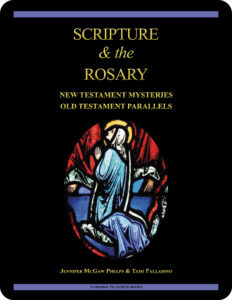 Scripture & the Rosary: New Testament Mysteries, Old Testament Parallels, a 26-lesson Catholic Bible study with an imprimatur, looks at the biblical foundations of the Rosary. The study includes lessons on Pope St. John Paul II’s Rosarium Virginis Mariae (Rosary of the Virgin Mary), the Apostles’ Creed, and the Luminous Mysteries as well as the original 15 Mysteries of the Rosary. Color photographs of stained glass windows depict key scenes in the lives of Jesus and Mary. In lieu of a sample, check out our free digital lessons.
start a Turning to God’s Word Bible study
 Thank you for your interest in our three-part study of the synoptic Gospels.
  More information about beginning a Turning to God’s Word Bible study can be found at start a Bible study, and Tami, Matthew, and I are available to answer questions or discuss concerns. Contact us to start this or one of our other studies or to have your schedule listed with other TtGW study groups on our website. —Jennifer
*There are seven deuterocanonical books in the Old Testament—Baruch, Judith, Sirach, Tobit, Wisdom, and First and Second Maccabees—and there are some deuterocanonical passages in the Books of Daniel and Esther. Protestants usually refer to these works as “apocryphal,” a word that means “outside the (Protestant) canon” because they’re excluded from most Protestant Bibles. Deuterocanonical means “second canon”; Catholics use that word to refer to any section of the Catholic Old Testament for which there are no extant, or existing, Hebrew manuscripts. All of the deuterocanonical books appear in the Septuagint, the earliest remaining versions of which date to the 1st century B.C. This Greek translation of the Old Testament was in common use by Jews at the time of Jesus. Learn more by reading How Do Catholic & Protestant Bibles Differ?
Turning to God’s Word printed Bible studies use the 2006 Revised Standard Version Second Catholic Edition (RSV2CE) translation for all Scripture references except those to the psalms, which are taken from The Abbey Psalms and Canticles, prepared by the Benedictine monks of Conception Abbey and published in 2020 by the United States Conference of Catholic Bishops (USCCB). All Scripture links for the online study pages for The Gospel According to Mark: A Look at the Son of God are to the 1966 Revised Standard Version Catholic Edition (RSVCE) translation. The New International Version (NIV) audio recordings follow the same chapter and verse numbering as the RSV Catholic translations.
The 1966 RSVCE uses archaic pronouns and verb forms such as “thee,” “thou,” and “didst” in the psalms and in direct quotations attributed to God. The 2006 RSV2CE replaces these with more accessible English. The few significant translation changes in the RSV2CE include rendering almah as “virgin” in the Book of Isaiah 7:14 and restoring the term “begotten” in the Gospel According to John 3:16.
Numbering varies for some passages in this Bible study. Turning to God’s Word studies (print and digital) follow the numbering in the Revised Standard Version Catholic translations (RSV2CE and RSVCE). Discrepancies in the New American Bible Revised Edition (NABRE) are noted in the Index of Scripture Citations in the study book.
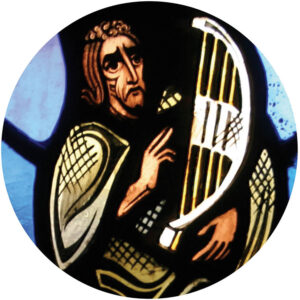 You can learn more about the psalms by viewing a sample lesson from the Turning to God’s Word Catholic Bible study Sing a New Psalm: Communicating with God Through the Prayers of the Church. The first volume covers psalms prayed at Lauds and Vespers; the second volume covers psalms prayed at Vigils, Day Prayer, and Compline. Numbering of psalms and verses may vary in different translations.