 Sing a New Psalm:
Communicating with God Through
the Prayers of the Church
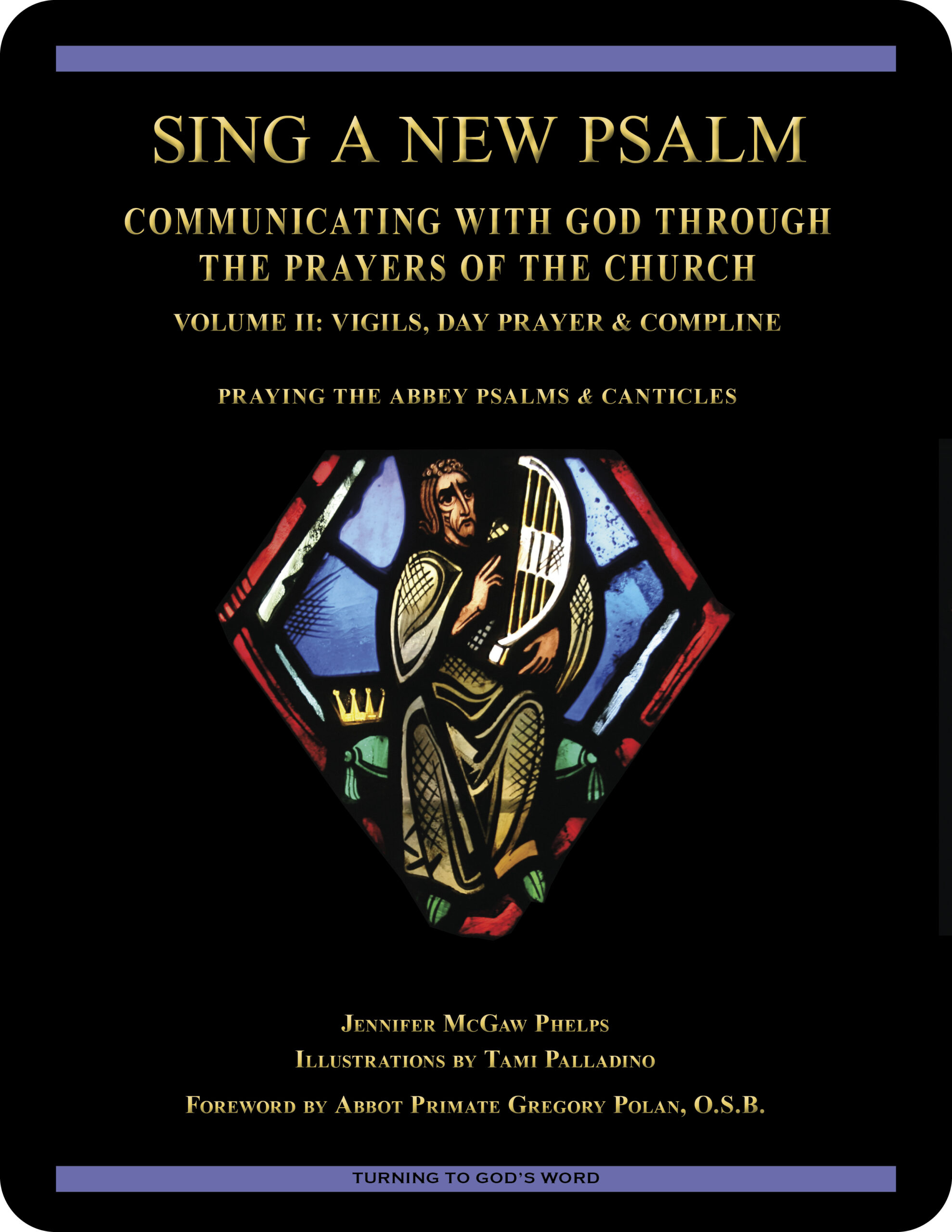
Volume II: Vigils, Day Prayer & Compline
Lesson 1 He Who Sits in the Heavens Laughs
Invitatory: Psalm 95 (RSVCE)
Psalm 1 (RSVCE), Psalm 2 (RSVCE), Psalm 23 (RSVCE), Psalm 76 (RSVCE) and Psalm 103 (RSVCE)
Sunday Vigils (Week I)
Revised Standard Version Catholic Edition*
New American Bible Revised Edition (NABRE)*
Catechism of the Catholic Church
ex libris (in our library)
glossary for Volume II of Sing a New Psalm
Tami Palladino’s visual-meditation journal
next lesson: Our Eyes Are on the LORD Our God
This material coordinates with Lesson 1, “He Who Sits in the Heavens Laughs,” on pages 8–11 in Sing a New Psalm: Communicating with God Through the Prayers of the Church—Volume II: Vigils, Day Prayer & Compline. Our Catholic Bible study is based on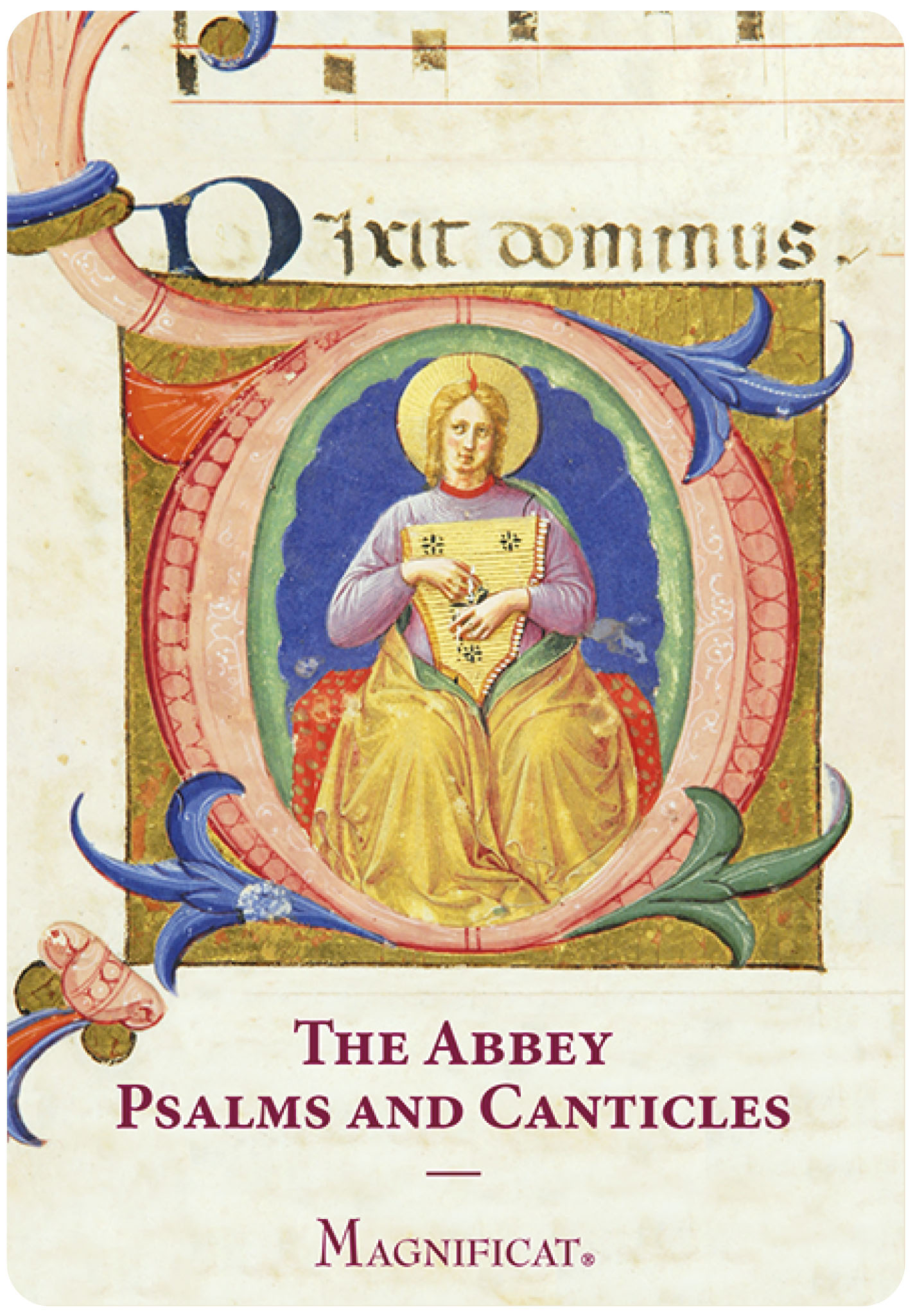 The Abbey Psalms and Canticles, an English translation of the psalms prepared by the monks at Conception Abbey in 2010 and first published as The Revised Grail Psalms. The Abbey Psalms and Canticles is a revision of that work, finished in 2020 and now owned by the United States Conference of Catholic Bishops (USCCB). Wording and numbering of some psalms and verses in other translations may differ. The Abbey Psalms and Canticles is being added to Liturgy of the Hours books used in the United States. While the Turning to God’s Word study book is based on The Abbey Psalms and Canticles translation, all online links to the psalms are to the Revised Standard Version Catholic Edition (RSVCE) translation. A separate copy of The Abbey Psalms and Canticles is needed to read the translation on which the psalms in this study are based.
“Unlike other prayers in sacred Scripture, the prayers contained in the psalms are not inserted into a narrative story that specifies their meaning and function. Instead, the psalms are given to the believer precisely as a text of prayer. Since they are the Word of God, the believer who prays the psalms speaks to God using the very words that God himself has given to us. Thus, in praying the psalms we learn to pray. The psalms are a school of prayer.”—Pope Benedict XVI
welcome to our continuing in-depth study of the psalms
We invite groups and individuals to check out the sample Introduction and Lesson 1 from this 29- lesson Turning to
  God’s Word Catholic Bible study. Our online study pages include additional questions, commentary, and prayers based on the psalm texts, plus an online glossary. Both Volume I and Volume II of Sing a New Psalm: Communicating with God Through the Prayers of the Church have been granted imprimaturs. A digital version of Volume I: Lauds & Vespers can be purchased from our website shop. Volume II: Vigils, Day Prayer & Compline is available in hard copy. If you have a Bible-related question or comment, click on one of the “ask us your question” or “what do you think” buttons on any online study page.
open with prayer
It’s always wise to begin any Bible study with prayer, whether reading the Scriptures alone or meeting with others in a discussion study group. You can pray using your own words, pray one of the psalms in this lesson, or use one of the opening prayers on our website. We especially like the following:
Lord Jesus, you promised to send your Holy Spirit
to teach us all things.
As we read and study your word today,
allow it to touch our hearts and change our lives. Amen.
think about praying Compline every night
In addition to the sample for this Bible study, Turning to God’s Word is providing a copy of Lesson 29 In Peace I Will Lie Down, which addresses the nightly Compline prayers based on Psalm 91, Psalm 4, and Psalm 134. The monks at Conception Abbey pray these short psalms each evening—Psalm 91 on Sunday, Tuesday, Wednesday, and Friday; Psalm 4 and Psalm 134 on Monday, Thursday, and Saturday.
about the psalms in this lesson**
Psalm 95 (the Invitatory) prayed for Sunday Vigils Weeks I and II at Conception Abbey, is a 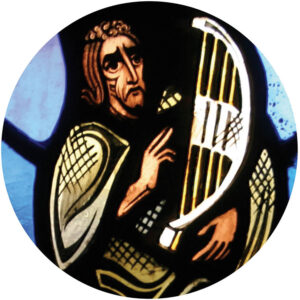 processional written by an anonymous composer and classified as “miscellaneous.” Psalm 1, also by an unidentified author, is classified as wisdom poetry. The author of Psalm 2, considered a royal or messianic psalm, also is anonymous. Psalm 1 and Psalm 2 function together as an introduction to the entire collection of psalms. Psalm 23, a psalm of individual trust, is credited to David. Psalm 76 is a song honoring Zion (God’s holy mountain) written by Asaph, a musician in David’s court. Psalm 103 is a hymn attributed to David.
classifying the psalms
The classification of the psalms, though somewhat standardized, retains an arbitrary nature. Some psalms are classified according to form or type; such forms include the hymn, the lament, and the song of thanksgiving. Psalms also may be classified according to subject matter—royal psalms, for instance, portray the political king of the descendants of Jacob as both the representative of God to the community and the representative of the community to God—or they may be classified according to their use; scholars generally think that hymns exalting Zion were part of a ritual reenactment of the great deeds of God in maintaining Mount Zion and Jerusalem as a home base. Turning to God’s Word is indebted to Fr. Felix Just, a Jesuit priest and biblical scholar, for his organized listing of the psalms by classification and author.
did David write all of the psalms?
There’s much scholarly controversy about the exact dates that the psalms were composed and by whom. The United States Conference of Catholic Bishops (USCCB) attributes authorship of 73 of the psalms to David. This amounts to about half of the 150 total number of psalms. The bishops caution, however, that there’s no sure way of precisely dating any individual psalm. Some are thought to have been written before the Babylonian Exile (earlier than 587 B.C.), while others are believed to have been written afterward (539 B.C. or later). None of the psalms are thought to have been composed after 165 B.C. Although the dates of David’s birth and reign are contested by scholars, it generally is agreed that David lived for about 70 years around 1000 B.C. His reign is thought to have lasted 40 years. His son Solomon assumed the throne at that time, several hundred years before the Babylonian Exile.
Besides David, others thought to have written some of the psalms are Solomon (Psalm 72 and Psalm 127), Asaph, and the Korahites (descendants of Korah); Psalm 90 is credited to Moses, and Psalm 89 is credited to Ethan the Ezrahite. The composers of a number of the psalms, however, are unidentified. Chapter 16 in the book of Numbers identifies Korah as a Levite who was killed by God for attempting a revolt against Moses and Aaron; Korah’s sons, who did not participate, were spared. It is Korah’s descendants, not his immediate sons, who are credited with writing 12 of the psalms—Psalm 42, Psalm 43, Psalm 44, Psalm 45, Psalm 46, Psalm 47, Psalm 48, Psalm 49, Psalm 84, Psalm 85, Psalm 87, and Psalm 88. Asaph, a Levite and member of David’s court also is thought to have been a prophet. He or a member of the guild of Temple singers he founded (called “sons of Asap”) are thought to have composed another dozen of the psalms—Psalm 50, Psalm 73, Psalm 74, Psalm 75, Psalm 76, Psalm 77, Psalm 78, Psalm 79, Psalm 80, Psalm 81, Psalm 82, and Psalm 83.
Psalm 95 (the Invitatory) is one of the psalms classified as miscellaneous
Scholars find it difficult to fit Psalm 95 into a single category. In addition to Psalm 95 in this lesson, the other 11 miscellaneous psalms are: Psalm 15, Psalm 24, Psalm 50, Psalm 78, Psalm 81, Psalm 82, Psalm 105, Psalm 108, Psalm 133, Psalm 134, and Psalm 139.
Psalm 1 is classified as wisdom poetry
Although there is some debate about which books of Scripture are considered books of wisdom, there is more or less agreement among scholars about the eight psalms classified as wisdom poetry, including Psalm 1 in this lesson. The other seven are: Psalm 37, Psalm 49, Psalm 73, Psalm 112, Psalm 119, Psalm 127, and Psalm 128.
Psalm 2 is classified as a royal psalm
The 10 psalms classified as royal are considered by scholars to point toward Jesus as the Messiah. In addition to Psalm 2 in this lesson, the other nine are: Psalm 18, Psalm 20, Psalm 21, Psalm 45, Psalm 72, Psalm 101, Psalm 110, Psalm 132, and Psalm 144.
Psalm 23 is classified as a psalm of individual trust
In addition to Psalm 23 in this lesson, the six other psalms of individual trust are: Psalm 11, Psalm 16, Psalm 62, Psalm 91, Psalm 121, and Psalm 131. The also are three psalms classified as psalms of communal trust. They are: Psalm 115, Psalm 125, and Psalm 129.
Psalm 76 is classified as a hymn to Zion
Zion or Mount Zion is the site of the ancient Jebusite fortress that David took by force before establishing his royal capital there. Zion came to refer to the city of Jerusalem. Mount Zion refers to the elevation upon which Solomon built his Temple, so in the psalms it has come to symbolize the dwelling place of God. Daughter Zion appears in the psalms as a metaphor for the descendants of Jacob, and Zion can refer to them as well. In Christianity, Mount Zion also can represent the eschatological city of God that is to come. In Psalm 76 in this lesson, the descendants of Jacob are encouraged to turn to God in times of trouble. Altogether, six of the 150 psalms are classified as hymns written in honor of Zion, God’s holy mountain. In addition to Psalm 76, they include Psalm 46, Psalm 48, Psalm 84, Psalm 87 and Psalm 122.
Psalm 103 is one of 19 psalms classified as a hymn
In addition to Psalm 103 in this lesson, the other 18 psalms classified as hymns are: Psalm 8, Psalm 19, Psalm 29, Psalm 33, Psalm 100, Psalm 104, Psalm 111, Psalm 113, Psalm 114, Psalm 117, Psalm 135, Psalm 136, Psalm 145, Psalm 146, Psalm 147, Psalm 148, Psalm 149, and Psalm 150.
it sounds sexist, but the psalms really just reflect cultural differences
In keeping with Christian tradition, Turning to God’s Word is assuming that all of the psalms were written by men—even those psalms whose authorship remains contested or unknown. In reality, this probably is the case. Women had relatively few rights and privileges in the culture of the Old Testament.
what exactly is Vigils?
Vigils refers to the night office of Liturgy of the Hours. The Church requires clergy and members of religious orders to recite the hours each day, and Catholic laity are encouraged to do so as well. The word “Vigils” comes from the Latin vigilae, which refers to soldiers’ night watches. Vigils traditionally was observed at 2 a.m.; it usually now is prayed between 2 and 6 a.m. St. Benedict associated the monastic Liturgy of the Hours with Psalm 119:164: “Seven times a day I praise you … .” The prayers at seven fixed hours came to be known as the Divine Office, based on the Latin officium, which means “duty.”
and what is an Invitatory?
The prayer that begins the Office of Vigils each day is called an Invitatory because it invites the faithful to pray. Invitatories encourage men and women to enter into deeper relationship with God. You can learn more about the psalms chosen as Invitatories at Conception Abbey by reading “The Invitatory Psalms” on page 9 of Sing a New Psalm: Communicating with God Through the Prayers of the Church—Volume II: Vigils, Day Prayer & Compline.
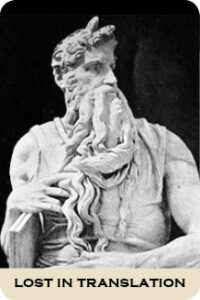 kingdom of heaven—you could look it up in our archives
Psalm 2 is classified as a royal psalm; Psalm 76 depicts the LORD as more powerful than any earthly king; Psalm 103 lauds God as ruler. To learn about the kingdom of heaven, read Lost in Translation, an online column in which Turning to God’s Word author Matthew Phelps helps readers connect with ideas expressed in the original languages of the Scriptures. New Lost in Translation entries are posted on Mondays, and past entries are archived on our website. Contact us if you’d like to receive Lost in Translation by email every week.
read the Catechism—everyone is called to God’s kingdom
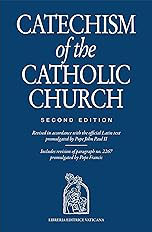 The psalms prayed for Sunday Vigils Week I emphasize the LORD’s power by focusing on his rule over the kingdom of heaven. In the present day, many people have difficulty accepting the idea of a ruler whose kingdom exists beyond that which can be readily observed on the earth. Paragraph 543 in the Catechism of the Catholic Church, however, insists that God’s kingdom not only exists, but is open to all who follow the teachings that Jesus outlines in the Gospel According to Mark 4:26–29.
543 Everyone is called to enter the kingdom. First announced to the children of Israel, this messianic kingdom is intended to accept men of all nations. To enter it, one must first accept Jesus’ word:
The word of the Lord is compared to a seed which is sown in a field; those who hear it with faith and are numbered among the little flock of Christ have truly received the kingdom. Then, by its own power, the seed sprouts and grows until the harvest.
the popes inspire us—who’s your daddy?
 “A Father Who Loves His Family” on page 10 of Sing a New Psalm: Communicating with God Through the Prayers of the Church—Volume II: Vigils, Day Prayer & Compline looks at the way that Jesus reveals the face of God to men and women. Pope Benedict XVI examines the content of Psalm 103, which he refers to as “the great hymn of divine mercy,” to find what might lead God to expend so much love on flawed humanity. Almost all Christians are familiar with Psalm 23. To learn Pope Benedict’s view on that ancient hymn, see “Dwelling in God’s House” on page 9 in the study book.
a Scripture scholar shares his thoughts about the psalms
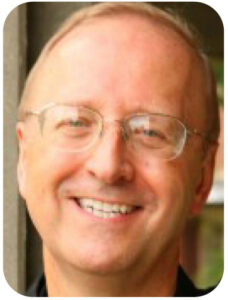 Gregory Polan, OSB, recent abbot primate of the worldwide Benedictine Confederation,
 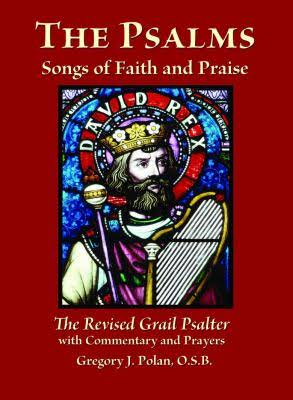 was lead translator of The Abbey Psalms and Canticles, the English translation upon which the Turning to God’s Word two-part Bible study of the psalms is based. Prepared by the monks at Conception Abbey and published by the United States Conference of Catholic Bishops (USCCB), The Abbey Psalms and Canticles is a 2020 revision of the monks’ 2010 translation of The Revised Grail Psalms. Abbot Polan is author of The Psalms: Songs of Faith and Praise, which contains commentary and prayers as well as the Abbey’s complete translation of the psalms. In addition, Abbot Polan also wrote the foreword to Sing a New Psalm: Communicating with God Through the Prayers of the Church.
 more insightful commentaries
Psalms & Canticles: Meditations and Catechesis on the Psalms and Canticles of Morning Prayer is a collection of reflections on the texts of the prayers at Lauds. These originally were delivered as part of Pope St. John Paul II’s Wednesday audiences. In another volume, Psalms & Canticles: Meditations and Catechesis on the Psalms and Canticles of Evening Prayer, Pope Benedict XVI continued the practice to include the biblical texts prayed at Vespers.
encountering Jesus Christ through Scripture
The psalms are a collection of intensely personal prayers, so any Bible study based on these prayers necessarily is going to get personal. The questions in Sing a New Psalm: Communicating with God  Through the Prayers of the Church attempt to address three different questions about each individual psalm.
1) What did the original Psalmist have in mind when he composed his prayer?
2) What might Jesus have had in mind when he prayed the same words?
3) How do present-day Christians interpret these ancient prayers?
Q&A—where to find some answers
Some people are used to doing Bible studies from other publishers, and they’ve told us that they miss the answer keys many of those studies offer. One leader even admitted that she relied on answer keys so she didn’t have to spend time doing Bible study lessons herself. We sympathize with omnipresent time constraints, but we maintain that up-front answer keys provide people with a strong temptation to rely on someone else’s idea of what Scripture means instead of thinking more deeply about what God might be trying to say to each of us as individuals at a particular moment in time.
Q: Why don’t Turning to God’s Word Catholic Bible studies provide any printed answer keys?
A: The Turning to God’s Word method of Bible study depends on participants engaging with the biblical text for answers to their questions. All of the factual questions in the lessons can be answered from the Scriptures. Sidebars in the lessons contain material that may help explain some of the themes suggested by the biblical text. Most of our studies also feature videos with each lesson, although the psalms study does not.
Outside commentaries can shed light on individual texts, but many commentaries examine Scripture passages out of context. Some may focus on an academic rather than a spiritual approach to the Bible. If you’re confused about anything in our studies or in any related outside commentaries, we encourage you to browse our website for more information.
The goal of all Turning to God’s Word Catholic Bible studies is to foster personal reflection leading to a more intimate relationship with Jesus. Consequently, each lesson contains reflection questions, and these necessarily don’t have any “right” or “wrong” answers. If you’d like to share your thoughts about any of our studies or need clarification about a question, commentary, or video related to the lessons, contact us using the “ask us your question” or “what do you think” button on any online lesson page. Because others may have the same concern, we routinely turn questions and comments we receive into anonymous Q&A items and add them to the relevant online study pages.
Q&A—three questions about Bible translations
We’re frequently asked what translation of the Bible is best. Sometimes we’re asked which translation is approved to be read at Catholic Masses. More infrequently we’re asked why we’ve chosen to reprint the Revised Standard Version Second Catholic Edition (RSV2CE) for the biblical text in our printed studies.
Q1: Which translation of the Bible is the best one for Catholics to read?
A2: As far as which translation is best, we maintain that reading any translation of the Bible you have on hand is a great place to start. The old adage “every translator is a traitor” certainly applies to Scripture, but God’s basic message to his people can be found in any Bible. While there are English-language Bibles catering to a variety of special-interest Catholic groups, they generally reprint either a translation of the New American Bible Revised Edition (the NABRE) or a Catholic edition of the Revised Standard Version (the RSVCE or the RSV2CE), which are the Bibles read by most American Catholics. Both of these translations rely on archeological finds and scholarship that were unavailable in earlier centuries. Before the mid-1960s, many Catholics were familiar with the Douay-Rheims English translation based on the Latin Vulgate. Originally translated by St. Jerome in the late 4th century, a version of the Vulgate has remained the official Latin translation of the Catholic Church since the 16th century. Before the mid-1960s, most Protestants read The King James Version.
As people become more interested in Scripture study, they also become more interested in reading the “right” Bible. Since very few of us are proficient in ancient languages, we’re forced to rely on the work of scholars who’ve spent years studying Hebrew, Greek, Aramaic, and Latin. In many cases, there simply isn’t an easy way to translate some of the original words and phrases of Scripture into English. The best advice we can offer is to choose an English translation that the Church has approved. The United States Conference of Catholic  Bishops (USCCB) offers guidelines. When questions arise, as they undoubtedly will, check out footnotes, commentaries, and other translations; talk to a knowledgeable priest; and—this part is most important—ask God to grant you increased understanding. You also can email us with your questions about Scripture. In many cases, Turning to God’s Word author Matthew Phelps’ background in classical languages proves helpful. We frequently rely on him to shed some light on the linguistics involved in difficult passages.
Q2: I’m having trouble locating the same Bible that I hear read at Mass. What translation is that?
A2: The Catholic Lectionary, a collection of biblical texts approved for liturgical use, isn’t the same as a Bible. The English-language lectionary used in the United States is primarily based on a 1970 translation. A close English translation outside the lectionary is the New American Bible Revised Edition (NABRE).
Q3: Why has Turning to God’s Word chosen to reprint biblical text from the Revised Standard Version Second Catholic Edition (RSV2CE) instead of the New American Bible Revised Edition (NABRE)?
A3: We currently use the Revised Standard Version Second Catholic Edition (RSV2CE) as our primary biblical translation in our printed studies because scholars consider it to be a more faithful word-for-word translation than many other translations. Pope Benedict XVI quotes from the RSV2CE in his three-volume book, Jesus of Nazareth. The RSVCE is the Bible translation used in English translations of the Catechism of the Catholic Church. The RSV2CE varies only slightly from the earlier RSVCE, which we link to on our online study pages. Any discrepancies between the RSV2CE and the RSVCE are pointed out on the online study pages. Turning to God’s Word cites The Abbey Psalms and Canticles in references to the psalms in all of our printed studies.
memorize a favorite Bible verse (4:46)
Tami Palladino has created a short video about the benefits of memorizing Bible verses. Choosing a passage that you find particularly meaningful will make the task easier. There are inspiring verses in every book of the Bible, but some people in our Turning to God’s Word Catholic Bible studies like to memorize a verse from their lesson every week. For more ideas, check out Tami’s video, Why Memorize Scripture? It’s less than five minutes long.
two translation differences: hand vs. hands, & heart vs. hearts
The Abbey Psalms and Canticles translations of Psalm 95:5 and Psalm 95:10 both appear to prefer the singular over the plural. In The Revised Grail Psalms translation, “hands” is substituted for “hand,” and “hearts are” is substituted for “heart goes.” Neither of these differences seem to significantly change the meaning of the psalm, which is the Invitatory for Sunday Vigils Weeks I and II. (Note that it is not possible to link to either The Abbey Psalms and Canticles or The Revised Grail Psalms; all links on the online pages are to the Revised Standard Version Catholic Edition [RSVCE].)
another relatively minor translation difference
The Abbey Psalms and Canticles translates Psalm 95:7: “… for he is our God, and we the people,
the people of his pasture, the flock of his hand.” The Revised Grail Psalms translates the same verse: “… for he is our God, and we the people who belong to his pasture, the flock that is led by his hand.” This variation also doesn’t change the meaning of the Invitatory psalm.
another translation difference: righteous vs. just
The Abbey Psalms and Canticles translation of Psalm 1:5 and Psalm 1:6 refers to the “council of the righteous” and the “way of the righteous,” respectively. The Revised Grail Psalms swaps the word “just” for the word “righteous” in the same verses. Which translation do you prefer, and why?
a couple of minor translation differences
In The Abbey Psalms and Canticles translation of Psalm 2:7 and Psalm 2:8, the United States Conference of Catholic Bishops (USCCB) made two small changes from the original translation of The Revised Grail Psalms. Psalm 2:7 begins: “I will announce his decree.” The same verse in The Revised Grail Psalms begins: “I will announce the decree of the LORD.” Psalm 2:8 in The Abbey Psalms and Canticles begins: “Ask of me and I will make nations your heritage.” The same verse in The Revised Grail Psalms begins: “Ask of me and I will give you nations as your inheritance.” The differences don’t appear to significantly change the meaning of the psalm.
another translation difference: embrace correction vs. pay God homage
The Abbey Psalms and Canticles translates Psalm 2:11: “Serve the LORD with fear; exult with trembling, embrace correction ….” The Revised Grail Psalms translates the same verse: “Serve the LORD with fear; exult with trembling, pay him your homage ….” While “paying the LORD homage” well may include “embracing correction,” it seems to be a rather different concept. Without access to the unidentified Psalmist’s original manuscript, it’s impossible to know what meaning is closest to his original intention. Consider why the USCCB might have preferred “embrace correction” over “pay him your homage.”
one more translation difference: sank into slumber vs. slept in death
The Abbey Psalms and Canticles translates Psalm 76:6 (Psalm 76:5 in Revised Standard Version Catholic editions): “The stouthearted, despoiled, sank into slumber….” The Revised Grail Psalms translates the same verse: “The stouthearted, despoiled, slept in death….” Most people would agree that there is a fairly significant difference between slumber and death, but without Asaph’s original manuscript, it’s difficult to know what meaning he intended. Consider why the USCCB might have preferred “sank into slumber” over “slept in death.”
the best Catholic commentary about Scripture
To find out more about how Church teaching is supported by passages in Sing a New Psalm: Communicating with God Through the Prayers of the Church—Volume II: Vigils, Day Prayer & Compline, check out the Index of Citations in the Catechism of the Catholic Church. Links to the primary Scripture passages in the lesson (Revised Standard Version Catholic Edition [RSVCE*]) and relevant paragraphs in the Catechism are provided here. Not every passage in the biblical text for this study is referenced in a Catechism paragraph, however, including Psalm 1 and Psalm 76 in this lesson.
Psalm 2:1–2—paragraph 600
Psalm 2:2—paragraph 436
Psalm 2:6–7—paragraph 745
Psalm 2:7—paragraphs 441, 653, 2836
Psalm 2:7–8—paragraph 2606
Psalm 23:5—paragraph 1293
Psalm 103:1–22—paragraph 304
Psalm 103:20—paragraph 329
Psalm 95:1–6 (the Invitatory)—paragraph 2628
Psalm 95:7 (the Invitatory)—paragraph 1165
Psalm 95:7–8 (the Invitatory)—paragraph 2659
Psalm 95:9 (the Invitatory)—paragraph 2119
Psalm 95:10 (the Invitatory)—paragraph 539
ways our glossary might prove helpful
In addition to providing extra information about geographical locations, our glossary also points out  persons or places mentioned in the biblical text under more than one name or more than one spelling. If you can remember a name but aren’t sure in which lesson it shows up, you can find it in the glossary, which lists every proper noun that appears in the biblical text for every lesson in Sing a New Psalm: Communicating with God Through the Prayers of the Church—Volume II: Vigils, Day Prayer & Compline.
don’t forget about our indexes & extra online material
If you’re trying to locate information about a passage in Scripture, you can look it up in the index at the back of the study book. If you want to revisit a particular commentary, you can look that up by title in the topics index. If you want to learn more about another book of the Bible for which there’s a Turning to God’s Word study, you can read the online commentaries and watch any accompanying videos by going to the online study directories. Finally, if you have a question or would like to make a comment about any of our studies, you can use one of the “ask us your question” or “what do you think” buttons to email our authors.
ex libris—Church documents & books about religious topics
You can find links to magisterial documents referred to in Turning to God’s Word Catholic Bible studies  at ex libris—magisterial documents. This page includes a listing of significant recent encyclicals as well as a number of historical Church documents. Recommended books related to Scripture study can be found at ex libris—main bookshelf.
wondering how to pronounce some of these words?
The following links are to readings from the New International Version (NIV) Bible. To listen, open one of the links and click on the audio icon above the printed text. Although not taken from the translations used in our study materials, the NIV readings provide an audio guide to pronunciation of words in this lesson’s primary biblical texts. A close online version of the translation of the psalms currently used in Catholic liturgy in the United States as well as an audio guide for daily Mass readings for the current month can be found on the website of the United States Conference of Catholic Bishops (USCCB).
Psalm 95, the Invitatory (NIV)
Psalm 1 (NIV)
Psalm 2 (NIV)
Psalm 23 (NIV)
Psalm 76 (NIV)
Psalm 103 (NIV)
 close with a psalms-based prayer for Sunday Vigils (Week I)
Many of our Catholic study groups like to conclude their discussions with a prayer based on the scriptural focus of their lesson, and some participants include Scripture-specific prayer in their individual study. If you’re uncomfortable composing your own Bible-based prayers, you can follow our four easy steps. If you prefer, you can pray any of the psalms in this lesson, or you can use the following short prayer.
LORD and God, you are Creator and ruler of the universe.
The Church honors your Son as Christ the King,
and the Psalmists recognized your royal authority.
Help us also to acknowledge your reign over our lives
and to accept your will in all things.
We ask this in the name of Jesus Christ,
who honored you in all aspects of his life. Amen.
Lesson 2 Our Eyes Are on the LORD Our God, Sunday Day Prayer (Week I)—Psalm 120, Psalm 121, and Psalm 123
Introduction Psalms Study Basics
you also may like our study of the book of Exodus
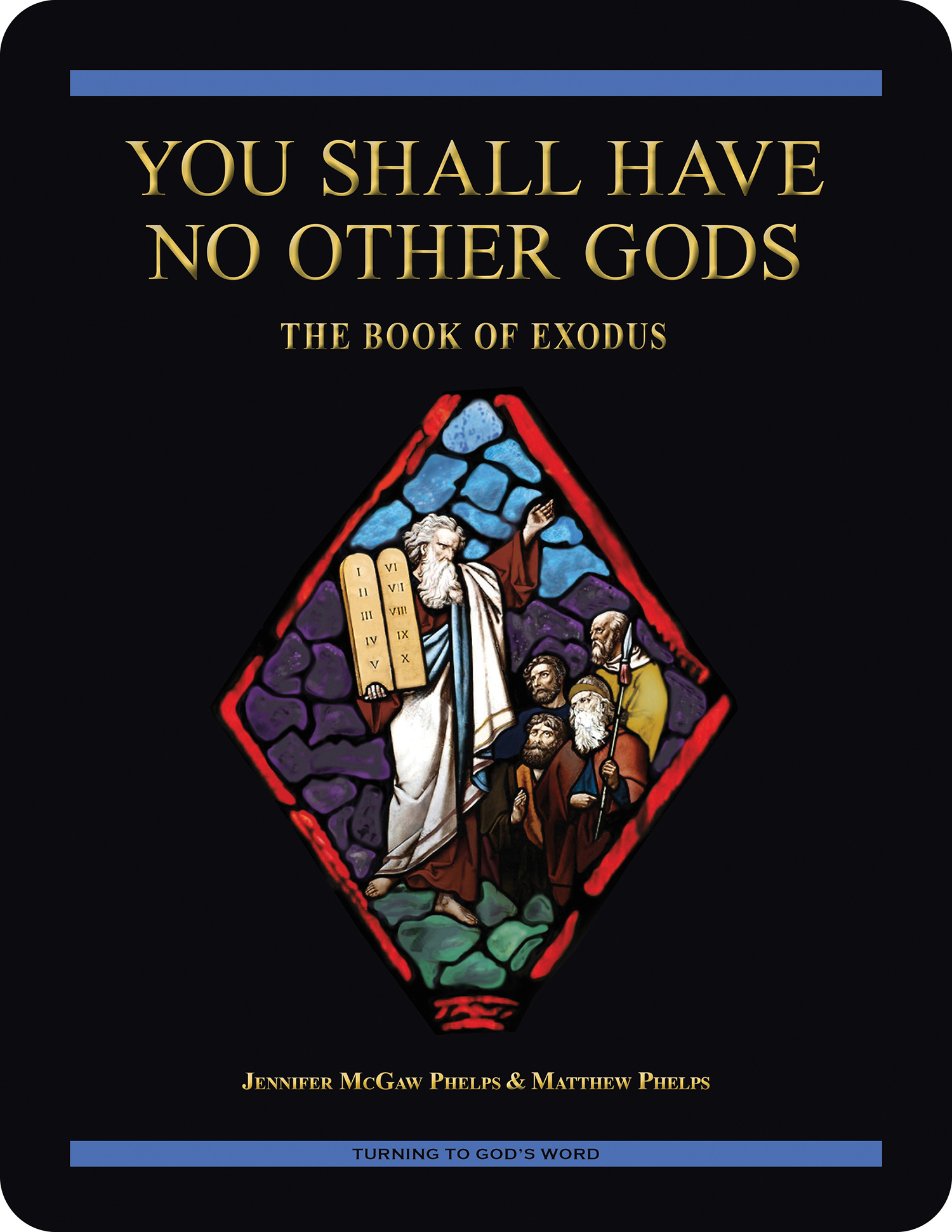 You Shall Have No Other Gods: The Book of Exodus, a 28-lesson Catholic Bible study with an imprimatur, provides an in-depth look at how significant events in biblical history that occurred thousands of years ago to descendants of Jacob remain relevant and even critical for present-day Christians to understand. The deliverance of the Hebrews from slavery in Egypt and the giving of Ten Commandments are examined along with the development of Moses’ relationship to God. Click here to view a sample of the first lesson.
start a Turning to God’s Word Bible study
 Thank you for your interest in Sing a New Psalm: Communicating with God Through the Prayers of the Church—Volume II.
  Information about beginning a Turning to God’s Word Bible study can be found at start a Bible study. Tami, Matthew, and I are available to answer questions. Contact us if you’d like to start one of our studies or have your schedule listed with other TtGW study groups on our website. —Jennifer
*There are seven deuterocanonical books in the Old Testament—Baruch, Judith, Sirach, Tobit, Wisdom, and First and Second Maccabees—and there are some deuterocanonical passages in the Books of Daniel and Esther. Protestants usually refer to these works as “apocryphal,” a word that means “outside the (Protestant) canon” because they’re excluded from most Protestant Bibles. Deuterocanonical means “second canon”; Catholics use that word to refer to any section of the Catholic Old Testament for which there are no extant, or existing, Hebrew manuscripts. All of the deuterocanonical books appear in the Septuagint, the earliest remaining versions of which date to the 1st century B.C. This Greek translation of the Old Testament was in common use by Jews at the time of Jesus. Learn more by reading How Do Catholic & Protestant Bibles Differ?
**You can learn more about the psalms by viewing a sample lesson from the Turning to God’s Word Catholic Bible study Sing a New Psalm: Communicating with God Through the Prayers of the Church. The first volume covers psalms prayed at Lauds and Vespers; the second covers psalms prayed at Vigils, Day Prayer, and Compline. Numbering of psalms and verses may vary in other translations.
Turning to God’s Word printed Bible studies use the 2006 Revised Standard Version Second Catholic Edition (RSV2CE) translation for all Scripture references except those to the psalms, which are taken from The Abbey Psalms and Canticles, prepared by the Benedictine monks of Conception Abbey and published in 2020 by the United States Conference of Catholic Bishops (USCCB). All Scripture links for the online study pages for Sing a New Psalm: Communicating with God Through the Prayers of the Church—Volume II: Vigils, Day Prayer & Compline are to the 1966 Revised Standard Version Catholic Edition (RSVCE) translation. The New International Version (NIV) audio recordings follow the same chapter and verse numbering as the RSV Catholic translations, but the NIV translation doesn’t include the deuterocanonical books and passages.
The 1966 RSVCE uses archaic pronouns and verb forms such as “thee,” “thou,” and “didst” in the psalms and in direct quotations attributed to God. The 2006 RSV2CE replaces these with more accessible English. The few significant translation changes in the RSV2CE include rendering almah as “virgin” in the Book of Isaiah 7:14 and restoring the term “begotten” in the Gospel According to John 3:16.
Numbering for some passages in this Bible study will vary. Turning to God’s Word studies (print and digital) follow the numbering in the Revised Standard Version Catholic translations (RSV2CE and RSVCE). Discrepancies in the New American Bible Revised Edition (NABRE) are noted in the Index of Scripture Citations in the study book.