 Sing a New Psalm:
Communicating with God Through
the Prayers of the Church
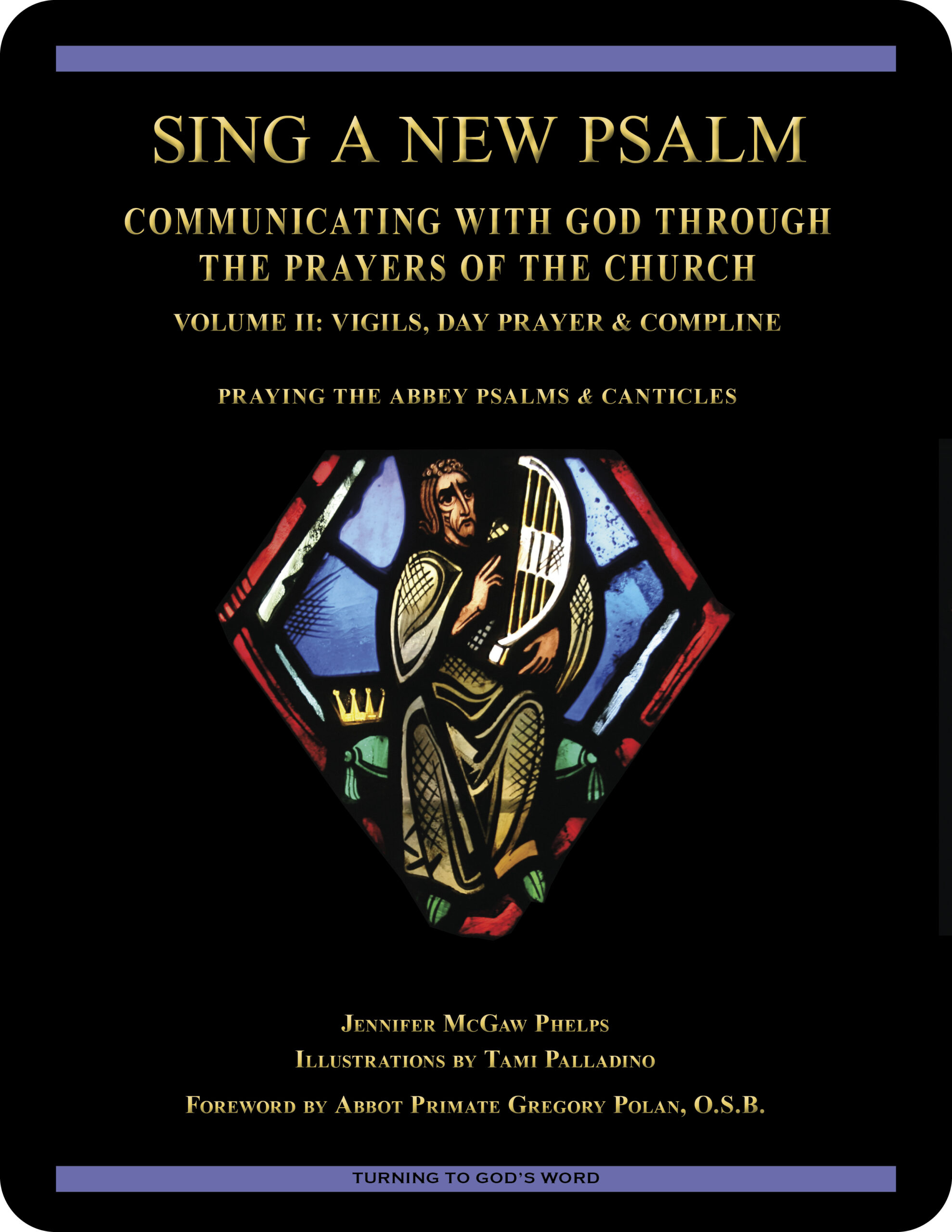
Volume II: Vigils, Day Prayer & Compline
Lesson 18 I Reach Out to Your Commands
Psalm 119:25–32 (RSVCE), Psalm 119:33–40 (RSVCE), and Psalm 119:41–48 (RSVCE)
Monday Day Prayer (Week II)
Revised Standard Version Catholic Edition*
New American Bible Revised Edition (NABRE)*
Catechism of the Catholic Church
ex libris (in our library)
glossary for Volume II of Sing a New Psalm
next lesson: Like an Owl Among the Ruins
This material coordinates with Lesson 18, “I Reach Out to Your Commands,” on pages 68–70 in Sing a New Psalm: Communicating with God Through the Prayers of the Church—Volume II: Vigils, Day Prayer & Compline. Our Catholic Bible study is based on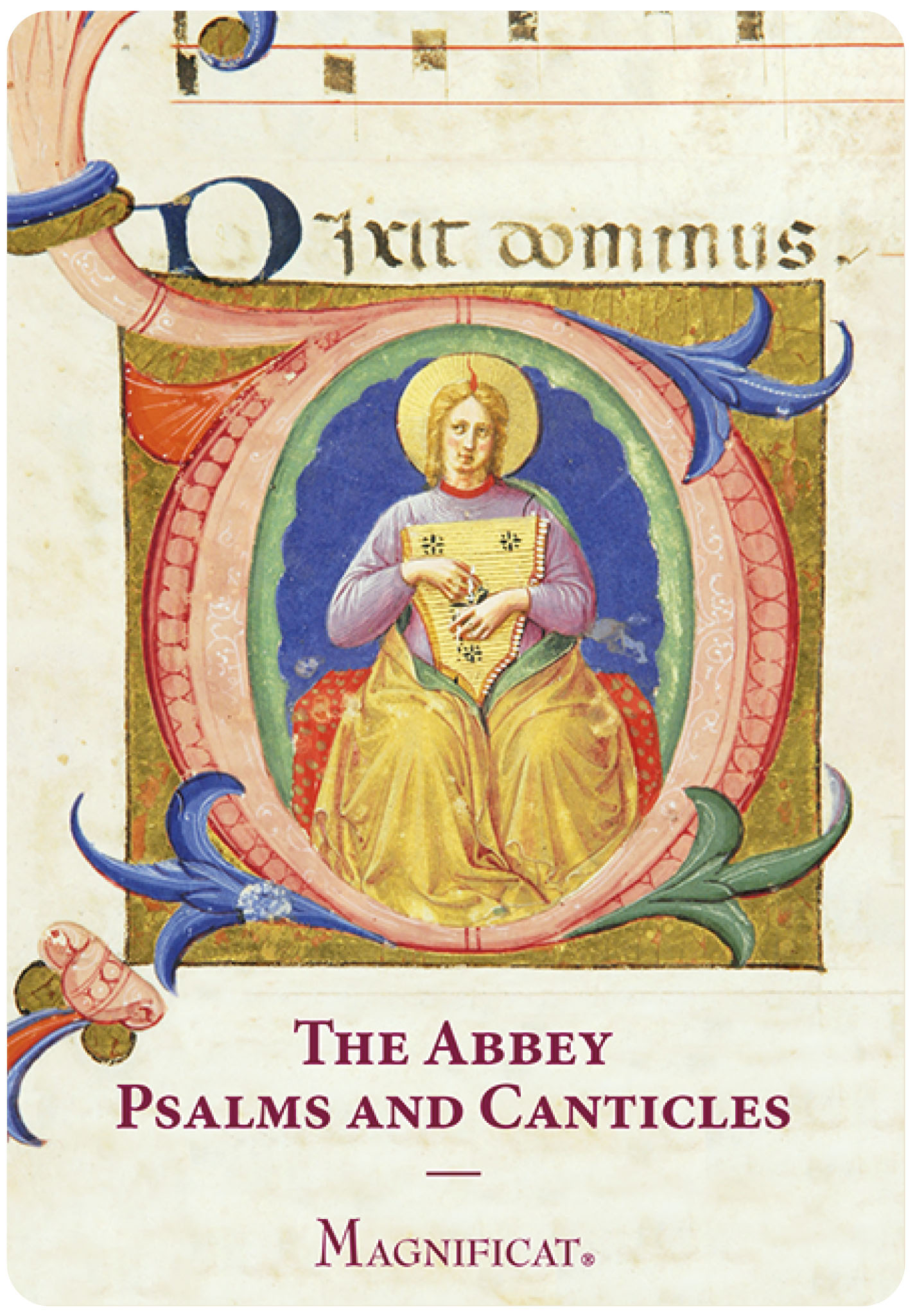 The Abbey Psalms and Canticles, a translation of the psalms prepared by the monks at Conception Abbey in 2010 and first published as The Revised Grail Psalms. The Abbey Psalms and Canticles is a revision of that work, finished in 2020 and published by the United States Conference of Catholic Bishops (USCCB). Wording and numbering of some psalms and verses in other translations may differ. The Abbey Psalms and Canticles is being added to Liturgy of the Hours books used in the United States. While the Turning to God’s Word study book is based on The Abbey Psalms and Canticles translation, all online links to the psalms are to the Revised Standard Version Catholic Edition (RSVCE) translation. A separate copy of The Abbey Psalms and Canticles is needed to read the translation on which the psalms in this study are based.
“Unlike other prayers in sacred Scripture, the prayers contained in the psalms are not inserted into a narrative story that specifies their meaning and function. Instead, the psalms are given to the believer precisely as a text of prayer. Since they are the Word of God, the believer who prays the psalms speaks to God using the very words that God himself has given to us. Thus, in praying the psalms we learn to pray. The psalms are a school of prayer.”—Pope Benedict XVI
welcome to our continuing in-depth study of the psalms
We invite groups and individuals to check out the sample Introduction and Lesson 1 from this 29- lesson Turning to
  God’s Word Catholic Bible study. Our online study pages include additional questions, commentary, and prayers based on the psalm texts, plus an online glossary. Both Volume I and Volume II of Sing a New Psalm: Communicating with God Through the Prayers of the Church have been granted imprimaturs. A digital version of Volume I: Lauds & Vespers can be purchased from our website shop. Volume II: Vigils, Day Prayer & Compline is available in hard copy. If you have a Bible-related question or comment, click on one of the “ask us your question” or “what do you think” buttons on any online study page.
open with prayer
It’s always wise to begin any Bible study with prayer, whether reading the Scriptures alone or meeting with others in a discussion group. You can pray using your own words, pray part of Psalm 119 covered in this lesson, or use one of the opening prayers on our website. We especially like the following:
Lord Jesus, you promised to send your Holy Spirit
to teach us all things.
As we read and study your word today,
allow it to touch our hearts and change our lives. Amen.
think about praying Compline every night
In addition to the sample for this Bible study, Turning to God’s Word is providing a copy of Lesson 29 In Peace I Will Lie Down, which addresses the nightly Compline prayers based on Psalm 91, Psalm 4, and Psalm 134. The monks at Conception Abbey pray these short psalms each evening—Psalm 91 on Sunday, Tuesday, Wednesday, and Friday; Psalm 4 and Psalm 134 on Monday, Thursday, and Saturday.
about the psalm in this lesson**
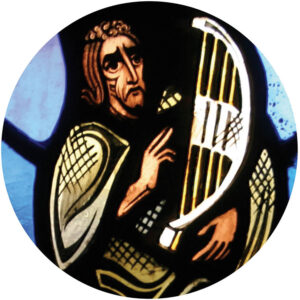 Psalm 119:25–48 is prayed for Monday Day Prayer at Week II at Conception Abbey. The composer of this wisdom poem remains unknown, but Psalm 119 often is considered the best example acrostic poetry in the Bible. Each stanza or set of eight verses begins with a different letter of the Hebrew alphabet. In this lesson, the letters emphasized are Psalm 119:25–32 (dalet or daleth), Psalm 119:33–40 (hei or he), and Psalm 119:41–48 (vav or vau).
classifying the psalms
The classification of the psalms, though somewhat standardized, retains an arbitrary nature. Some psalms are classified according to form or type; such forms include the hymn, the lament, and the song of thanksgiving. Psalms also may be classified according to subject matter—royal psalms, for instance, portray the political king of the descendants of Jacob as both the representative of God to the community and the representative of the community to God—or they may be classified according to their use; scholars generally think that hymns exalting Zion were part of a ritual reenactment of the great deeds of God in maintaining Mount Zion and Jerusalem as a home base. Turning to God’s Word is indebted to Fr. Felix Just, a Jesuit priest and biblical scholar, for his organized listing of the psalms by classification and author.
Psalm 119 is classified as wisdom poetry
Although there is some debate about which books of Scripture are considered books of wisdom, there is more or less agreement among scholars about the eight psalms classified as wisdom poetry, including Psalm 119 in this lesson. The other seven are: Psalm 1, Psalm 37, Psalm 49, Psalm 73, Psalm 112, Psalm 127, and Psalm 128.
about the acrostic format in Psalm 119
The longest of the psalms, Psalm 119 also is considered the most famous example of acrostic poetry in Scripture. Each of the Hebrew alphabet’s 22 letters begins a section of eight verses. Most of these stanzas are prayed at Conception Abbey as part of Day Prayer during Week II, but Psalm 119:105–112 is prayed by the monks as part of Sunday First Vespers during Week I and is covered in Lesson 1 Set a Guard on My Mouth in Sing a New Psalm: Communicating with God Through the Prayers of the Church—Volume I: Lauds & Vespers. The alphabetic acrostic pattern serves as both a mnemonic device for memorization and a way to  express the completeness of the psalm’s theme. Other acrostic psalms in this study include Psalm 25, Psalm 34, Psalm 37, and most of Psalm 119; Psalm 111, Psalm 112, Psalm 119:105–112, and Psalm 145 are covered in Volume I.
the letters of the Hebrew alphabet traditionally have spiritual meaning
While each stanza in Psalm 119 represents a different letter in the Hebrew alphabet, in the Jewish religious philosophy known as Kaballah, each letter traditionally is thought to represent spiritual meaning. In this lesson, dalet (or dalteth), represents self-nullification and dependence on the Creator. Hei (or he) symbolizes divine revelation. Vav (or vau) stands for the power to unite.
read the Catechism—can you name the precepts of the Church?
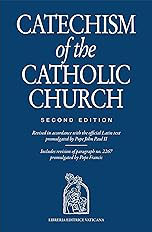 Psalm 119 emphasizes the unidentified Psalmist’s love of God’s law, which at the time the psalm was composed consisted of the Ten Commandments. While the Ten Commandments remain binding on Christians, not many Catholics can recite the precepts of the Church, which represent the bare minimum required of Christians. These precepts (another word for precept is law) can be found in Paragraph 2041 through paragraph 2043 in the Catechism of the Catholic Church.
2041 The precepts of the Church are set in the context of a moral life bound to and nourished by liturgical life. The obligatory character of these positive laws decreed by the pastoral authorities is meant to guarantee to the faithful the very necessary minimum in the spirit of prayer and moral effort, in the growth in love of God and neighbor:
2042 The first precept (“You shall attend Mass on Sundays and holy days of obligation and rest from servile labor”) requires the faithful to sanctify the day commemorating the Resurrection of the Lord as well as the principal liturgical feasts honoring the mysteries of the Lord, the Blessed Virgin Mary, and the saints; in the first place, by participating in the Eucharistic celebration, in which the Christian community is gathered, and by resting from those works and activities which could impede such a sanctification of these days.
The second precept (“You shall confess your sins at least once a year”) ensures preparation for the Eucharist by the reception of the sacrament of reconciliation, which continues Baptism’s work of conversion and forgiveness.
The third precept (“You shall receive the sacrament of the Eucharist at least during the Easter season”) guarantees as a minimum the reception of the Lord’s Body and Blood in connection with the Paschal feasts, the origin and center of the Christian liturgy.
2043 The fourth precept (“You shall observe the days of fasting and abstinence established by the Church”) ensures the times of ascesis and penance which prepare us for the liturgical feasts and help us acquire mastery over our instincts and freedom of heart.
The fifth precept (“You shall help to provide for the needs of the Church”) means that the faithful are obliged to assist with the material needs of the Church, each according to his own ability.
The faithful also have the duty of providing for the material needs of the Church, each according to his own abilities.
read the Catechism—the LORD is serious about the Ten Commandments
While it’s become common in some religious circles to discredit certain of the Ten Commandments, this flies in the face of Church teaching. Paragraph 2068 in the Catechism of the Catholic Church is clear that Christians are required to take seriously every one of the Ten Commandments.
2068 The Council of Trent teaches that the Ten Commandments are obligatory for Christians and that the justified man is still bound to keep them; the Second Vatican Council confirms: “The bishops, successors of the apostles, receive from the Lord … the mission of teaching all peoples, and of preaching the Gospel to every creature, so that all men may attain salvation through faith, Baptism, and the observance of the Commandments.”
 mercy—you could look it up in our archives
The section of Psalm 119 prayed for Monday Day Prayer Week II emphasizes that God’s law, which the Psalmist loves, is based on the LORD’s mercy. To learn more about mercy, read Lost in Translation, an online column in which Turning to God’s Word author Matthew Phelps helps readers connect with ideas expressed in the original languages of the Scriptures. New Lost in Translation entries are posted on Mondays, and past entries are archived on our website. Contact us if you’d like to receive Lost in Translation by email every week.
 how do you rely on God’s mercy?
The Greek word ἔλεος (eleos), “pity” or mercy, suggests kindness or good will toward the miserable or the afflicted. As we reflect on the mercy of God, we’re also called to reflect on our own state of misery and lowliness and need. Mercy is not shown to those who are not in need of it.
 related reading
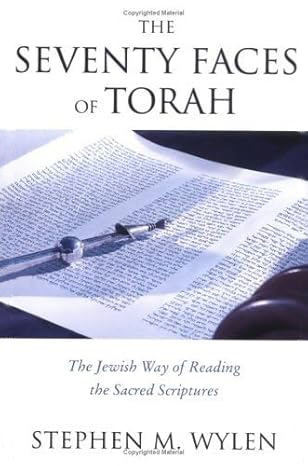
The Seventy Faces of Torah: The Jewish Way of Reading the Sacred Scriptures by Rabbi Stephen M. Wylen offers insight into the differences between how Christians  and Jews read the Old Testament based on other of their sacred Scriptures. This means that while Christians have learned to see the Old Testament as pointing toward Jesus in the New Testament, Jews instead interpret the Hebrew Scriptures (the Old Testament) in light of their understanding of God’s law, which includes the Talmud and Mishna, two sacred Jewish works with which most Christians are unfamiliar. Other recommended books related to Scripture study can be found at ex libris—main bookshelf. You also can find links to magisterial documents referred to in Turning to God’s Word Catholic Bible studies at ex libris—magisterial documents. This page includes a listing of significant recent encyclicals as well as a number of historical Church documents.
there are no translations difference in Lesson 18
the best Catholic commentary about Scripture
To find out more about how Church teaching is supported by passages in Sing a New Psalm: Communicating with God Through the Prayers of the Church—Volume II: Vigils, Day Prayer & Compline, check out the Index of Citations in the Catechism of the Catholic Church. Links to the primary Scripture passages in the lesson (Revised Standard Version Catholic Edition [RSVCE*]) and relevant paragraphs in the Catechism are provided here. Not every passage in the biblical text for this study is referenced in a Catechism paragraph, however, including Psalm 119:33–40 and Psalm 119:41–48 in this lesson.
Psalm 119:30—paragraph 2465
ways our glossary might prove helpful
In addition to providing extra information about geographical locations, our glossary also points out  persons or places mentioned in the biblical text under more than one name or more than one spelling. If you can remember a name but aren’t sure in which lesson it shows up, you can find it in the glossary, which lists every proper noun that appears in the biblical text for every lesson in Sing a New Psalm: Communicating with God Through the Prayers of the Church—Volume II: Vigils, Day Prayer & Compline.
don’t forget about our indexes & extra online material
If you’re trying to locate information about a passage in Scripture, you can look it up in the index at the back of the study book. If you want to revisit a particular commentary, you can look that up by title in the topics index. If you want to learn more about another book of the Bible for which there’s a Turning to God’s Word study, you can read the online commentaries and watch any accompanying videos by going to the online study directories. Finally, if you have a question or would like to make a comment about any of our studies, you can use one of the “ask us your question” or “what do you think” buttons to email our authors.
ex libris—Church documents & books about religious topics
You can find links to magisterial documents referred to in Turning to God’s Word Catholic Bible studies at ex libris—magisterial documents. This page includes a listing of significant recent encyclicals as well as a number of historical Church documents. Recommended books related to Scripture study can be found at ex libris—main bookshelf.
wondering how to pronounce some of these words?
The following links are to readings from the New International Version (NIV) Bible. To listen, open one of the links and click on the audio icon above the printed text. Although not taken from the translations used in our study materials, the NIV readings provide an audio guide to pronunciation of words in this lesson’s primary biblical texts. An online version of the translation of the Bible used in Catholic liturgy in the United States as well as an audio guide for daily Mass readings for the current three months can be found on the website of the United States Conference of Catholic Bishops (USCCB).
Psalm 119:25–32
Psalm 119:33–40
Psalm 119:41–48
 close with a psalms-based prayer for Monday Day Prayer (Week II)
Many of our Catholic study groups like to conclude their discussions with a prayer based on the scriptural focus of their lesson. If you’re uncomfortable composing your own Bible-based prayers, you can follow our four easy steps. If you prefer, you can pray any of the psalms in this lesson, or you can use the following short prayer.
O God, your commandments are based on love.
Teach us to recognize the benefits
that we receive when we do your will,
and help us to avoid the disobedience of sin.
We ask this in the name of your Son, Jesus,
who continues to devote his life to love for our sake. Amen.
Lesson 19 Like an Owl Among the Ruins, Tuesday Vigils (Week II)—Psalm 100 (the Invitatory), Psalm 74, Psalm 79, Psalm 83, and Psalm 102
Lesson 17 I Was Young & Now I Am Old, Monday Vigils (Week II)—Psalm 29 (the Invitatory), Psalm 37, Psalm 52, and Psalm 71
you also may like our study of the book of Genesis
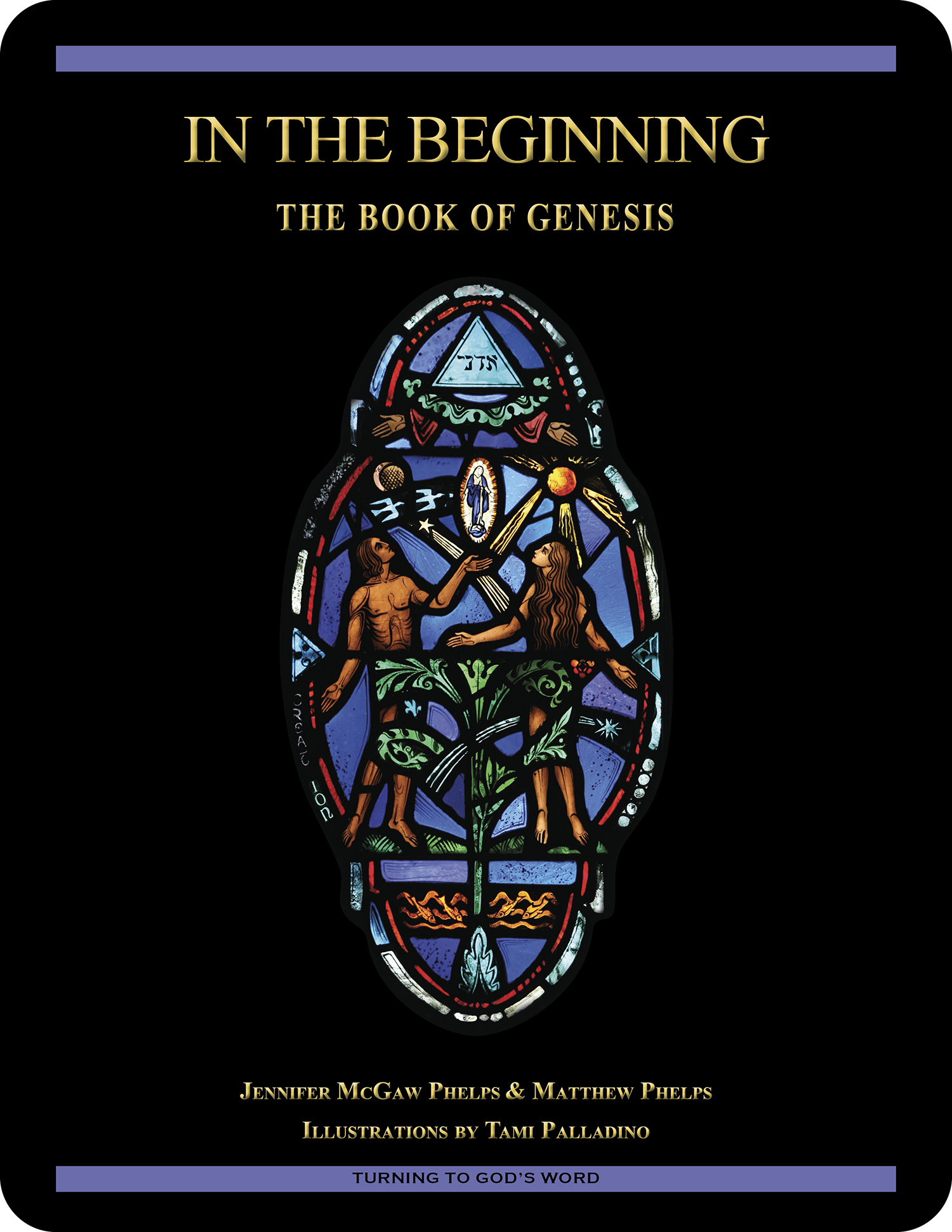 The first seven lessons of In the Beginning: The Book of Genesis, a 28-lesson Catholic Bible study with an imprimatur, provide an in-depth look at the very earliest biblical history—including the two accounts of Creation, events surrounding the Fall of Adam and Eve, the relationship between Cain and Abel, and the baptismal foreshadowing present in the account of Noah and the Flood. Remaining lessons look at lives of the patriarchs Abraham, Isaac, Jacob, and Joseph. Click here to view a sample of the first lesson.
start a Turning to God’s Word Bible study
 Thank you for your interest in Sing a New Psalm: Communicating with God Through the Prayers of the Church—Volume II.
  Information about beginning a Turning to God’s Word Bible study can be found at start a Bible study. Tami, Matthew, and I are available to answer questions. Contact us if you’d like to start one of our studies or have your schedule listed with other TtGW study groups on our website. —Jennifer
*There are seven deuterocanonical books in the Old Testament—Baruch, Judith, Sirach, Tobit, Wisdom, and First and Second Maccabees—and there are some deuterocanonical passages in the Books of Daniel and Esther. Protestants usually refer to these works as “apocryphal,” a word that means “outside the (Protestant) canon” because they’re excluded from most Protestant Bibles. Deuterocanonical means “second canon”; Catholics use that word to refer to any section of the Catholic Old Testament for which there are no extant, or existing, Hebrew manuscripts. All of the deuterocanonical books appear in the Septuagint, the earliest remaining versions of which date to the 1st century B.C. This Greek translation of the Old Testament was in common use by Jews at the time of Jesus. Learn more by reading How Do Catholic & Protestant Bibles Differ?
**You can learn more about the psalms by viewing a sample lesson from the Turning to God’s Word Catholic Bible study Sing a New Psalm: Communicating with God Through the Prayers of the Church. The first volume covers psalms prayed at Lauds and Vespers; the second covers psalms prayed at Vigils, Day Prayer, and Compline. Numbering of psalms and verses may vary in other translations.
Turning to God’s Word printed Bible studies use the 2006 Revised Standard Version Second Catholic Edition (RSV2CE) translation for all Scripture references except those to the psalms, which are taken from The Abbey Psalms and Canticles, prepared by the Benedictine monks of Conception Abbey and published in 2020 by the United States Conference of Catholic Bishops (USCCB). All Scripture links for the online study pages for Sing a New Psalm: Communicating with God Through the Prayers of the Church—Volume II: Vigils, Day Prayer & Compline are to the 1966 Revised Standard Version Catholic Edition (RSVCE) translation. The New International Version (NIV) audio recordings follow the same chapter and verse numbering as the RSV Catholic translations, but the NIV translation doesn’t include the deuterocanonical books and passages.
The 1966 RSVCE uses archaic pronouns and verb forms such as “thee,” “thou,” and “didst” in the psalms and in direct quotations attributed to God. The 2006 RSV2CE replaces these with more accessible English. The few significant translation changes in the RSV2CE include rendering almah as “virgin” in the Book of Isaiah 7:14 and restoring the term “begotten” in the Gospel According to John 3:16.
Numbering for some passages in this Bible study will vary. Turning to God’s Word studies (print and digital) follow the numbering in the Revised Standard Version Catholic translations (RSV2CE and RSVCE). Discrepancies in the New American Bible Revised Edition (NABRE) are noted in the Index of Scripture Citations in the study book.