 Sing a New Psalm:
Communicating with God Through
the Prayers of the Church
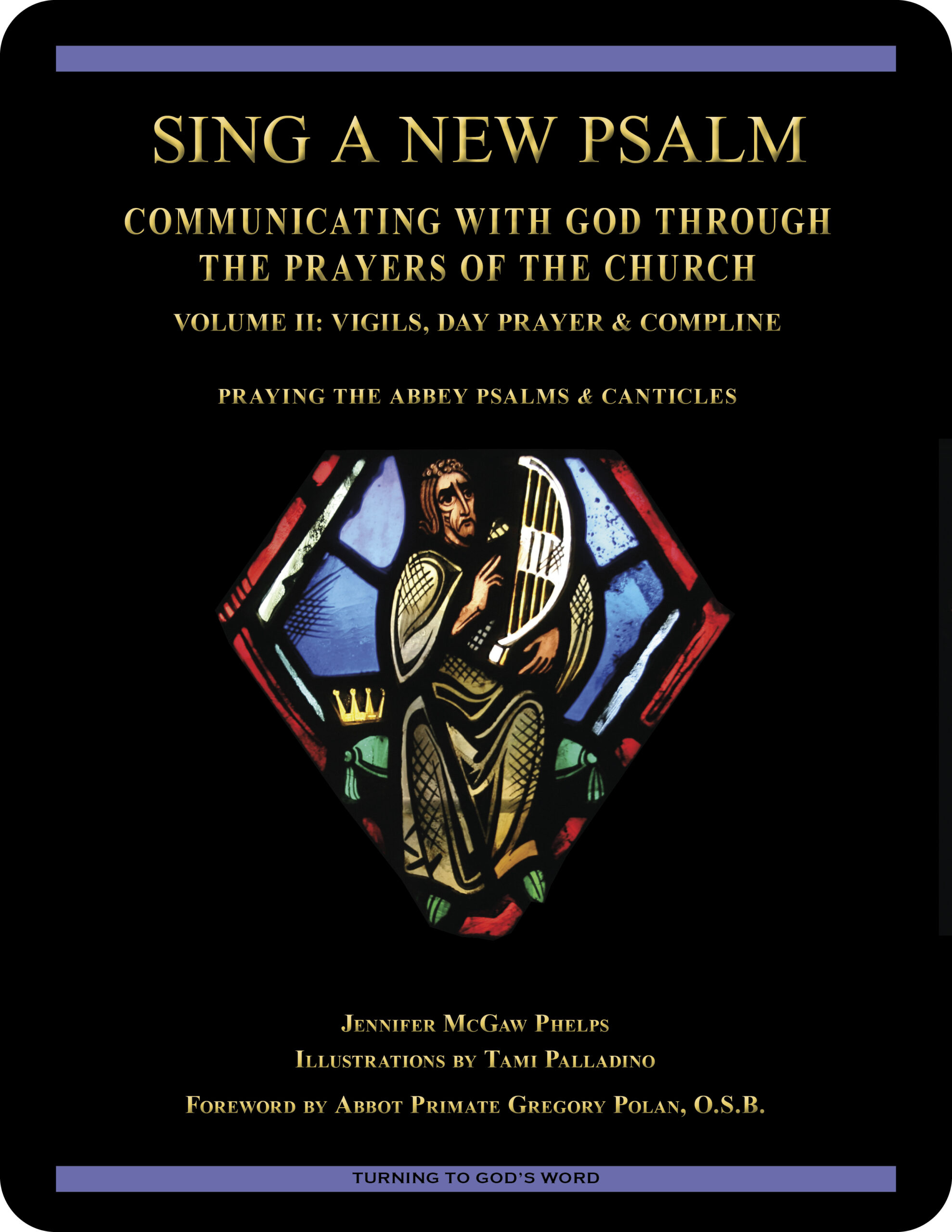
Volume II: Vigils, Day Prayer & Compline
Lesson 2 Our Eyes Are on the LORD Our God
Psalm 120 (RSVCE) , Psalm 121 (RSVCE), and Psalm 123 (RSVCE)
Sunday Day Prayer (Week I)
Revised Standard Version Catholic Edition*
New American Bible Revised Edition (NABRE)*
Catechism of the Catholic Church
ex libris (in our library)
glossary for Volume II of Sing a New Psalm
next lesson: You, LORD, Are a Shield About Me
This material coordinates with Lesson 2, “Our Eyes Are on the LORD Our God,” on pages 12–14 in Sing a New Psalm: Communicating with God Through the Prayers of the Church—Volume II: Vigils, Day Prayer & Compline. Our Catholic Bible study is based on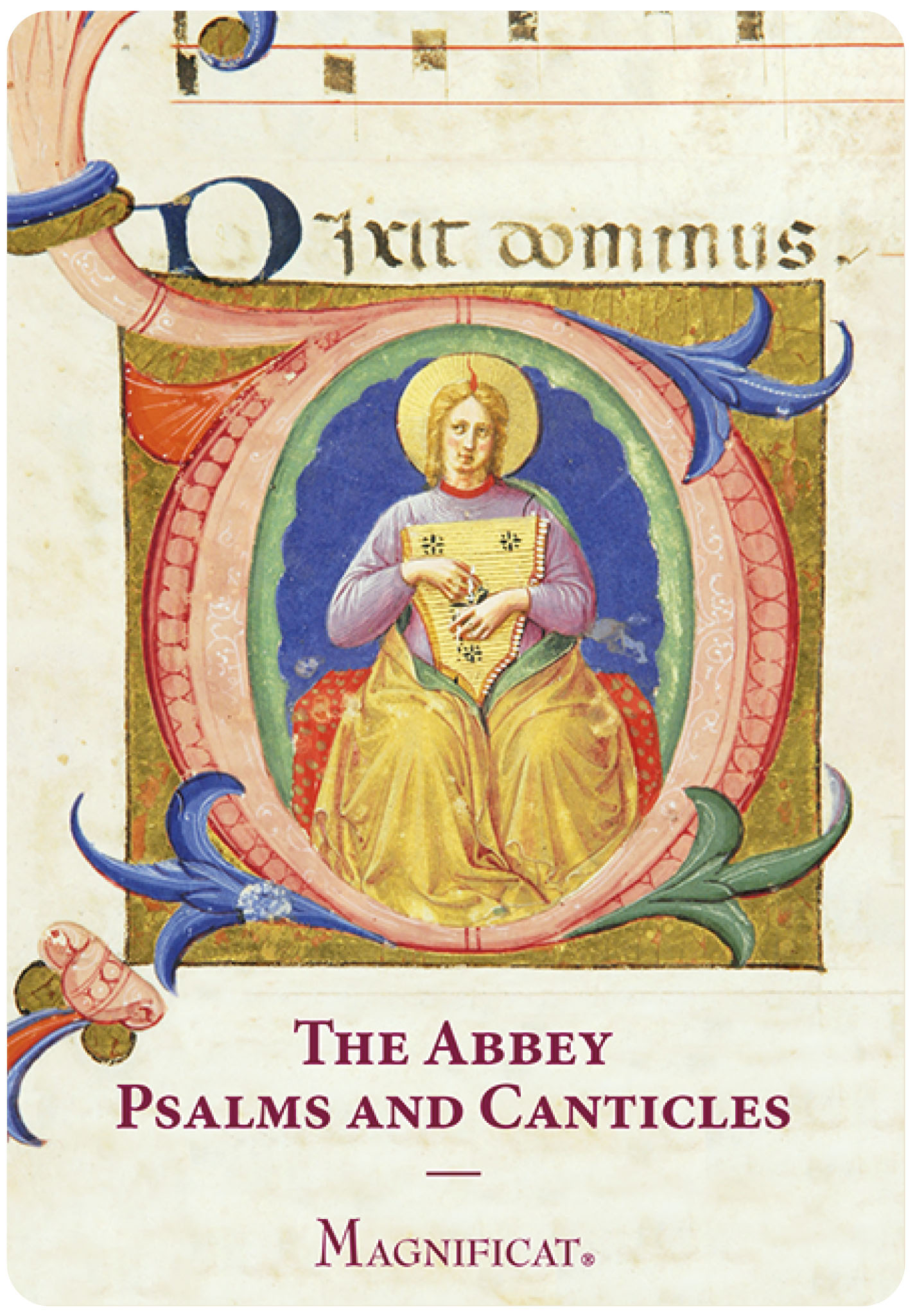 The Abbey Psalms and Canticles, an English translation of the psalms prepared by the monks at Conception Abbey in 2010 and first published as The Revised Grail Psalms. The Abbey Psalms and Canticles is a revision of that work, finished in 2020 and now owned by the United States Conference of Catholic Bishops (USCCB). Wording and numbering of some psalms and verses in other translations may differ. The Abbey Psalms and Canticles is being added to Liturgy of the Hours books used in the United States. While the Turning to God’s Word study book is based on The Abbey Psalms and Canticles translation, all online links to the psalms are to the Revised Standard Version Catholic Edition (RSVCE) translation. A separate copy of The Abbey Psalms and Canticles is needed to read the translation on which the psalms in this study are based.
“Unlike other prayers in sacred Scripture, the prayers contained in the psalms are not inserted into a narrative story that specifies their meaning and function. Instead, the psalms are given to the believer precisely as a text of prayer. Since they are the Word of God, the believer who prays the psalms speaks to God using the very words that God himself has given to us. Thus, in praying the psalms we learn to pray. The psalms are a school of prayer.”—Pope Benedict XVI
welcome to our continuing in-depth study of the psalms
We invite groups and individuals to check out the sample Introduction and Lesson 1 from this 29- lesson Turning to
  God’s Word Catholic Bible study. Our online study pages include additional questions, commentary, and prayers based on the psalm texts, plus an online glossary. Both Volume I and Volume II of Sing a New Psalm: Communicating with God Through the Prayers of the Church have been granted imprimaturs. A digital version of Volume I: Lauds & Vespers can be purchased from our website shop. Volume II: Vigils, Day Prayer & Compline is available in hard copy. If you have a Bible-related question or comment, click on one of the “ask us your question” or “what do you think” buttons on any online study page.
open with prayer
It’s always wise to begin any Bible study with prayer, whether reading the Scriptures alone or meeting with others in a discussion study group. You can pray using your own words, pray one of the psalms in this lesson, or use one of the opening prayers on our website. We especially like the following:
Lord Jesus, you promised to send your Holy Spirit
to teach us all things.
As we read and study your word today,
allow it to touch our hearts and change our lives. Amen.
think about praying Compline every night
In addition to the sample for this Bible study, Turning to God’s Word is providing a copy of Lesson 29 In Peace I Will Lie Down, which addresses the nightly Compline prayers based on Psalm 91, Psalm 4, and Psalm 134. The monks at Conception Abbey pray these short psalms each evening—Psalm 91 on Sunday, Tuesday, Wednesday, and Friday; Psalm 4 and Psalm 134 on Monday, Thursday, and Saturday.
about the psalms in this lesson**
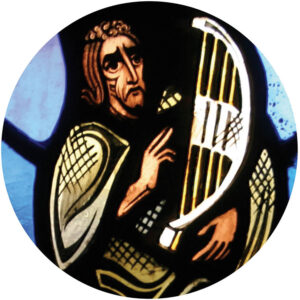 All three of the psalms prayed for Sunday Day Prayer Week I at Conception Abbey are by unidentified composers. Psalm 120 is classified as an individual or personal lament, Psalm 121 is a psalm of individual trust, and Psalm 123 is a communal lament representing the prayer of an entire community. All three psalms are included in a grouping known as the Songs of Ascent.
classifying the psalms
The classification of the psalms, though somewhat standardized, retains an arbitrary nature. Some psalms are classified according to form or type; such forms include the hymn, the lament, and the song of thanksgiving. Psalms also may be classified according to subject matter—royal psalms, for instance, portray the political king of the descendants of Jacob as both the representative of God to the community and the representative of the community to God—or they may be classified according to their use; scholars generally think that hymns exalting Zion were part of a ritual reenactment of the great deeds of God in maintaining Mount Zion and Jerusalem as a home base. Turning to God’s Word is indebted to Fr. Felix Just, a Jesuit priest and biblical scholar, for his organized listing of the psalms by classification and author.
the largest number of psalms are laments
Forty-three of the psalms, including Psalm 120 in this lesson, are classified as individual laments. The word “lament” means “a passionate expression of regret.” An additional 18 psalms, including Psalm 123 in this lesson, are classified as communal laments, which means they were written to be used by an entire community. Refer to the above-mentioned work of Fr. Felix Just for a complete online listing of psalms classified as individual or communal laments.
Psalm 121 is classified as a psalm of individual trust
In addition to Psalm 121 in this lesson, the six other psalms of individual trust are: Psalm 11, Psalm 16, Psalm 23, Psalm 62, Psalm 91, Psalm 121, and Psalm 131. The also are three psalms classified as psalms of communal trust. They are: Psalm 115, Psalm 125, and Psalm 129.
the Songs of Ascent
The Songs of Ascent—sometimes called Pilgrim Psalms or Gradual Psalms—are a collection of 15 psalms (Psalm 120 through Psalm 134) that are thought to have been sung by pilgrims traveling to Jerusalem for religious festivals. These psalms are characterized by themes of divine protection, joyful worship, dependence on God, and unity as a blessing. The term “ascent” refers to the physical journey up the hills toward Jerusalem, the holy city. All biblical references to going to Jerusalem are references to going “up.” In later Christian tradition, these 15 psalms also were thought to describe the spiritual ascent into heaven, which led to them frequently being recited for the dead.
the Aaronic blessing
Some scholars speculate that the Songs of Ascent were set apart as a restoration of the Aaronic benediction found in the book of Numbers 6:24—26: “The LORD bless you and keep you: The LORD make his face to shine upon you, and be gracious to you: The LORD lift up his countenance upon you, and give you peace.” This benediction remains popular in the present day.
the number 15 & the Songs of Ascent
In the Hebrew alphabet, every letter is designated a number. Not only are there 15 psalms designated as Songs of Ascent, mandatory Hebrew feasts took place on the fifteenth day of the month on the Israeli lunar calendar. In the Temple at Jerusalem, there were 15 steps leading from the Lower Court to the Upper Court, which was where Levitical musicians played the Songs of Ascent during liturgical services. The number 15 sometimes is thought to symbolize mercy and grace, or a connection between the physical and the spiritual worlds. In Hebrew tradition the number 15 also is linked to one of the names of God.
what is Day Prayer?
Day Prayer combines several mid-day prayers from the Middle Ages—usually Terce (the third hour of the day, 9 a.m.), Sext (the sixth hour, noon), and None (the ninth hour, 3 p.m.). Day Prayer consists of only a relatively few short psalms prayed around noon. The purpose of Day Prayer is to sanctify the middle of the day by giving the faithful time to pause for spiritual reflection.
the prayer of Barsanuphius
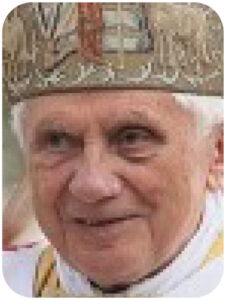 Commenting on Psalm 121, Pope Benedict XVI cited Barsanuphius (variously called Barsanuphius “of Gaza,” “of Palestine,” or “the Great”), a saint who died in the mid-sixth century. Barsanuphius frequently relied on the comforting words of Psalm 121:7–8; the saint ended a personal prayer for one of his brother monks with similar consoling words: “May God protect you from every evil, as his true child, and grant you your heart’s desire, for the advantage of your soul and your body, in his name. Amen.”
for more writings from recent popes
You can find links to magisterial documents referred to in Turning to God’s Word Catholic Bible studies 
 at ex libris—magisterial documents. This page includes a listing of significant recent encyclicals as well as a number of historical Church documents. Recommended books related to Scripture study can be found at ex libris—main bookshelf, including books on the psalms by Pope St. John Paul II and Pope Benedict XVI. Psalms & Canticles: Meditations and Catechesis on the Psalms and Canticles of Morning Prayer is a collection of reflections on the texts of the prayers at Lauds originally delivered as part of Pope St. John Paul II’s Wednesday audiences. In another volume, Psalms & Canticles: Meditations and Catechesis on the Psalms and Canticles of Evening Prayer, Pope Benedict XVI continued the practice to include the biblical texts prayed at Vespers.
another book about the psalms
Gregory Polan, OSB, recent abbot primate of the worldwide Benedictine Confederation, 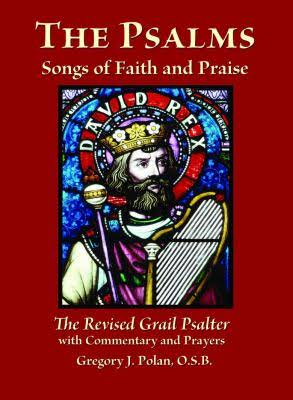 was lead
 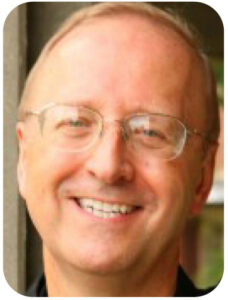 translator of The Abbey Psalms and Canticles, the English translation upon which the Turning to God’s Word two-part Bible study of the psalms is based. Abbot Polan is author of The Psalms: Songs of Faith and Praise, which contains commentary and prayers as well as the Abbey’s complete translation of the psalms. Abbot Polan’s book is listed in ex libris—main bookshelf on the Turning to God’s Word website.
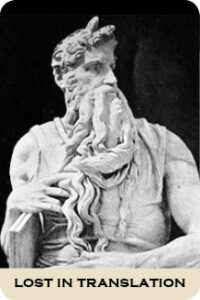 Ascension—you could look it up in our archives
The Songs of Ascent are psalms that foreshadow Jesus’ Ascension into heaven. To learn more about the theological difference between Jesus’ Ascension and his Mother’s Assumption, read Lost in Translation, an online column in which Turning to God’s Word author Matthew Phelps helps readers connect with ideas expressed in the original languages of the Scriptures. New Lost in Translation entries are posted on Mondays, and past entries are archived on our website. Contact us if you’d like to receive Lost in Translation by email every week.
read the Catechism—have you cooperated in sin?
Paragraph 1868 in the Catechism of the Catholic Church acknowledges that although sin is a personal act, it’s entirely possible to still manage to cooperate in the sin of others. Consider whether you are 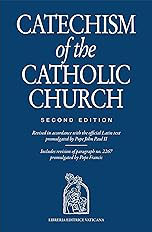 guilty of any of the following types of sin. What sacramental help does the Church provide?
1868 Sin is a personal act. Moreover, we have a responsibility for the sins committed by others when we cooperate in them:
—by participating directly and voluntarily in them;
—by ordering, advising, praising, or approving them;
—by not disclosing or not hindering them when we have an obligation to do so;
—by protecting evil-doers.
a study leader shares her thoughts
The following exchange veers from our standard question-and-answer format, but others may find it helpful. It comes from a study leader in a group planning to tackle one of our other studies.
 comment: Thank you for your online pages. They are such a bonus. In our Bible study more questions come up in our leaders’ group than in my individual group about why you ask a certain question, or what you might be thinking, or where you are leading with your questions. I’ve often been able to point to the online pages for direction and clues. I need to remind the other group leaders and myself that you’re trying to get us to think and pray about Scripture and its impact in our lives rather than limiting Bible study to an assignment that can be completed with a single academic answer.
response: We appreciate your comments, especially since we know that the online pages are not everyone’s cup of tea. We go to some effort to provide optional supplemental information here and in the videos for participants who are interested.
Matthew, Tami, and I feel that it’s important for people to know that sometimes asking the right questions is more valuable than having all the answers. It took us at Turning to God’s Word some time to get to this idea. The bottom line is that no one is able to hold onto information that they’re spoon-fed the same way that they can remember and live it when they have to dig concepts out for themselves. This is a big departure from the popular scholarly model of Bible study where everyone expects an expert to tell them what stuff means, what’s important, and why. Sometimes when one of us sits in with a group, a participant will ask what we were going for with a particular question. People almost always find it shocking when they’re told that we were thinking we wouldn’t mind hearing a discussion about what others think about the passage in question.
Studying any of the Old Testament writings presents some special stumbling blocks. These books introduce images and ideas that we might or might not recognize as also occurring in the New Testament. There’s a danger that we become so concerned with understanding the Old Testament message as it originally would have been received that we miss noticing that everything that happens in the Old Testament points toward Jesus. Then there’s the other side of that danger, in which we concentrate so much on a Christian interpretation that we miss important historical information that can shed light on Jesus and what he came to do. Finally, there’s a very real danger that we begin to view Jesus as the end point and miss seeing that the work of the Church only begins with Jesus’ death and Resurrection.
It’s easy to get derailed in one area and miss the big picture, which is why group discussion of the questions is helpful. If one person is focusing on Old Testament history, someone else may be looking at the particular way the writing points to Jesus. Another person may be concentrating on how these ancient books are relevant in today’s world. All these different points of view combine to give us a clearer picture of what God is saying to us in Scripture.
more about the online study pages & videos
We hope that some people will find Bible study so compelling that they’ll want more information than realistically fits in the study books. We want to provide a vehicle for extra material and an easy way for people to ask questions and make comments, especially with so many contradictory views floating around on the Internet and elsewhere.
It also is our intent that the books, the online study pages, and the videos each can stand alone if need be. We don’t want financial concerns or the lack of a compatible group to prevent anyone from reading and praying with the Bible. We know that there are people in our groups who never read the online pages or watch the videos, just as there are people who do all of those things and more. The only really necessary part of studying the Bible, however, is reading the Bible. Everything else is secondary.
The only caution we would add is that if you’re limiting your Bible study experience to just reading the Bible—and you are aware that you don’t understand what you’re reading—you probably should take a look at the commentaries in the study book and on the supplemental online pages, and also listen to Matthew’s videos—especially any related to what you’re studying. We frequently address some of the more obvious difficulties in those places. If you’ve read all of our related commentaries and watched the video and still have questions, shoot us an email. We’re always happy to discuss Scripture, and some of our most cherished insights have come about in conversation with others. (There are no videos to accompany lessons in either Volume I or Volume II of Sing a New Psalm; all the rest of the Turning to God’s Word Bible studies except Scripture & the Rosary have videos.)
a translation difference: sojourn vs. live
The Abbey Psalms and Canticles translates Psalm 120:5: “Alas, that I sojourn in Meshech, dwell among the tents of Kedar!” The Revised Grail Psalms translates the same verse as: “Alas, that I live in Meshech, dwell among the tents of Kedar!” While the words “sojourn” and “live” have similar meanings, “sojourn” includes the possibility of a more temporary stay than suggested by the word “live.” It’s not clear which word comes closest to the anonymous Psalmist’s intent. Of importance, however, is the location where he finds himself dwelling. What might be most significant about Meshech and Kedar? (Note that it is not possible to link to either The Abbey Psalms and Canticles or The Revised Grail Psalms; all links on the online pages are to the Revised Standard Version Catholic Edition [RSVCE].)
the best Catholic commentary about Scripture
To find out more about how Church teaching is supported by passages in Sing a New Psalm: Communicating with God Through the Prayers of the Church—Volume II: Vigils, Day Prayer & Compline, check out the Index of Citations in the Catechism of the Catholic Church. Links to the primary Scripture passages in the lesson (Revised Standard Version Catholic Edition [RSVCE*]) and relevant paragraphs in the Catechism are provided here. Not every passage in the biblical text for this study is referenced in a Catechism paragraph, however, including Psalm 120 and Psalm 123 in this lesson.
Psalm 121:2—paragraph 1605
ways our glossary might prove helpful
In addition to providing extra information about geographical locations, our glossary also points out  persons or places mentioned in the biblical text under more than one name or more than one spelling. If you can remember a name but aren’t sure in which lesson it shows up, you can find it in the glossary, which lists every proper noun that appears in the biblical text for every lesson in Sing a New Psalm: Communicating with God Through the Prayers of the Church—Volume II: Vigils, Day Prayer & Compline.
don’t forget about our indexes & extra online material
If you’re trying to locate information about a passage in Scripture, you can look it up in the index at the back of the study book. If you want to revisit a particular commentary, you can look that up by title in the topics index. If you want to learn more about another book of the Bible for which there’s a Turning to God’s Word study, you can read the online commentaries and watch any accompanying videos by going to the online study directories. Finally, if you have a question or would like to make a comment about any of our studies, you can use one of the “ask us your question” or “what do you think” buttons to email our authors.
ex libris—Church documents & books about religious topics
You can find links to magisterial documents referred to in Turning to God’s Word Catholic Bible studies at ex libris—magisterial documents. This page includes a listing of significant recent encyclicals as well as a number of historical Church documents. Recommended books related to Scripture study can be found at ex libris—main bookshelf.
wondering how to pronounce some of these words?
The following links are to readings from the New International Version (NIV) Bible. To listen, open one of the links and click on the audio icon above the printed text. Although not taken from the translations used in our study materials, the NIV readings provide an audio guide to pronunciation of words in this lesson’s primary biblical texts. A close online version of the translation of the psalms currently used in Catholic liturgy in the United States as well as an audio guide for daily Mass readings for the current month can be found on the website of the United States Conference of Catholic Bishops (USCCB).
Psalm 120 (NIV)
Psalm 121 (NIV)
Psalm 123 (NIV)
 close with a psalms-based prayer for Sunday Day Prayer (Week I)
Many of our Catholic study groups like to conclude their discussions with a prayer based on the scriptural focus of their lesson, and some participants include Scripture-specific prayer in their individual study. If you’re uncomfortable composing your own Bible-based prayers, you can follow our four easy steps. If you prefer, you can pray any of the psalms in this lesson, or you can use the following short prayer.
O God, you sent your own Son
to give us hope for eternal life.
Through his Ascension, Jesus opened the door
to paradise for those who follow him in truth.
Grant that we may remain focused on what matters
as we travel toward the Promised Land of heaven.
We ask this in the name of Jesus Christ,
whom you sent to show us the way. Amen.
Lesson 3 You, LORD, Are a Shield About Me, Monday Vigils (Week I)—Psalm 29 (the Invitatory), Psalm 3, Psalm 9, Psalm 10, and Psalm 21
Lesson 1 He Who Sits in the Heavens Laughs, Sunday Vigils (Week I)—Psalm 95 (the Invitatory), Psalm 1, Psalm 2, Psalm 23, Psalm 76, and Psalm 103
you also may like our study of Saul, David & Solomon (digital only)
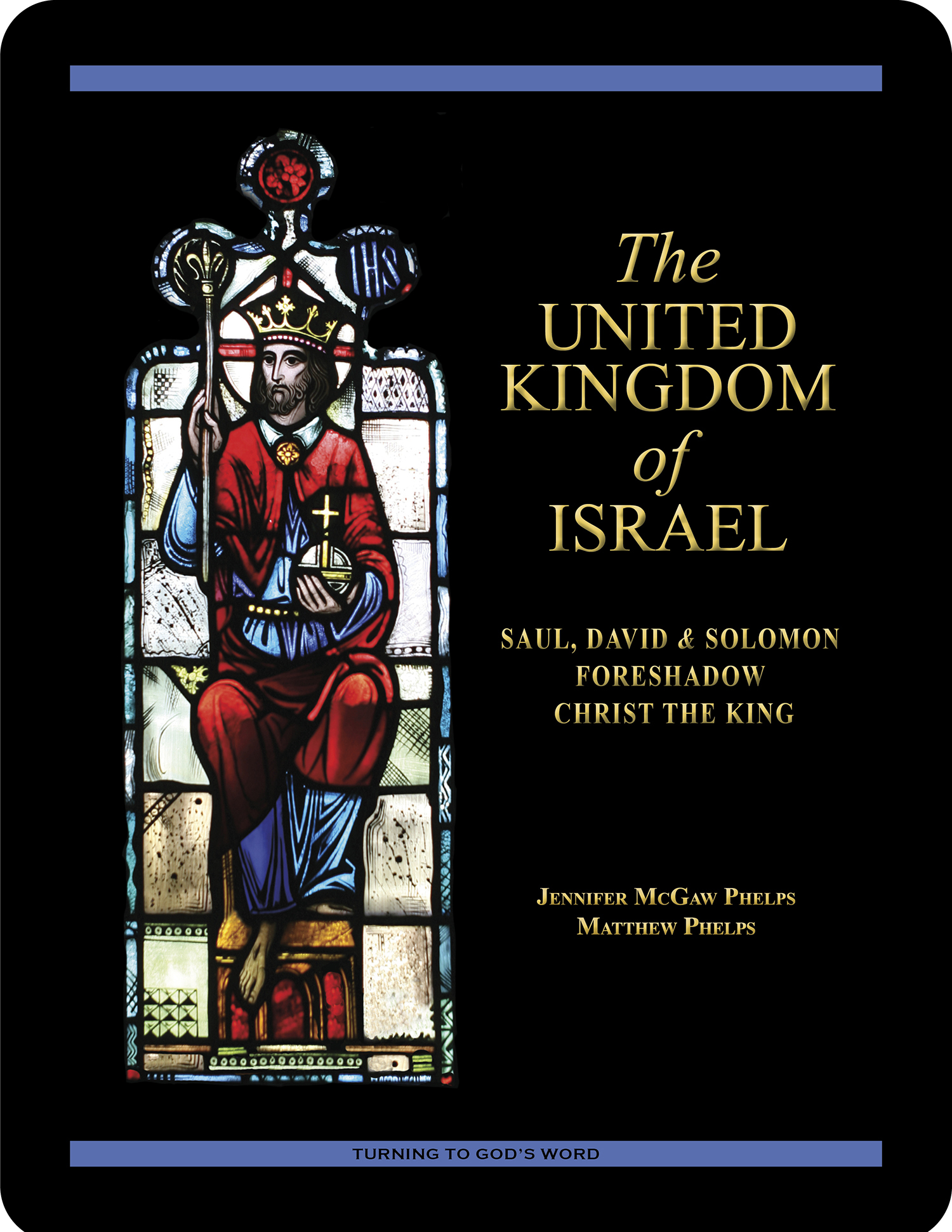 The United Kingdom of Israel: Saul, David & Solomon Foreshadow Christ the King, a 28-lesson Catholic Bible study with an imprimatur, provides an in-depth look at the First and Second Books of Samuel to learn how the lives of the monarchs Saul, David, and Solomon point ahead to the kingdom of heaven. The unified reign of King David is seen as a foreshadowing or type of the unity that is one of the four marks of the Church—the kingdom of God—established by Jesus Christ. Click here to view a sample of the first lesson.
start a Turning to God’s Word Bible study
 Thank you for your interest in Sing a New Psalm: Communicating with God Through the Prayers of the Church—Volume II.
  Information about beginning a Turning to God’s Word Bible study can be found at start a Bible study. Tami, Matthew, and I are available to answer questions. Contact us if you’d like to start one of our studies or have your schedule listed with other TtGW study groups on our website. —Jennifer
*There are seven deuterocanonical books in the Old Testament—Baruch, Judith, Sirach, Tobit, Wisdom, and First and Second Maccabees—and there are some deuterocanonical passages in the Books of Daniel and Esther. Protestants usually refer to these works as “apocryphal,” a word that means “outside the (Protestant) canon” because they’re excluded from most Protestant Bibles. Deuterocanonical means “second canon”; Catholics use that word to refer to any section of the Catholic Old Testament for which there are no extant, or existing, Hebrew manuscripts. All of the deuterocanonical books appear in the Septuagint, the earliest remaining versions of which date to the 1st century B.C. This Greek translation of the Old Testament was in common use by Jews at the time of Jesus. Learn more by reading How Do Catholic & Protestant Bibles Differ?
**You can learn more about the psalms by viewing a sample lesson from the Turning to God’s Word Catholic Bible study Sing a New Psalm: Communicating with God Through the Prayers of the Church. The first volume covers psalms prayed at Lauds and Vespers; the second covers psalms prayed at Vigils, Day Prayer, and Compline. Numbering of psalms and verses may vary in other translations.
Turning to God’s Word printed Bible studies use the 2006 Revised Standard Version Second Catholic Edition (RSV2CE) translation for all Scripture references except those to the psalms, which are taken from The Abbey Psalms and Canticles, prepared by the Benedictine monks of Conception Abbey and published in 2020 by the United States Conference of Catholic Bishops (USCCB). All Scripture links for the online study pages for Sing a New Psalm: Communicating with God Through the Prayers of the Church—Volume II: Vigils, Day Prayer & Compline are to the 1966 Revised Standard Version Catholic Edition (RSVCE) translation. The New International Version (NIV) audio recordings follow the same chapter and verse numbering as the RSV Catholic translations, but the NIV translation doesn’t include the deuterocanonical books and passages.
The 1966 RSVCE uses archaic pronouns and verb forms such as “thee,” “thou,” and “didst” in the psalms and in direct quotations attributed to God. The 2006 RSV2CE replaces these with more accessible English. The few significant translation changes in the RSV2CE include rendering almah as “virgin” in the Book of Isaiah 7:14 and restoring the term “begotten” in the Gospel According to John 3:16.
Numbering for some passages in this Bible study will vary. Turning to God’s Word studies (print and digital) follow the numbering in the Revised Standard Version Catholic translations (RSV2CE and RSVCE). Discrepancies in the New American Bible Revised Edition (NABRE) are noted in the Index of Scripture Citations in the study book.