
 Sing a New Psalm:
Communicating with God Through
the Prayers of the Church
Volume II: Vigils, Day Prayer & Compline
Lesson 3 You, LORD, Are a Shield About Me
Invitatory: Psalm 29 (RSVCE)
Psalm 3 (RSVCE), Psalm 9 (RSVCE), Psalm 10 (RSVCE), and Psalm 31 (RSVCE)
Monday Vigils (Week I)
Revised Standard Version Catholic Edition*
New American Bible Revised Edition (NABRE)*
Catechism of the Catholic Church
ex libris (in our library)
glossary for Volume II of Sing a New Psalm
Pope Francis’ message for the Third World Day of the Poor
next lesson: I Wash My Hands in Innocence
This material coordinates with Lesson 3, “You, LORD, Are a Shield About Me,” on pages 15–18 in Sing a New Psalm: Communicating with God Through the Prayers of the Church—Volume II: Vigils, Day Prayer & Compline. Our Catholic Bible study is based on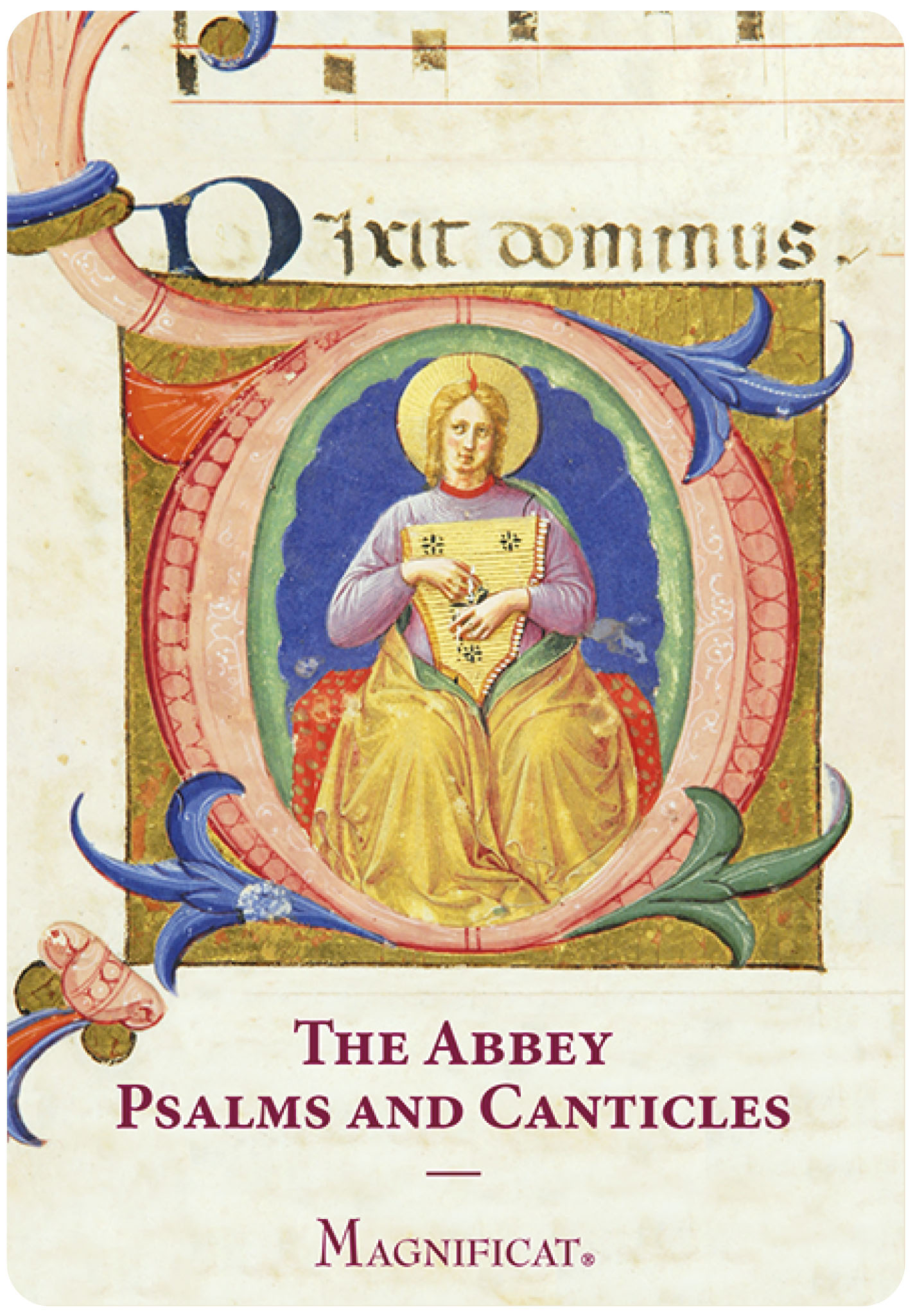 The Abbey Psalms and Canticles, an English translation of the psalms prepared by the monks at Conception Abbey in 2010 and first published as The Revised Grail Psalms. The Abbey Psalms and Canticles is a revision of that work, finished in 2020 and now owned by the United States Conference of Catholic Bishops (USCCB). Wording and numbering of some psalms and verses in other translations may differ. The Abbey Psalms and Canticles is being added to Liturgy of the Hours books used in the United States. While the Turning to God’s Word study book is based on The Abbey Psalms and Canticles translation, all online links to the psalms are to the Revised Standard Version Catholic Edition (RSVCE) translation. A separate copy of The Abbey Psalms and Canticles is needed to read the translation on which the psalms in this study are based.
“Unlike other prayers in sacred Scripture, the prayers contained in the psalms are not inserted into a narrative story that specifies their meaning and function. Instead, the psalms are given to the believer precisely as a text of prayer. Since they are the Word of God, the believer who prays the psalms speaks to God using the very words that God himself has given to us. Thus, in praying the psalms we learn to pray. The psalms are a school of prayer.”—Pope Benedict XVI
welcome to our continuing in-depth study of the psalms
We invite groups and individuals to check out the sample Introduction and Lesson 1 from this 29- lesson Turning to
  God’s Word Catholic Bible study. Our online study pages include additional questions, commentary, and prayers based on the psalm texts, plus an online glossary. Both Volume I and Volume II of Sing a New Psalm: Communicating with God Through the Prayers of the Church have been granted imprimaturs. A digital version of Volume I: Lauds & Vespers can be purchased from our website shop. Volume II: Vigils, Day Prayer & Compline is available in hard copy. If you have a Bible-related question or comment, click on one of the “ask us your question” or “what do you think” buttons on any online study page.
open with prayer
It’s always wise to begin any Bible study with prayer, whether reading the Scriptures alone or meeting with others in a discussion study group. You can pray using your own words, pray one of the psalms in this lesson, or use one of the opening prayers on our website. We especially like the following:
Lord Jesus, you promised to send your Holy Spirit
to teach us all things.
As we read and study your word today,
allow it to touch our hearts and change our lives. Amen.
think about praying Compline every night
In addition to the sample for this Bible study, Turning to God’s Word is providing a copy of Lesson 29 In Peace I Will Lie Down, which addresses the nightly Compline prayers based on Psalm 91, Psalm 4, and Psalm 134. The monks at Conception Abbey pray these short psalms each evening—Psalm 91 on Sunday, Tuesday, Wednesday, and Friday; Psalm 4 and Psalm 134 on Monday, Thursday, and Saturday.
about the psalms in this lesson**
 Four of the five psalms prayed for Monday Vigils Week I at Conception Abbey are attributed to David—Psalm 29 (the Invitatory) is classified as a hymn, Psalm 3 and Psalm 31 are individual or personal laments, and Psalm 9 is an individual song of thanksgiving. The identity of the person who composed Psalm 10, another individual psalm of thanksgiving, is disputed; some scholars believe it was composed by David, but others think the composer remains unknown.
classifying the psalms
The classification of the psalms, though somewhat standardized, retains an arbitrary nature. Some psalms are classified according to form or type; such forms include the hymn, the lament, and the song of thanksgiving. Psalms also may be classified according to subject matter—royal psalms, for instance, portray the political king of the descendants of Jacob as both the representative of God to the community and the representative of the community to God—or they may be classified according to their use; scholars generally think that hymns exalting Zion were part of a ritual reenactment of the great deeds of God in maintaining Mount Zion and Jerusalem as a home base. Turning to God’s Word is indebted to Fr. Felix Just, a Jesuit priest and biblical scholar, for his organized listing of the psalms by classification and author.
Psalm 29 (the Invitatory) is one of 19 psalms classified as a hymn
In addition to Psalm 29 in this lesson, the other 18 psalms classified as hymns are: Psalm 8, Psalm 19, Psalm 33, Psalm 100, Psalm 103, Psalm 104, Psalm 111, Psalm 113, Psalm 114, Psalm 117, Psalm 135, Psalm 136, Psalm 145, Psalm 146, Psalm 147, Psalm 148, Psalm 149, and Psalm 150.
Psalm 9 & Psalm 10 are classified as individual psalms of thanksgiving
Nine of the 150 psalms are individual psalms offering thanks to God. These include Psalm 9 and Psalm 10, as well as Psalm 30, Psalm 32, Psalm 34, Psalm 41, Psalm 92, Psalm 116, and Psalm 138. In addition, eight more psalms are classified as communal songs of thanksgiving—Psalm 65, Psalm 66, Psalm 67, Psalm 68, Psalm 75, Psalm 107, Psalm 108, and Psalm 124.
the largest number of psalms are laments
Forty-three of the psalms, including Psalm 3 and Psalm 31 in this lesson, are classified as individual laments. The word “lament” means “a passionate expression of regret.” An additional 18 psalms are classified as communal laments, which means they were written to be used by an entire community. Refer to the above-mentioned work of Fr. Felix Just for a complete online listing of psalms classified as individual or communal laments.
introducing acrostic psalms
Acrostic writing describes poems, word puzzles, or other compositions in which certain letters (usually the first in a line) combine to form a word or some other message. Acrostic writing is seen as an artistic device, a mnemonic tool, or in some cases as a pattern implying completeness. A few of the psalms are written in acrostic form. The best-known of these is Psalm 119, in which 22 sections of eight verses each begin with a successive letter of the Hebrew alphabet. (Psalm 119, which looks at various aspects of God’s law, will be the focus of Day Prayer Week II—Lesson 16 I Treasure Your Word in My Heart, Lesson 18 I Reach Out to Your Commands, Lesson 20 Your Statutes Have Become My Song, Lesson 22 It Was Your Hands That Shaped Me, Lesson 24 More Than Finest Gold, Lesson 26 The Unfolding of Your Word Gives Light, and Lesson 28 My Lips Shall Proclaim Your Praise.) Psalm 119:105–112 is prayed at Conception Abbey as part of Sunday First Vespers during Week I and is covered in Lesson 1 Set a Guard on My Mouth in Sing a New Psalm: Communicating with God Through the Prayers of the Church—Volume I: Lauds & Vespers.
Psalm 9 and Psalm 10 in this lesson combine to form a single acrostic psalm (which may or may not be composed entirely by David), but it’s easy to miss the acrostic significance when the psalms are translated from Hebrew to English. Other acrostic psalms include Psalm 25, Psalm 34, and Psalm 37 in this study and Psalm 111, Psalm 112, and Psalm 145 in Volume I.
a passage omitted from Liturgy of the Hours books
A difficulty for Christians who wish to incorporate the psalms into their prayers is that in some of these  ancient hymns the Psalmists blatantly curse their enemies and ask the LORD to deal harshly with those enemies. This is disturbing enough that the editors compiling the four-week Liturgy of the Hours books chose to leave out a few problematic verses. Omitted from psalms for this lesson (Monday Vigils Week I prayed by the monks at Conception Abbey) is Psalm 31:18–19 (Psalm 31:17–18 in Revised Standard Version Catholic Editions). Consider why the editors of Liturgy of the Hours books might have felt that this verse shouldn’t be included.
all omissions are noted in this study
Omissions in the four-week Liturgy of the Hours books are addressed in Volume I and Volume II. For a complete list, click on this link, which includes a comparison of the two-week cursus (schedule) used at Conception Abbey and in both volumes of our study with the four-week Roman cursus followed by current Liturgy of the Hours books.
an image of God’s loving protection
This illustration by Turning to God’s Word co-founder Tami Palladino is from Lesson 20 The LORD God I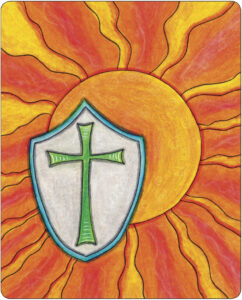 s a Sun & a Shield in Volume I. Tami’s illustration combines two images of God’s love for his people. These are found in Psalm 84:12 (Psalm 84:11 in Revised Standard Version Catholic Editions)—the sun to enlighten our days and the shield to protect us from all that would harm us. Many religions emphasize the beginning of a new day, which is greeted by the rising of the sun, as one of the very best times to pray. What three things would you most like to thank God for today? What’s the single thing for which you’ve been the most thankful throughout your life? In what area of your life do you feel that you’re in the most need of God’s protection? What’s one particular challenge that you would like God’s help with today? What’s a goal you have that you’d like God’s help with over the next six months? What do you consider the ultimate goal of your life? Consider how God might be able to help you to achieve it. Click on Tami’s illustration to enlarge it. The illustration also is printed on page 85 in Volume I. Click on this link to access the supplemental online page for that lesson.
 salvation—you could look it up in our archives
In Psalm 3:3 (Psalm 3:2 in Revised Standard Version Catholic Editions), salvation is a major theme. From what might humanity need to be saved? You can learn more about salvation and how the meaning of that word has changed over time, by reading Lost in Translation, an online column in which Turning to God’s Word author Matthew Phelps helps readers connect with ideas expressed in the original languages of the Scriptures. New Lost in Translation entries are posted on Mondays, and past entries are archived on our website. Contact us if you’d like to receive Lost in Translation by email every week.
God speaks & it comes to be
The word of the Lord is a crucial concept in both Testaments. In the book of Genesis 1:1–31, whatever God speaks comes to be, an idea reiterated in Psalm 29, which describes the performative nature of the divine speech in a series of verses about the power of the LORD’s voice. Psalm 33:6 credits the word of the LORD with creating the heavens, and the anonymous author of that hymn also describes an army of the stars coming forth with God’s breath.
The breath of God is associated with God’s Spirit, so Creation is viewed as the result of God’s inspiration (taking in of breath), after which God simply exhales his Word. In the Gospel According to John 1:1–3, Jesus Christ is revealed as the Word of God: “In the beginning was the Word, and the Word was with God, and the Word was God. He was in the beginning with God; all things were made through him, and without him was not anything made that was made.”
Humanity is given the ability to speak, but the speech of men and women is descriptive, not performative. What a person says describes a situation; what God says, by contrast, is performative. The words spoken by God cause changes in the world. The one clear exception to this, the occasions that give humanity the ability to effect similar change in the spiritual world through speech, occur in the sacraments. Priests can enact ontological change through the sacraments of the Church, and they do this through performative—not descriptive—speech.
what is ontological change?
Ontological change is an irreversible transformation of a thing or person’s very nature or essence, rather than merely a superficial change. In Catholic theology, ontological change describes the belief that a priest acts in persona Christi (in the person of Christ) to effect a spiritual change when performing the sacraments. The belief that bread and wine become the Body and Blood of Christ during the sacrament of the Eucharist is an example of ontological change. So is the absolution of sin that takes place in the sacrament of Reconciliation. Ordination, another sacrament, allows a man to act in persona Christi. The mystery of the sacraments is an example of God’s performative speech at work through the Church. Think about the ontological changes wrought by each sacrament. How many sacraments have you received, and how did they change your spiritual life?
the Church’s preferential option for the poor
In November 17, 2019, Pope Francis used Psalm 9 as the basis of his message for the Third World Day 
 of the Poor, leading with a quote from Psalm 9:19 (Psalm 9:18 in Revised Standard Version Catholic Editions): “… the hope of the poor shall not perish forever.” (The Abbey Psalms and Canticles and The Revised Grail Psalm both translate that same passage as: “…the needy shall not always be forgotten, nor the hopes of the poor ever perish.” The Vatican document that contains the entire message is short enough to easily read—you can access it by clicking on message for the Third World Day of the Poor. You also can read “An Option for the Poor” on page 15 of Volume II, and paragraphs 2443 through 2449 in the Catechism of the Catholic Church, which urge the faithful to be mindful of the poor.
for more writings from recent popes
You can find links to magisterial documents referred to in Turning to God’s Word Catholic Bible studies 
 at ex libris—magisterial documents. This page includes a listing of significant recent encyclicals as well as a number of historical Church documents. Recommended books related to Scripture study can be found at ex libris—main bookshelf, including books on the psalms by Pope St. John Paul II and Pope Benedict XVI. Psalms & Canticles: Meditations and Catechesis on the Psalms and Canticles of Morning Prayer is a collection of reflections on the texts of the prayers at Lauds originally delivered as part of Pope St. John Paul II’s Wednesday audiences. In another volume, Psalms & Canticles: Meditations and Catechesis on the Psalms and Canticles of Evening Prayer, Pope Benedict XVI continued the practice to include the biblical texts prayed at Vespers.
another book about the psalms
Gregory Polan, OSB, recent abbot primate of the worldwide Benedictine Confederation, 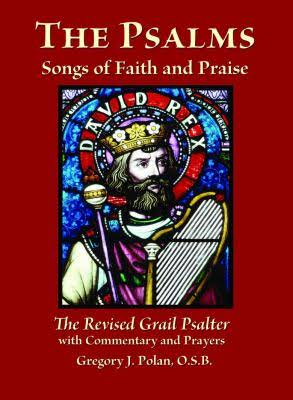 was lead
 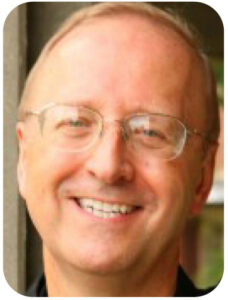 translator of The Abbey Psalms and Canticles, the English translation upon which the Turning to God’s Word two-part Bible study of the psalms is based. Abbot Polan is author of The Psalms: Songs of Faith and Praise, which contains commentary and prayers as well as the Abbey’s complete translation of the psalms. Abbot Polan’s book is listed in ex libris—main bookshelf on the Turning to God’s Word website.
a translation difference: sits vs. sat
The Abbey Psalms and Canticles translates Psalm 29:10: “The LORD sits enthroned above the flood….” In The Revised Grail Psalms translation, the past tense “sat” is substituted for the present tense “sits.” Consider what effect his change has on the psalm’s meaning. (Note that it is not possible to link to either The Abbey Psalms and Canticles or The Revised Grail Psalms; all links on the online pages are to the Revised Standard Version Catholic Edition [RSVCE].)
a translation difference: salvation vs. help
The Abbey Psalms and Canticles translates Psalm 3:3 (Psalm 3:2 in Revised Standard Version Catholic Editions): “There is no salvation for him in God.” The Revised Grail Psalms translates the same verse: “There is no help for him in God.” What is the difference between “salvation” and “help,” and why might the USCCB editors have chosen to use the word “salvation”?
a translation difference: righteousness vs. justice
The Abbey Psalms and Canticles translates Psalm 9:9: “He will judge the world with righteousness….” The Revised Grail Psalms swaps the word “justice” for the word “righteousness” in the same verses. Which translation do you prefer, and why?
a translation difference: Sheol vs. the grave
The Abbey Psalms and Canticles translates Psalm 9:18 (Psalm 9:17 in Revised Standard Version Catholic Editions): “Let the wicked go down to Sheol ….” The Revised Grail Psalms translates the same verse: “Let the wicked go down to the grave ….” A similar translation change occurs in Psalm 31:18 (Psalm 31:17 in Revised Standard Version Catholic Editions). Which translation do you prefer, and why?
a trio of minor translation differences
In The Abbey Psalms and Canticles translation of Psalm 10:1, Psalm 10:4, and Psalm 10:13 the United States Conference of Catholic Bishops (USCCB) made three fairly insignificant changes from the original translation of The Revised Grail Psalms. Psalm 10:1 in The Abbey Psalms and Canticles begins: “Why, O Lord, do you stand afar off….” The Revised Grail Psalms translates the same verse: “O Lord, why do you stand afar off….” The Abbey Psalms and Canticles translates Psalm 10:4: “In his pride, the wicked does not seek him; all his thoughts are,’There is no God.'” The Revised Grail Psalms translates the same verse: “The wicked says in his pride, ‘God will not punish. There is no God.’ Such are his thoughts.” And The Abbey Psalms and Canticles translates the beginning of Psalm 10:13: “Why should the wicked man spurn God….” The Revised Grail Psalms translates the same verse: “Why should the wicked spurn God….” Consider what might have motivated the USCCB editors to make these three changes, which don’t appear to significantly alter the meaning of the psalm.
another translation difference: draws him to his snare vs. drags him away
The Abbey Psalms and Canticles translates Psalm 10:9: “…he seizes the poor one and draws him to his snare.… ” The Revised Grail Psalms translates the same verse: “…he seizes the poor one and drags him away….” Both translations suggest the poor one is going to be harmed, but the idea is stronger when the word “snare” is employed.
a translation difference that involves word arrangement
The Abbey Psalms and Canticles translates Psalm 31:16 (Psalm 31:15 in Revised Standard Version Catholic Editions): “There in your hands is my lot, from the hands of my enemies deliver me, and from those who pursue me” The Revised Grail Psalms translates the same verse: “My lot is in your hands, deliver me from the hands of my enemies and those who pursue me.” Consider why editors at the USCCB might have asked for this translation change.
two more translation differences: one & Adam vs. man & men
The Abbey Psalms and Canticles translates Psalm 31:19–20 (Psalm 31:18–19 in Revised Standard Version Catholic editions): “Let lying lips be stilled, that speak haughtily against the just one, with pride and contempt. How great is the goodness, LORD, that you keep for those who fear you, that you show to those who trust you in the sight of the children of Adam.” The Revised Grail Psalms translates the same verse: “Let lying lips be stilled, that speak haughtily against the just man, with pride and contempt. How great is the goodness, LORD, that you keep for those who fear you, that you show to those who trust you in the sight of the children of men.” It’s worth speculating about whether these two changes are related, and if they were designed primarily to incorporate inclusive language into Scripture.
the best Catholic commentary about Scripture
To find out more about how Church teaching is supported by passages in Sing a New Psalm: Communicating with God Through the Prayers of the Church—Volume II: Vigils, Day Prayer & Compline, check out the Index of Citations in the Catechism of the Catholic Church. Links to the primary Scripture passages in the lesson (Revised Standard Version Catholic Edition [RSVCE*]) and relevant paragraphs in the Catechism are provided here. Not every passage in the biblical text for this study is referenced in a Catechism paragraph, however, including Psalm 3, Psalm 9, Psalm 10, and Psalm 31 in this lesson.
Psalm 29:2 (the Invitatory)—paragraph 2143
ways our glossary might prove helpful
In addition to providing extra information about geographical locations, our glossary also points out  persons or places mentioned in the biblical text under more than one name or more than one spelling. If you can remember a name but aren’t sure in which lesson it shows up, you can find it in the glossary, which lists every proper noun that appears in the biblical text for every lesson in Sing a New Psalm: Communicating with God Through the Prayers of the Church—Volume II: Vigils, Day Prayer & Compline.
don’t forget about our indexes & extra online material
If you’re trying to locate information about a passage in Scripture, you can look it up in the index at the back of the study book. If you want to revisit a particular commentary, you can look that up by title in the topics index. If you want to learn more about another book of the Bible for which there’s a Turning to God’s Word study, you can read the online commentaries and watch any accompanying videos by going to the online study directories. Finally, if you have a question or would like to make a comment about any of our studies, you can use one of the “ask us your question” or “what do you think” buttons to email our authors.
ex libris—Church documents & books about religious topics
You can find links to magisterial documents referred to in Turning to God’s Word Catholic Bible studies at ex libris—magisterial documents. This page includes a listing of significant recent encyclicals as well as a number of historical Church documents. Recommended books related to Scripture study can be found at ex libris—main bookshelf.
wondering how to pronounce some of these words?
The following links are to readings from the New International Version (NIV) Bible. To listen, open one of the links and click on the audio icon above the printed text. Although not taken from the translations used in our study materials, the NIV readings provide an audio guide to pronunciation of words in this lesson’s primary biblical texts. An online version of the translation of the Bible used in Catholic liturgy in the United States as well as an audio guide for daily Mass readings for the current three months can be found on the website of the United States Conference of Catholic Bishops (USCCB).
Psalm 29—the Invitatory (NIV)
Psalm 3 (NIV)
Psalm 9 (NIV)
Psalm 10 (NIV)
Psalm 31 (NIV)
 close with a psalms-based prayer for Monday Vigils (Week I)
Many of our Catholic study groups like to conclude their discussions with a prayer based on the scriptural focus of their lesson. If you’re uncomfortable composing your own Bible-based prayers, you can follow our four easy steps. If you prefer, you can pray any of the psalms in this lesson, or you can use the following short prayer.
O God, you are the refuge of all who call on you.
Respond in mercy to those who seek your protection.
Help us to value and appreciate your performative words
that effect sacramental change in our lives,
and grant that we also may value the descriptive words that we speak.
We ask this in the name of Jesus Christ,
the ultimate Word you sent to your faithful people. Amen.
Lesson 4 I Wash My Hands in Innocence, Monday Day Prayer (Week I)—Psalm 26, Psalm 28, and Psalm 39
Lesson 2 Our Eyes Are on the LORD Our God, Sunday Day Prayer (Week I)—Psalm 120, Psalm 121, and Psalm 123
you also may like our two-part study of the prophets
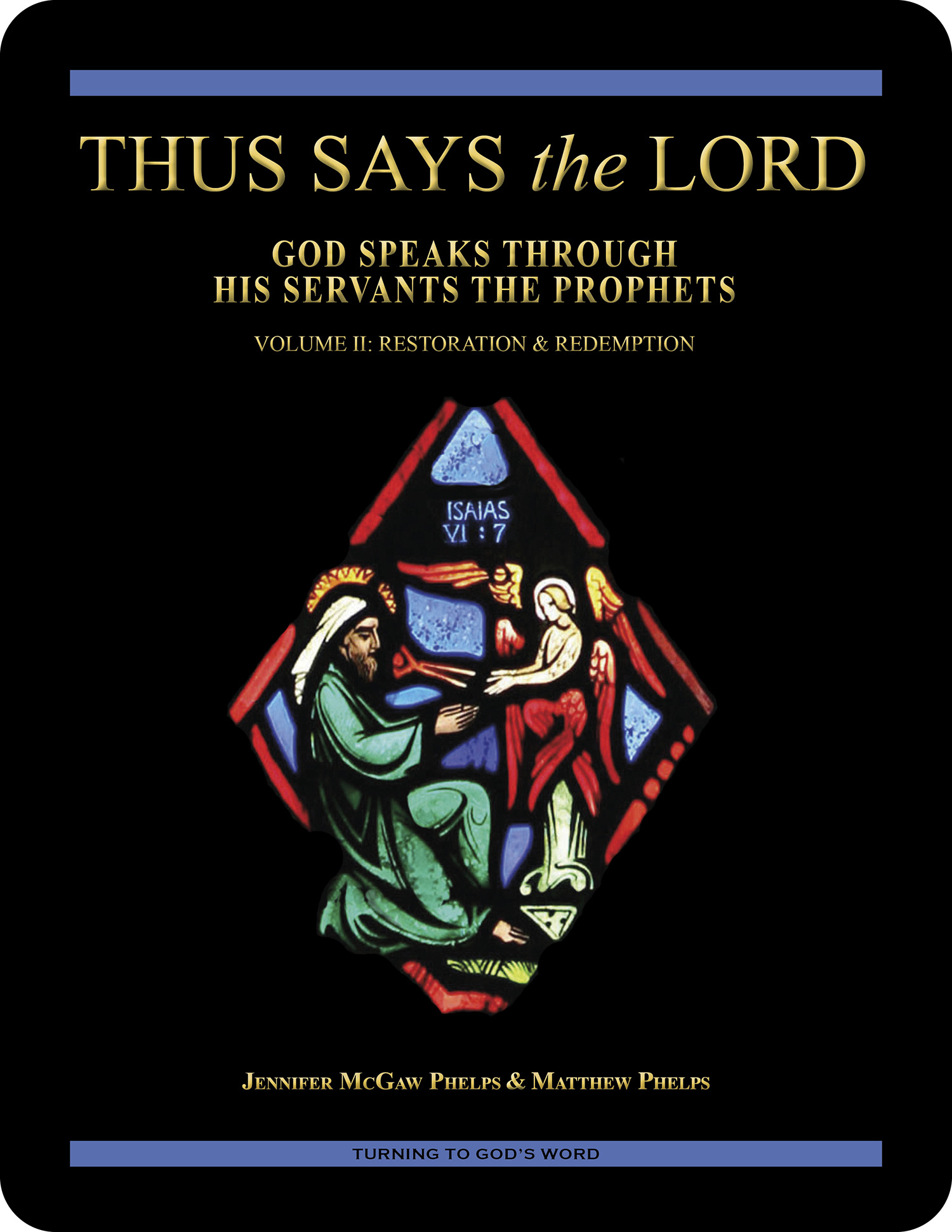
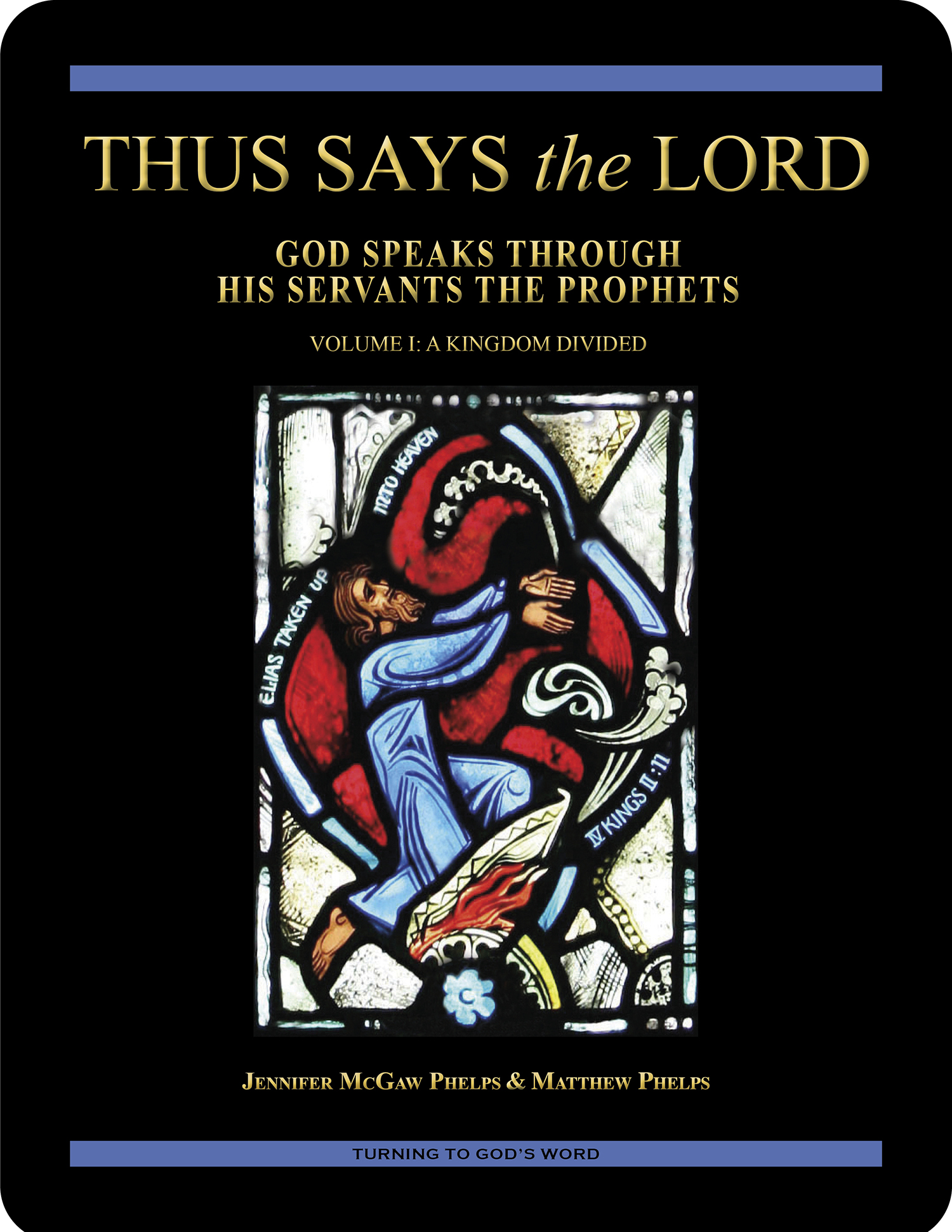 Thus Says the LORD: God Speaks Through His Servants the Prophets—Volume I: A Kingdom Divided examines the prophets in historical context using the First and Second Books of the Kings and other Old Testament passages written before the Babylonian Exile. Volume II: Restoration & Redemption looks at the post-exilic prophets. This 51-lesson Catholic Bible study builds on The United Kingdom of Israel: Saul, David & Solomon Foreshadow Christ the King. Click on these links to view a lesson from Volume I and another from Volume II.
start a Turning to God’s Word Bible study
 Thank you for your interest in Sing a New Psalm: Communicating with God Through the Prayers of the Church—Volume II.
  Information about beginning a Turning to God’s Word Bible study can be found at start a Bible study. Tami, Matthew, and I are available to answer questions. Contact us if you’d like to start one of our studies or have your schedule listed with other TtGW study groups on our website. —Jennifer
*There are seven deuterocanonical books in the Old Testament—Baruch, Judith, Sirach, Tobit, Wisdom, and First and Second Maccabees—and there are some deuterocanonical passages in the Books of Daniel and Esther. Protestants usually refer to these works as “apocryphal,” a word that means “outside the (Protestant) canon” because they’re excluded from most Protestant Bibles. Deuterocanonical means “second canon”; Catholics use that word to refer to any section of the Catholic Old Testament for which there are no extant, or existing, Hebrew manuscripts. All of the deuterocanonical books appear in the Septuagint, the earliest remaining versions of which date to the 1st century B.C. This Greek translation of the Old Testament was in common use by Jews at the time of Jesus. Learn more by reading How Do Catholic & Protestant Bibles Differ?
**You can learn more about the psalms by viewing a sample lesson from the Turning to God’s Word Catholic Bible study Sing a New Psalm: Communicating with God Through the Prayers of the Church. The first volume covers psalms prayed at Lauds and Vespers; the second covers psalms prayed at Vigils, Day Prayer, and Compline. Numbering of psalms and verses may vary in other translations.
Turning to God’s Word printed Bible studies use the 2006 Revised Standard Version Second Catholic Edition (RSV2CE) translation for all Scripture references except those to the psalms, which are taken from The Abbey Psalms and Canticles, prepared by the Benedictine monks of Conception Abbey and published in 2020 by the United States Conference of Catholic Bishops (USCCB). All Scripture links for the online study pages for Sing a New Psalm: Communicating with God Through the Prayers of the Church—Volume II: Vigils, Day Prayer & Compline are to the 1966 Revised Standard Version Catholic Edition (RSVCE) translation. The New International Version (NIV) audio recordings follow the same chapter and verse numbering as the RSV Catholic translations, but the NIV translation doesn’t include the deuterocanonical books and passages.
The 1966 RSVCE uses archaic pronouns and verb forms such as “thee,” “thou,” and “didst” in the psalms and in direct quotations attributed to God. The 2006 RSV2CE replaces these with more accessible English. The few significant translation changes in the RSV2CE include rendering almah as “virgin” in the Book of Isaiah 7:14 and restoring the term “begotten” in the Gospel According to John 3:16.
Numbering for some passages in this Bible study will vary. Turning to God’s Word studies (print and digital) follow the numbering in the Revised Standard Version Catholic translations (RSV2CE and RSVCE). Discrepancies in the New American Bible Revised Edition (NABRE) are noted in the Index of Scripture Citations in the study book.