 Sing a New Psalm:
Communicating with God Through
the Prayers of the Church
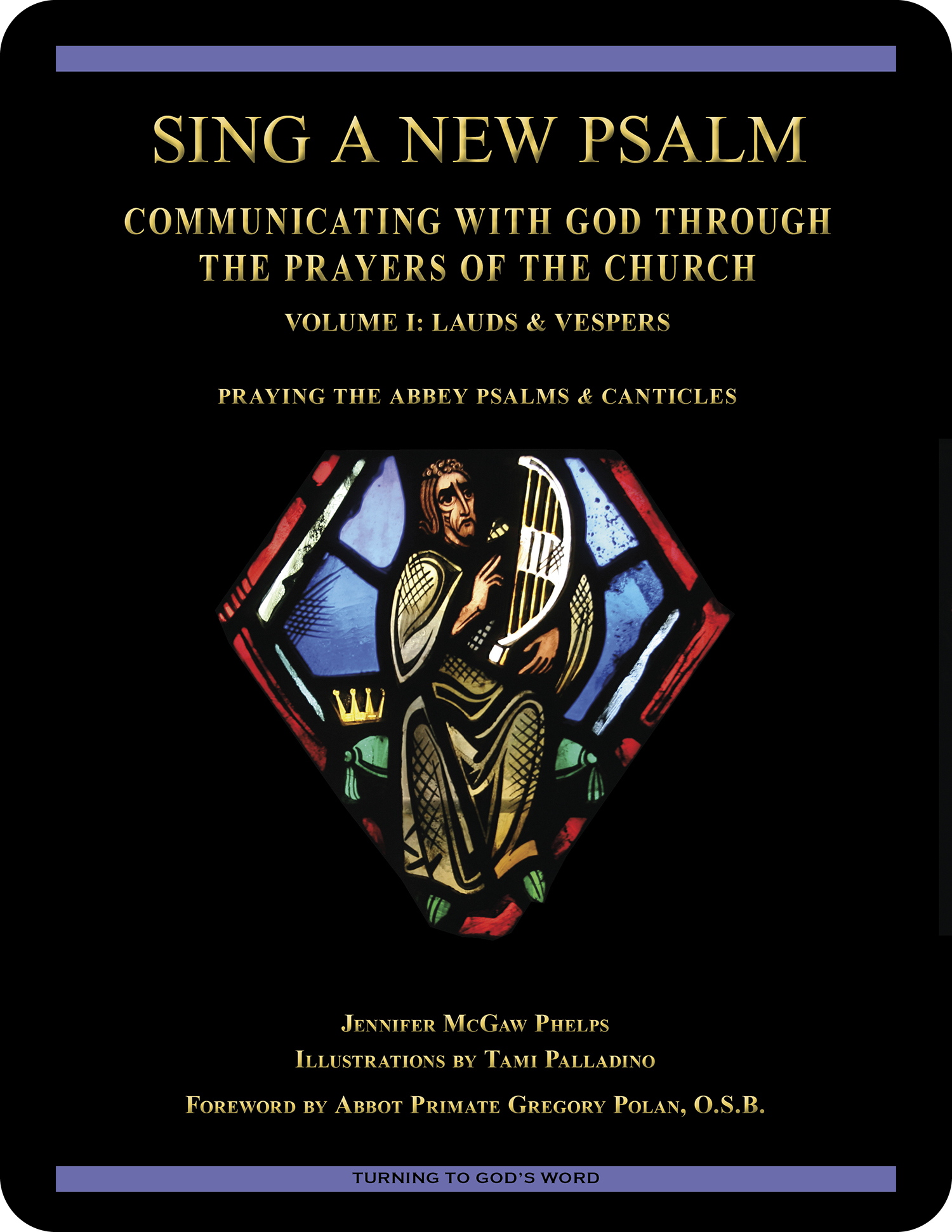
Volume I: Lauds & Vespers
Lesson 12 Have Mercy on Me, O God
Psalm 51, Psalm 117 and Psalm 146
Friday Lauds (Week I)
Revised Standard Version Catholic Edition (RSVCE)*
New American Bible Revised Edition (NABRE)*
Catechism of the Catholic Church
ex libris (in our library)
next lesson: Our Help Is in the Name of the LORD
This material coordinates with Lesson 12, “Have Mercy on Me, O God,” on pages 52–55 in Sing a New 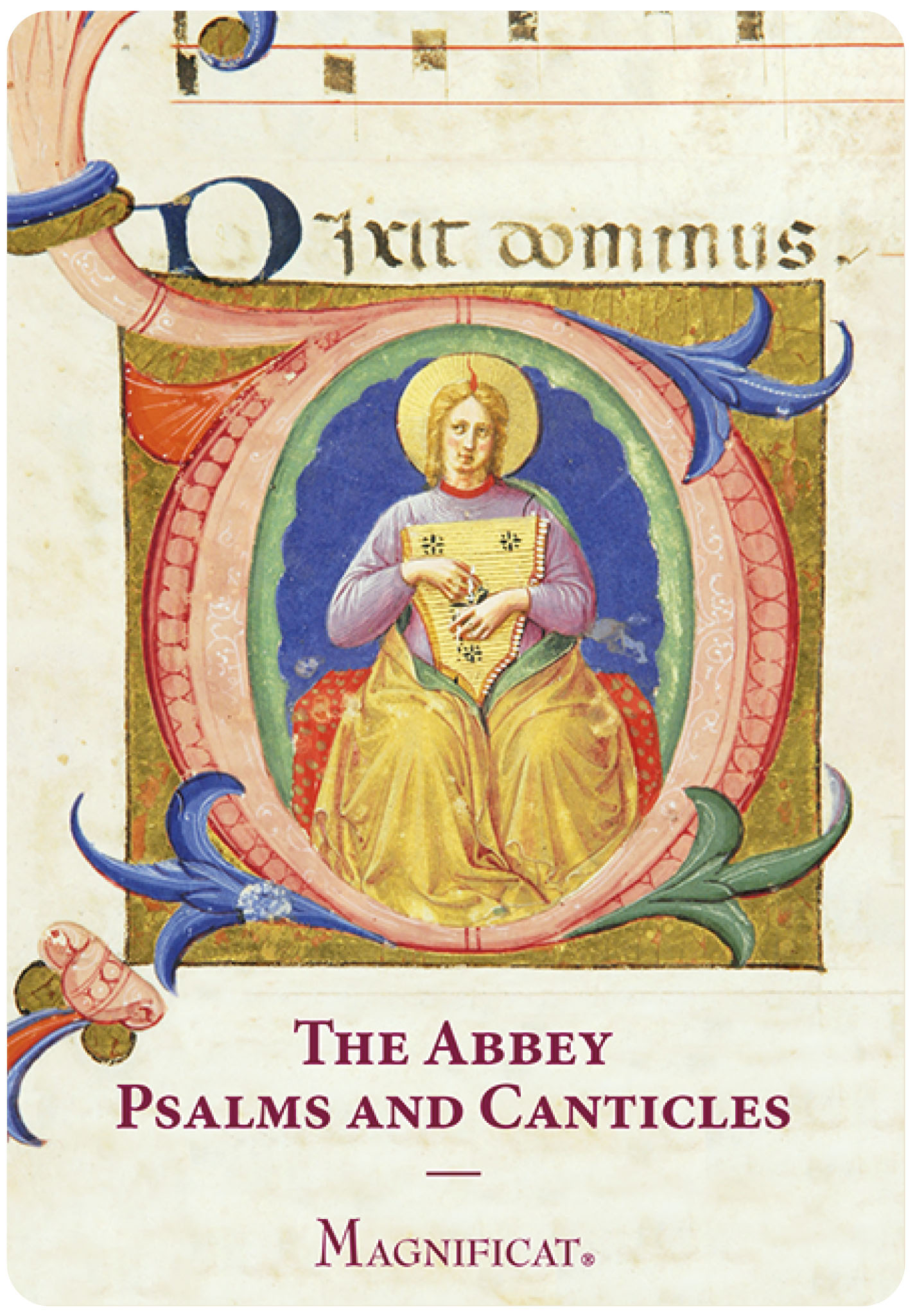 Psalm: Communicating with God Through the Prayers of the Church—Volume I: Lauds & Vespers. Our Catholic Bible study is based on The Abbey Psalms and Canticles, a psalms translation prepared by the monks at Conception Abbey in 2010 and first published as The Revised Grail Psalms. The Abbey Psalms and Canticles is a revision of that work, finished in 2020 and now owned by the United States Conference of Catholic Bishops (USCCB). Wording and numbering of some psalms in other translations may differ. This translation is being added to all English-language Liturgy of the Hours books used in the United States.
“Unlike other prayers in sacred Scripture, the prayers contained in the psalms are not inserted into a narrative story that specifies their meaning and function. Instead, the psalms are given to the believer precisely as a text of prayer. Since they are the Word of God, the believer who prays the psalms speaks to God using the very words that God himself has given to us. Thus, in praying the psalms we learn to pray. The psalms are a school of prayer.”—Pope Benedict XVI
welcome to our in-depth study of the psalms
We invite groups and individuals to check out the sample Introduction and Lesson 1 from this 28- lesson Turning to
  God’s Word Catholic Bible study. Our online study pages include additional questions, commentary, and prayers based on the psalm texts. Sing a New Psalm: Communicating with God Through the Prayers of the Church—Volume I: Lauds & Vespers has been granted an imprimatur. A digital version of can be purchased from our website shop. Volume II covers psalms prayed at Vigils, Day Prayer, and Compline. If you have a Bible-related question or comment, click on one of the “ask us your question” or “what do you think” buttons on any online study page.
open with prayer
It’s always wise to begin any Bible study with prayer, whether reading the Scriptures alone or meeting with others in a discussion study group. You can pray using your own words, pray one of the psalms in this lesson, or use one of the opening prayers on our website. We especially like the following:
Lord Jesus, you promised to send your Holy Spirit
to teach us all things.
As we read and study your word today,
allow it to touch our hearts and change our lives. Amen.
about the psalms in this lesson**
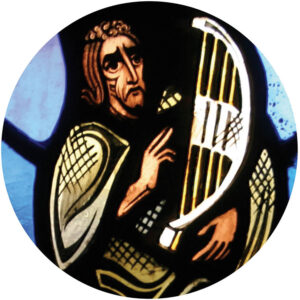 During Ordinary Time, the monks at Conception Abbey pray the following psalms for Friday Lauds Week I: Psalm 51, an individual or personal lament written by David; Psalm 117, a hymn by an anonymous composer; and Psalm 146, a hymn by David. Psalm 51 also is covered in Lesson 26, “Create a Pure Heart for Me.”
it seems that the day of the week also matters
“Have Mercy on Me, O God” is the title of Lesson 12, reflecting a strong religious theme that’s woven through Psalm 51, Psalm 117, and Psalm 146, which are prayed at Friday Lauds (Week I). These prayers 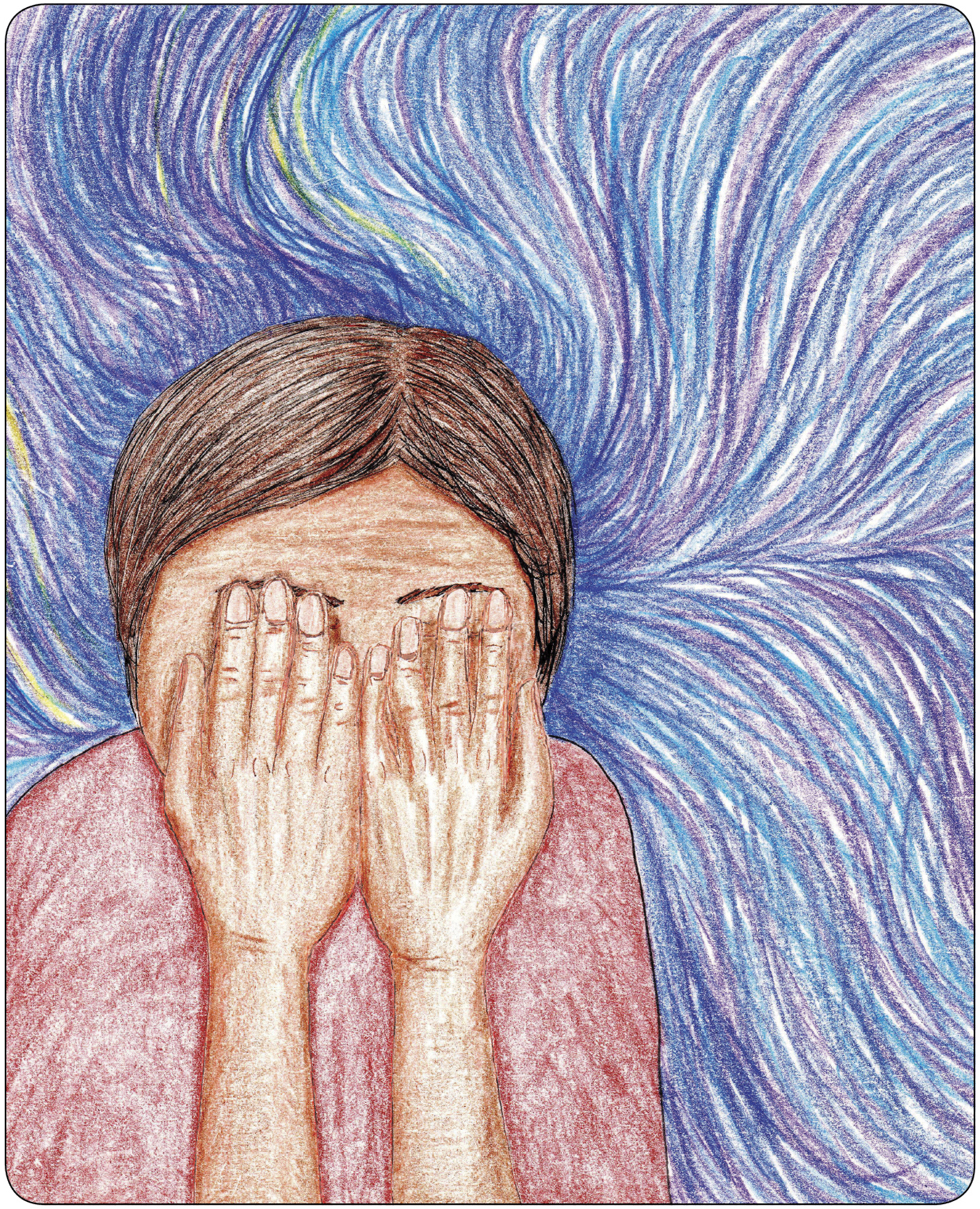 follow the Church’s tradition of treating all Fridays as days of penitence. Consider what there is about Friday that led to this tradition of performing penitential acts on that day. What other evidence can you see in Church practice and on the liturgical calendar that encourages acts of penitence on Fridays? What benefit might there be for a Christian who adopts a penitential attitude on a weekly basis? If you aren’t already performing a private act of penitence each Friday, what’s one such act that you’d be willing to start doing every week? Click to enlarge the illustration by Turning to God’s Word co-founder Tami Palladino. Her illustration also is printed on page 53 in Sing a New Psalm: Communicating with God Through the Prayers of the Church—Volume I: Lauds & Vespers.
what do you think about this very the short psalm?
The psalms for Friday Lauds Week I include Psalm 117—only two verses long and the shortest of all the psalms. Question 6 on page 54 in Sing a New Psalm: Communicating with God Through the Prayers of the Church—Volume I: Lauds & Vespers suggests that the unidentified Psalmist has used this short hymn to make an important statement about the relationship between the LORD and humanity.
 ? Consider what that statement is?
? Have you experienced any similar incident worthy of praise?
? What can we learn about prayer from this psalm?
among the most familiar of the psalms
Psalm 51 is known as the Miserere (have mercy) from the Latin translation of its opening word, and it’s among the most well known of all the ancient prayers that make up the psalms. It’s also one of seven psalms considered especially penitential. The other six are Psalm 6, Psalm 32, Psalm 38, Psalm 102, Psalm 130, and Psalm 143. The Miserere is credited to David. If you’re unfamiliar with some of the major details of David’s life, they can be found in the First and Second Books of Samuel. You also can  learn much more about the lives of Saul, David, and Solomon in our in-depth Catholic Bible study The United Kingdom of Israel: Saul, David & Solomon Foreshadow Christ the King.
read the Catechism—how well do you know your faith?
Can you answer the following questions about sin and its effects without looking in the Catechism of the Catholic Church?
 ? What is sin? To learn what the Church teaches, refer to paragraphs 1849 and 1850 in the Catechism of the Catholic Church.
? How does sin turn men and women away from God? Refer to paragraph 1850 in the Catechism of the Catholic Church.
? How do we inherit original sin? Refer to paragraph 402 in the Catechism of the Catholic Church.
sin—you could look it up in our archives
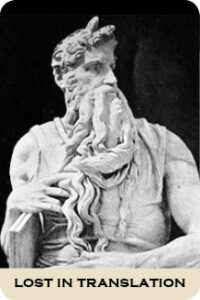 Before we can express penitence, we need to be aware of what we’re repenting. That gets us to sin—what it is and what it isn’t. You can learn the original meaning of the word sin, by reading Lost in Translation, an online column in which Turning to God’s Word author Matthew Phelps helps readers connect with ideas expressed in the original languages of the Scriptures. New Lost in Translation entries are posted on Mondays, and past entries are archived on our website. Contact us if
  you’d like to receive Lost in Translation by email every week. You can learn more about original sin in Lesson 3 The Fall of Adam & Eve in the Turning to God’s Word Catholic Bible study In the Beginning: The Book of Genesis.
 the popes inspire us—prayer as a way of witnessing to God
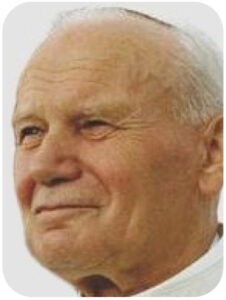
“Lively Conversation with God” on page 54 in Sing a New Psalm: Communicating with God Through the Prayers of the Church—Volume I: Lauds & Vespers looks at the meaning of Psalm 117. Pope St. John Paul II teaches that the witness of a person who prays is like a ray of light in the darkness. You can learn more about how your regular practice of communicating with God may lead someone else to desire a relationship with God as well.
read the Catechism—occasions when Christians make promises to God
Paragraph 2101 in the Catechism of the Catholic Church lists a number of times when Christians are called upon to make promises to God. How many do you know without referring to the Catechism?
2101 In many circumstances, the Christian is called to make promises to God. Baptism and Confirmation, Matrimony and Holy Orders always entail promises. Out of personal devotion, the Christian may also promise to God this action, that prayer, this alms-giving, that pilgrimage, and so forth. Fidelity to promises made to God is a sign of respect owed to the divine majesty and of love for a faithful God.
a translation difference: behold vs. O see & yes
The Abbey Psalms and Canticles translations of Psalm 51:7 and Psalm 51:8 (Psalm 51:5 and Psalm 51:6 in Revised Standard Version Catholic editions) both begin with “Behold.” The Revised Grail Psalms begins Psalm 51:7 with “O see “and Psalm 51:8 with “Yes.” Although the words have somewhat different meanings, that doesn’t seem to matter a lot in this instance. (Note that it is not possible to link to either The Abbey Psalms and Canticles or The Revised Grail Psalms; all links on the online pages are to the Revised Standard Version Catholic Edition [RSVCE]).
another relatively minor translation difference
The Abbey Psalms and Canticles translates Psalm 51:16 (Psalm 51:14 in Revised Standard Version Catholic editions): “Rescue me from bloodshed, O God, O God of my salvation, and then my tongue shall ring out your justice.” The Revised Grail Psalms deletes the second O in this passage: “Rescue me from bloodshed, O God, God of my salvation, and then my tongue shall ring out your justice.” This change also doesn’t appear to affect the meaning of David’s penitential psalm.
and yet another relatively minor translation difference
In The Abbey Psalms and Canticles, Psalm 51:19 (Psalm 51:17 in Revised Standard Version Catholic editions) is translated to include “a broken and humbled heart, you will not spurn, O God.” The Revised Grail Psalms swaps phrases in the same verse to render “a broken and humbled heart, O God, you will not spurn.” This change also doesn’t appear to affect the meaning of the psalm.
a translation difference: mercy vs. merciful love
The Abbey Psalms and Canticles translation of Psalm 117:2 refers to the “mercy” of the LORD; The Revised Grail Psalms translation refers to the LORD’s “merciful love.” Perhaps the editors at the United States Conference of Catholic Bishops (USCCB) were trying to emphasize that mercy is a function of the LORD’s love. Which translation do you prefer, and why?
another translation difference: anyone vs. mortal man
The Abbey Psalms and Canticles translations of Psalm 146:3 advise men and women to “put no trust in princes, in anyone who cannot save.” The Revised Grail Psalms translates the same verse as “put no trust in princes, in mortal man who cannot save.” Again, this change doesn’t appear to significantly affect the meaning of the psalm. The construction of the sentence fails to resolve the question of whether princes and “anyone” (or princes and “mortal man”) are to be lumped together in one large group or whether they constitute individual categories. It appears the USCCB editors’ primary motivation for making this change may have been to eliminate language that could be deemed noninclusive.
the best Catholic commentary about Scripture
To find out more about how Church teaching is supported by passages in Sing a New Psalm: Communicating with God Through the Prayers of the Church—Volume I: Lauds & Vespers, check out the Index of Citations in the Catechism of the Catholic Church. Links to the primary Scripture passages in the lesson (Revised Standard Version Catholic Edition [RSVCE*]) and relevant paragraphs in the Catechism are provided here. Not every passage in the biblical text for this study is referenced in a Catechism paragraph, however including Psalm 117 in this lesson. (The Index of Citations in the Catechism lists Psalm 117:24, but that appears to be a typo of an intended listing for Psalm 118:24; Psalm 117 contains only two verses.)
Psalm 51:6—paragraphs 431, 1850
Psalm 51:12—paragraphs 298, 431
Psalm 51:19—paragraphs 1428, 2100
Psalm 146:3–4—paragraph 150
don’t forget about our indexes & extra online material
If you’re trying to locate information about a specific Scripture passage, you can look it up in the index at the back of the study book. If you want to find a particular commentary, you can look up its title in the topics index. To learn more about another book of the Bible for which there’s a Turning to God’s Word study, visit the online study directories to read the commentaries and watch any accompanying videos. Finally, if you have a question or would like to make a comment about any of our studies, you can use one of the “ask us your question” or “what do you think” buttons to email our authors.
ex libris—Church documents & books about religious topics
Link to magisterial documents referred to in our Bible studies at ex libris—magisterial documents.  This listing includes significant recent encyclicals as well as a number of historical Church documents. Recommended books related to Scripture study can be found at ex libris—main bookshelf.
wondering how to pronounce some of these words?
The following links are to readings from the New International Version (NIV) Bible. To listen, open one of the links and click on the audio icon above the printed text. Although not taken from the translations used in our study materials, the NIV readings provide an audio guide to pronunciation of many words in this lesson’s primary biblical texts. A close online version of the translation of the Bible used in Catholic liturgy in the United States as well as an audio guide for daily Mass readings for the current month can be found on the website of the United States Conference of Catholic Bishops (USCCB).
Psalm 51 (NIV)
Psalm 117 (NIV)
Psalm 146 (NIV)
 close with a psalms-based prayer for Friday Lauds Week I
Many of our Catholic study groups like to conclude their discussions with a prayer based on the scriptural focus of their lesson. If you’re uncomfortable composing your own Bible-based prayers, you can follow our four easy steps. If you prefer, you can pray any of the psalms in this lesson, or you can use the following short prayer.
O God of justice, you blot out our transgressions.
Give us the courage to seek your mercy
with sincere and steadfast hearts.
Purify our motives and transform our lives
that we may be faithful in following
the example set by your Son, Jesus Christ. Amen.
Lesson 13 Our Help Is in the Name of the LORD, Friday Vespers (Week I)—Psalm 41, Psalm 124, Psalm 129, and Psalm 130
Lesson 11 God Will Ransom My Soul, Thursday Vespers (Week I)—Psalm 49 and Psalm 72
you also may like our study of the book of Exodus
 You Shall Have No Other Gods: The Book of Exodus, a 28-lesson Catholic Bible study with an imprimatur, provides an in-depth look at how significant events in biblical history that occurred thousands of years ago to descendants of Jacob remain relevant and even critical for present-day Christians to understand. The deliverance of the Hebrews from slavery in Egypt and the giving of Ten Commandments are examined along with the development of Moses’ relationship to God. Click here to view a sample of the first lesson.
start a Turning to God’s Word Bible study
Thank you for your interest in Sing a New Psalm: Communicating with God Through the Prayers of the Church—Volume I: Lauds & Vespers. 
 More information about beginning a Turning to God’s Word Bible study can be found on this website at start a Bible study, and Tami, Matthew, and I are available to answer questions or discuss concerns. Contact us to start this or one of our other studies or to have your schedule listed with other TtGW study groups on our website. —Jennifer
*There are seven deuterocanonical books in the Old Testament—Baruch, Judith, Sirach, Tobit, Wisdom, and First and Second Maccabees—and there are some deuterocanonical passages in the Books of Daniel and Esther. Protestants usually refer to these works as “apocryphal,” a word that means “outside the (Protestant) canon” because they’re excluded from most Protestant Bibles. Deuterocanonical means “second canon”; Catholics use that word to refer to any section of the Catholic Old Testament for which there are no extant, or existing, Hebrew manuscripts. All of the deuterocanonical books appear in the Septuagint, the earliest remaining versions of which date to the 1st century B.C. This Greek translation of the Old Testament was in common use by Jews at the time of Jesus. Learn more by reading How Do Catholic & Protestant Bibles Differ?
**You can learn more about the psalms by viewing a sample lesson from the Turning to God’s Word Catholic Bible study Sing a New Psalm: Communicating with God Through the Prayers of the Church. The first volume covers psalms prayed at Lauds and Vespers; the second covers psalms prayed at Vigils, Day Prayer, and Compline. Numbering of psalms and verses may vary in different translations.
Turning to God’s Word printed Bible studies use the 2006 Revised Standard Version Second Catholic Edition (RSV2CE) translation for all Scripture references except those to the psalms, which are taken from The Abbey Psalms and Canticles, prepared by the Benedictine monks of Conception Abbey and published in 2020 by the United States Conference of Catholic Bishops (USCCB). All Scripture links for the online study pages for Sing a New Psalm: Communicating with God Through the Prayers of the Church—Volume I: Lauds & Vespers are to the 1966 Revised Standard Version Catholic Edition (RSVCE) translation. The New International Version (NIV) audio recordings follow the same chapter and verse numbering as the RSV Catholic translations, but the NIV translation doesn’t include the deuterocanonical books and passages.
The 1966 RSVCE uses archaic pronouns and verb forms such as “thee,” “thou,” and “didst” in the psalms and in direct quotations attributed to God. The 2006 RSV2CE replaces these with more accessible English. The few significant translation changes in the RSV2CE include rendering almah as “virgin” in the Book of Isaiah 7:14 and restoring the term “begotten” in the Gospel According to John 3:16.
Numbering varies for some passages in this Bible study. Turning to God’s Word studies (print and digital) follow the numbering in the Revised Standard Version Catholic translations (RSV2CE and RSVCE). Discrepancies in the New American Bible Revised Edition (NABRE) are noted in the Index of Scripture Citations in the study book.