
 Sing a New Psalm:
Communicating with God Through
the Prayers of the Church
Volume I: Lauds & Vespers
Lesson 16 His Mercy Endures Forever
Psalm 118, Psalm 148, and Psalm 150
Sunday Lauds (Week II)
Revised Standard Version Catholic Edition (RSVCE)*
New American Bible Revised Edition (NABRE)*
Catechism of the Catholic Church
ex libris (in our library)
next lesson: The LORD Has Sworn an Oath
This material coordinates with Lesson 16, “His Mercy Endures Forever,” on pages 68–71 in Sing a New 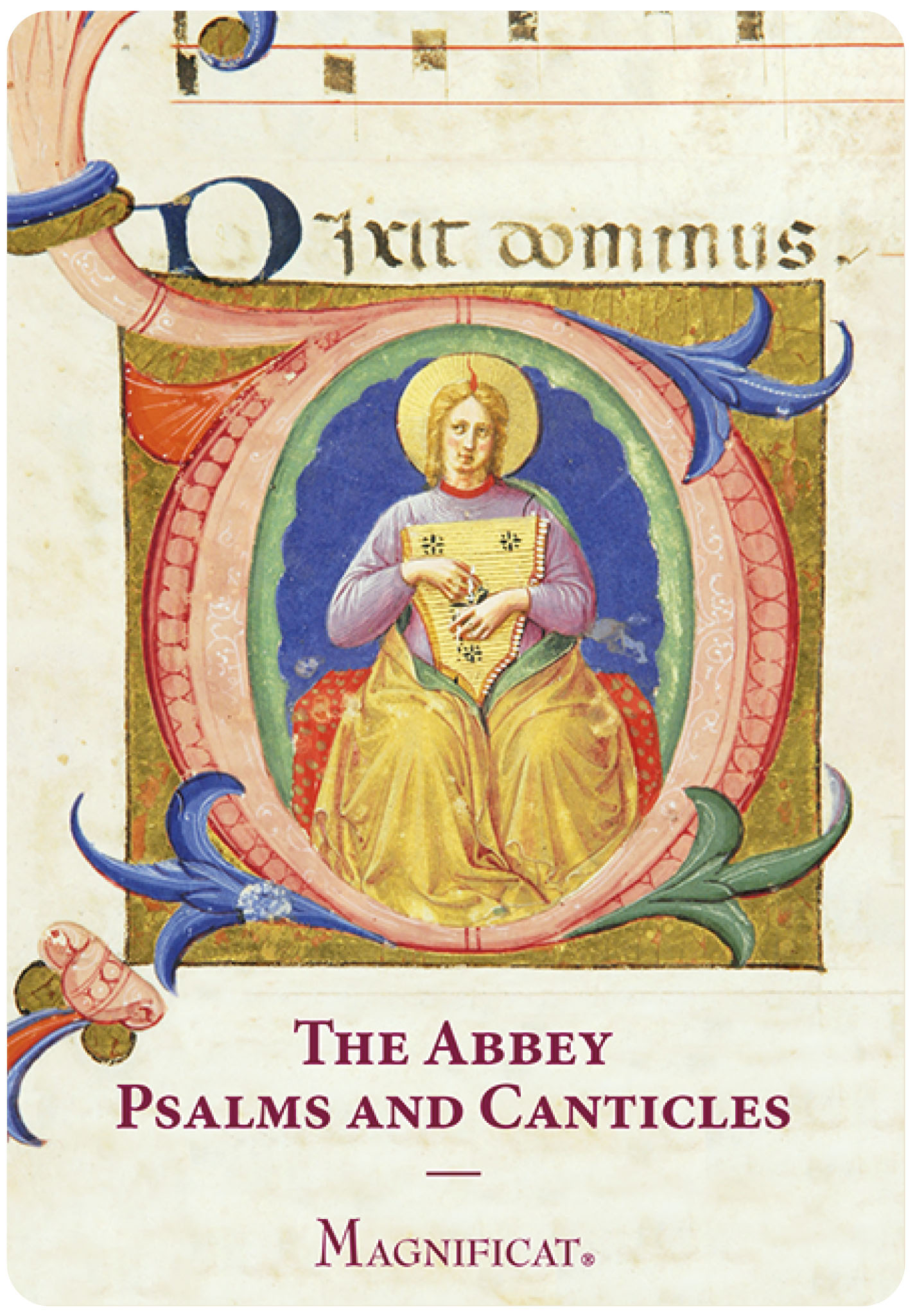 Psalm: Communicating with God Through the Prayers of the Church—Volume I: Lauds & Vespers. Our Catholic Bible study is based on The Abbey Psalms and Canticles, a psalms translation prepared by the monks at Conception Abbey in 2010 and first published as The Revised Grail Psalms. The Abbey Psalms and Canticles is a revision of that work, finished in 2020 and now owned by the United States Conference of Catholic Bishops (USCCB). Wording and numbering of some psalms in other translations may differ. This translation is being added to all English-language Liturgy of the Hours books used in the United States.
“Unlike other prayers in sacred Scripture, the prayers contained in the psalms are not inserted into a narrative story that specifies their meaning and function. Instead, the psalms are given to the believer precisely as a text of prayer. Since they are the Word of God, the believer who prays the psalms speaks to God using the very words that God himself has given to us. Thus, in praying the psalms we learn to pray. The psalms are a school of prayer.”—Pope Benedict XVI
welcome to our in-depth study of the psalms
We invite groups and individuals to check out the sample Introduction and Lesson 1 from this 28- lesson Turning to
  God’s Word Catholic Bible study. Our online study pages include additional questions, commentary, and prayers based on the psalm texts. Sing a New Psalm: Communicating with God Through the Prayers of the Church—Volume I: Lauds & Vespers has been granted an imprimatur. A digital version of can be purchased from our website shop. Volume II covers psalms prayed at Vigils, Day Prayer, and Compline. If you have a Bible-related question or comment, click on one of the “ask us your question” or “what do you think” buttons on any online study page
open with prayer
It’s always wise to begin any Bible study with prayer, whether reading the Scriptures alone or meeting with others in a discussion study group. You can pray using your own words, pray one of the psalms in this lesson, or use one of the opening prayers on our website. We especially like the following:
Lord Jesus, you promised to send your Holy Spirit
to teach us all things.
As we read and study your word today,
allow it to touch our hearts and change our lives. Amen.
 about the psalms in this lesson**
During Ordinary Time, the monks at Conception Abbey pray the following psalms for Sunday Lauds Week II: Psalm 118, a hymn of thanksgiving by an anonymous composer; and Psalm 148 and Psalm 150, both hymns by unknown composers.
doxology is a word that indicates praise of God
Related to the word for “glory,” the word “doxology” also is related to the English word for “orthodoxy.” You can learn more by reading the vocabulary boxes “Glory” on page 23 and “Doxology” on page 71 in Sing a New Psalm: Communicating with God Through the Prayers of the Church—Volume I: Lauds & Vespers. The psalms contain five doxologies (short hymns of praise). Three are covered in Volume I—Psalm 150:1–6 in this lesson, Psalm 72:18–19 in Lesson 11 God Will Ransom My Soul, and Psalm 41:14 (Psalm 41:13 in Revised Standard Version Catholic Editions) in Lesson 13 Our Help Is in the Name of the LORD. Psalm 150:1–6 serves as a closing doxology for all 150 psalms. The remaining two doxologies are covered in Volume II—Psalm 89:53 (Psalm 89:52 in Revised Standard Version Catholic Editions) in Lesson 13 Praise the LORD Who Rides on the Heavens and Psalm 106:48 in Lesson 21 Out of Zion, God Is Shining Forth.
God’s kindness is eternal
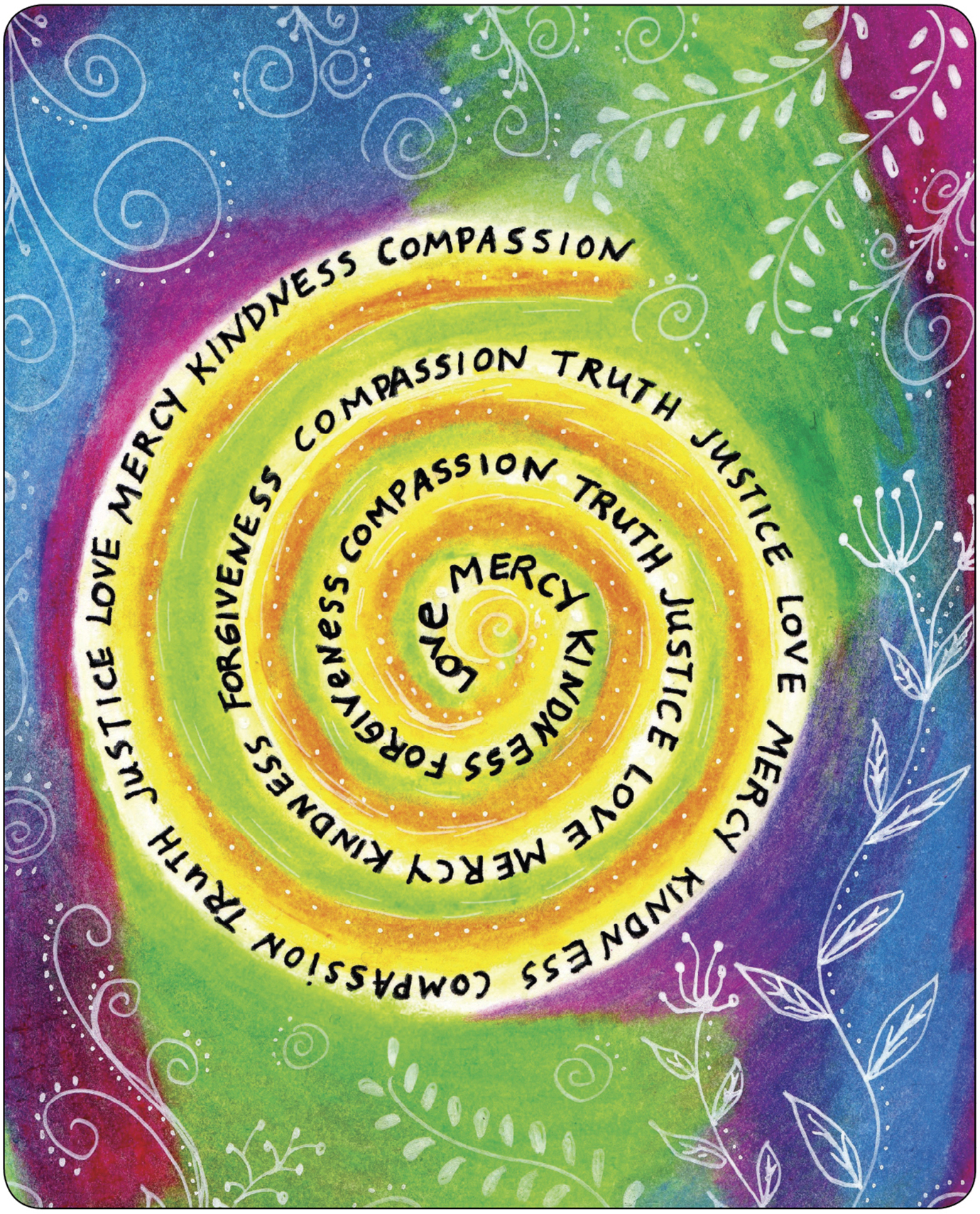 Turning to God’s Word co-founder Tami Palladino envisions God as a spiral of light in which God’s key attributes—truth, justice, love, mercy, kindness, and compassion—spread outward. This lesson focuses on God’s kindness, which cannot exist in a vacuum. It’s divinely linked for all eternity to truth, justice, love, mercy, and compassion. During the jubilee year in 2000, the entire Church celebrated the loving mercy of God, but it’s always fitting to meditate on the relationship between God’s mercy and God’s kindness—and to consider how we can reflect God’s kindness in the circumstances of our own lives. Click on Tami’s illustration to enlarge it. The illustration also is printed on page 69 in Sing a New Psalm: Communicating with God Through the Prayers of the Church—Volume I: Lauds & Vespers.
what do you think is the best way to praise the LORD?
All of the psalms in one way or another are about praising God, and this theme unites the morning prayers chosen for Sunday Lauds Week II)
 ? In addition to offering prayers, what are some other ways in which you might praise God?
? Which of God’s divine attributes do you consider to be the most praiseworthy?
? What reasons can you give to explain your choices?
? Which of the 150 psalms studied so far is your favorite?
? Point out passages in your favorite psalms that praise God.
? How would you paraphrase those passages to express similar ideas in your own words?
more about liturgical praise
The psalms were composed to be sung as part of worship, and they form an important aspect of our Catholic Liturgy of the Word. The next time you attend Mass, try to listen closely to the words of the responsorial psalm. The vast majority of responsorial readings are from the psalms, but occasionally a responsorial is taken from another book of the Bible. Toward the end of the liturgical year when the Mass readings focus on the end of time, the responsorial reading often is from apocalyptic writings in the books of Revelation or Daniel. When repeating these liturgical responses, consider how the chosen psalm or other Scripture passage relates to the reading that immediately preceded it. In what ways does it reinforce the idea of a kind and loving eternal God? Think about whether the words of the psalms reflect your own feelings about God. What other words would you use to praise the LORD at Mass? You can learn more about the relationship between apocalyptic writing and biblical prophecy in the in-depth Turning to God’s Word Catholic Bible study Thus Says the LORD: God Speaks Through His Servants the Prophets—Volume II: Restoration & Redemption.
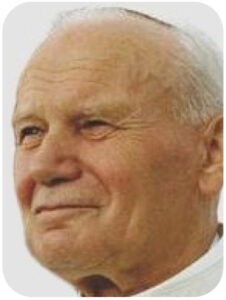 the popes inspire us—liturgy as a place to meet with God
Take a few minutes to read “A Channel of Communication” on page 71 in Sing a New Psalm: Communicating with God Through the Prayers of the Church—Volume I: Lauds & Vespers. In this general audience, Pope St. John Paul II explains the way in which the liturgy unites heaven and earth, as God adapts himself to our limitations in order to hear and speak to us, meet us, and save us. Consider what you can do today in order to meet God halfway.
 exalt, exult & extol—you could look these up in our archives
In Psalm 118, the unnamed Psalmist promises to exalt the LORD who’s given him safety from his foes. To learn how the similar words exalt, exult, and extol differ in meaning, read Lost in Translation, an online column in which Turning to God’s Word author Matthew Phelps helps readers connect with ideas expressed in the original languages of the Scriptures. New Lost in Translation entries are posted on Mondays, and past entries are archived on our website. Contact us if you’d like to receive Lost in Translation by email every week.
a translation difference: anyone else vs. man
Psalm 118:8 in The Abbey Psalms and Canticles is translated: “It is better to take refuge in the LORD than to trust in anyone else.” The Revised Grail Psalms translates the same verse: “It is better to take refuge in the LORD than to trust in man.” It appears that the editors at the United States Conference of Catholic Bishops (USCCB) may have made this change to introduce more inclusive language in The Abbey Psalms and Canticles. (Note that it is not possible to link to either The Abbey Psalms and Canticles or The Revised Grail Psalms; all links on the online pages are to the Revised Standard Version Catholic Edition [RSVCE]).
a translation difference: pushed vs. thrust
Psalm 118:13 in The Abbey Psalms and Canticles is translated: “They pushed me, pushed me hard to knock me down, but the LORD was my helper.” The Revised Grail Psalms translates the same verse: “I was thrust down, thrust down and falling, but the LORD was my helper.” Can you see any difference in meaning between these two translations?
a translation difference: upright vs. just
Several verses in Psalm 118 in The Abbey Psalms and Canticles substitute the word “upright” or “uprightness” for the word “just” or”justice.” These include Psalm 118:15, Psalm 118:19, and Psalm 118:20. It appears that USCCB editors decided to substitute “upright” or one of its variants most—but not all—of the time that the original translators of The Revised Grail Psalms chose “justice” or some similar word. It’s possible that this was done because words directly related to “justice” carry a sense of revenge not as obvious in words related to “uprightness.” Think about whether there might be some other reason.
repetition in a translation change
Psalm 118:18 in The Abbey Psalms and Canticles is translated: “The LORD has punished me severely, but did not hand me over to death.” The Revised Grail Psalms translates the same verse: “The LORD has punished me, punished me severely, but did not hand me over to death.” The Revised Grail Psalms repetition may have been done to strengthen meter in order to facilitate chanting.
a translation deletion
Psalm 118:25 in The Abbey Psalms and Canticles is translated: “We beseech you, O LORD, grant salvation; we beseech you, O LORD grant success.” The Revised Grail Psalms translation of the same verse deletes the words “we beseech you” in both places where that phrase occurs; no new words or phrases are added in either case. Consider what the phrase “we beseech you” means, and why the unknown Psalmist used it in the first place.
and one more translation difference: creeping things vs. reptiles
Psalm 148:10 in The Abbey Psalms and Canticles is translated: “beasts, both wild and tame, creeping things and birds on the wing.” The Revised Grail Psalms translation substitutes “reptiles” for “creeping things.” Do you understand the two words to mean the same thing?
the best Catholic commentary about Scripture
 To find out more about how Church teaching is supported by passages in Sing a New Psalm: Communicating with God Through the Prayers of the Church—Volume I: Lauds & Vespers, check out the Index of Citations in the Catechism of the Catholic Church. Links to the primary Scripture passages in the lesson (Revised Standard Version Catholic Edition [RSVCE*]) and relevant paragraphs in the Catechism are provided here. Not every passage in the biblical text for this study is referenced in a Catechism paragraph, however, including Psalm 148 and Psalm 150 in this lesson. (Psalm 118:24 is listed erroneously as Psalm 117:24 in the Index of Citations in the Catechism in reference to paragraph 2173.)
Psalm 118:14—paragraph 1808
Psalm 118:22—paragraphs 587, 756
Psalm 118:24—paragraph 2173
Psalm 118:26—paragraph 559
don’t forget about our indexes & extra online material
If you’re trying to locate information about a specific Scripture passage, you can look it up in the index at the back of the study book. If you want to find a particular commentary, you can look up its title in the topics index. To learn more about another book of the Bible for which there’s a Turning to God’s Word study, visit the online study directories to read the commentaries and watch any accompanying videos. Finally, if you have a question or would like to make a comment about any of our studies, you can use one of the “ask us your question” or “what do you think” buttons to email our authors.
ex libris—Church documents & books about religious topics
Link to magisterial documents referred to in our Bible studies at ex libris—magisterial documents.  This listing includes significant recent encyclicals as well as a number of historical Church documents. Recommended books related to Scripture study can be found at ex libris—main bookshelf.
wondering how to pronounce some of these words?
The following links are to readings from the New International Version (NIV) Bible. To listen, open one of the links and click on the audio icon above the printed text. Although not taken from the translations used in our study materials, the NIV readings provide an audio guide to pronunciation of many words in this lesson’s primary biblical texts. A close online version of the translation of the Bible used in Catholic liturgy in the United States as well as an audio guide for daily Mass readings for the current month can be found on the website of the United States Conference of Catholic Bishops (USCCB).
Psalm 118 (NIV)
Psalm 148 (NIV)
Psalm 150 (NIV)
 close with a psalms-based prayer for Sunday Lauds Week II
Many of our Catholic study groups like to conclude their discussions with a prayer based on the scriptural focus of their lesson. If you’re uncomfortable composing your own Bible-based prayers, you can follow our four easy steps. If you prefer, you can pray any of the psalms in this lesson, or you can use the following short prayer.
O God, you establish and sustain all things,
and your mercy endures forever.
Grant that our faith also may endure.
Help us to persevere through the trials of life
to attain final salvation and join with all of Creation
in offering you eternal praise.
We ask this in the name of your Son, Jesus Christ,
whose life brought blessing to the world. Amen.
Lesson 17 The LORD Has Sworn an Oath, Sunday 2nd Vespers (Week II)—Psalm 110, Psalm 113, and Psalm 114
Lesson 15 Let My Prayer Be As Incense, Sunday 1st Vespers (Week II)—Psalm 141, Psalm 116:10–19, and Psalm 16
you also may like our study of the Gospel According to John
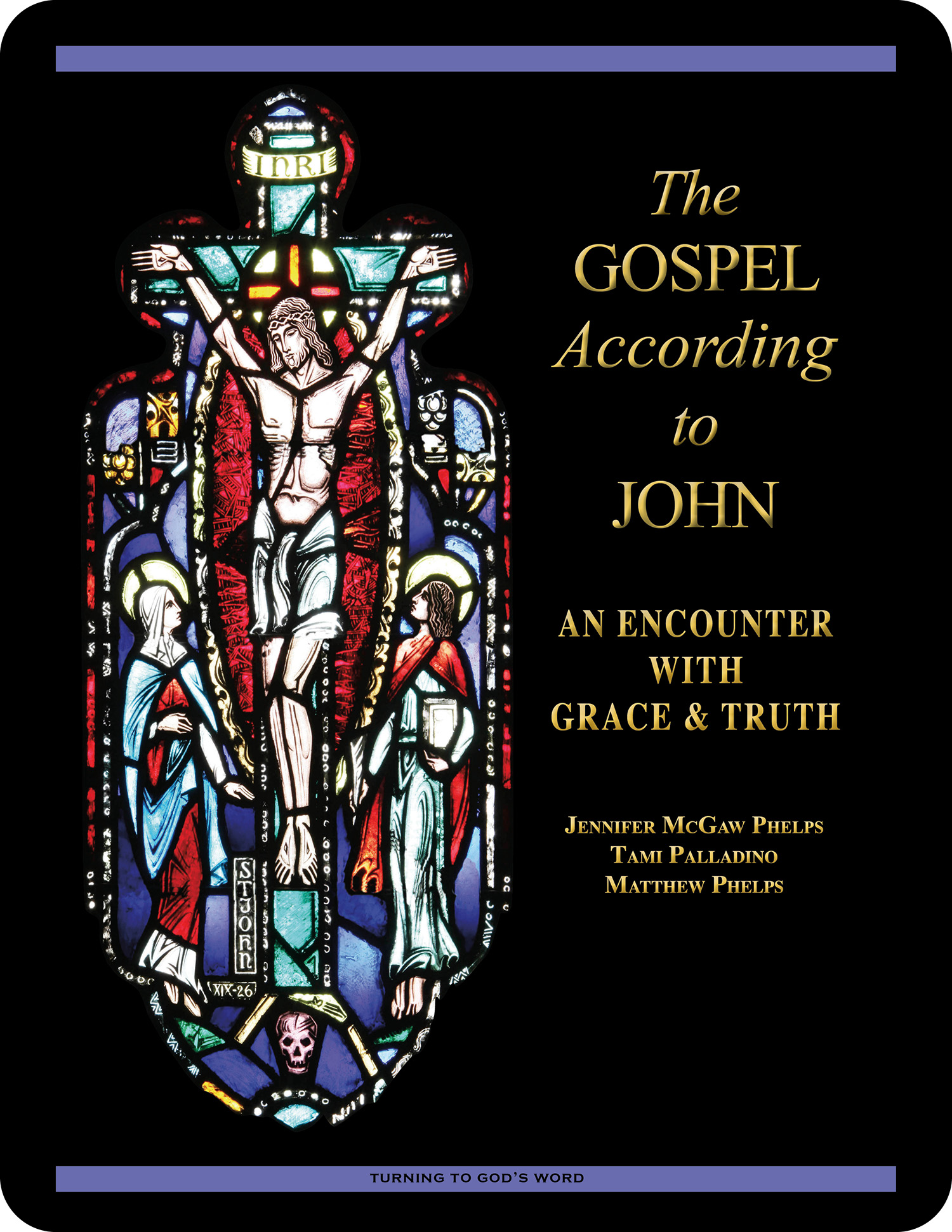 The Gospel According to John: An Encounter with Grace & Truth, a 25-lesson Catholic Bible study with an imprimatur, examines the Fourth Gospel’s view of Jesus Christ as the Son of God, with special emphasis on the institution of the sacraments of the Church as the means by which Christians are purified and made holy. This recently revised study includes maps and additional commentary, and takes a closer look at the way in which Jesus relates to individual men and women. Click here to view a sample of the first lesson.
start a Turning to God’s Word Bible study
Thank you for your interest in Sing a New Psalm: Communicating with God Through the Prayers of the Church—Volume I: Lauds & Vespers. 
 More information about beginning a Turning to God’s Word Bible study can be found on this website at start a Bible study, and Tami, Matthew, and I are available to answer questions or discuss concerns. Contact us to start this or one of our other studies or to have your schedule listed with other TtGW study groups on our website. —Jennifer
*There are seven deuterocanonical books in the Old Testament—Baruch, Judith, Sirach, Tobit, Wisdom, and First and Second Maccabees—and there are some deuterocanonical passages in the Books of Daniel and Esther. Protestants usually refer to these works as “apocryphal,” a word that means “outside the (Protestant) canon” because they’re excluded from most Protestant Bibles. Deuterocanonical means “second canon”; Catholics use that word to refer to any section of the Catholic Old Testament for which there are no extant, or existing, Hebrew manuscripts. All of the deuterocanonical books appear in the Septuagint, the earliest remaining versions of which date to the 1st century B.C. This Greek translation of the Old Testament was in common use by Jews at the time of Jesus. Learn more by reading How Do Catholic & Protestant Bibles Differ?
**You can learn more about the psalms by viewing a sample lesson from the Turning to God’s Word Catholic Bible study Sing a New Psalm: Communicating with God Through the Prayers of the Church. The first volume covers psalms prayed at Lauds and Vespers; the second covers psalms prayed at Vigils, Day Prayer, and Compline. Numbering of psalms and verses may vary in different translations.
Turning to God’s Word printed Bible studies use the 2006 Revised Standard Version Second Catholic Edition (RSV2CE) translation for all Scripture references except those to the psalms, which are taken from The Abbey Psalms and Canticles, prepared by the Benedictine monks of Conception Abbey and published in 2020 by the United States Conference of Catholic Bishops (USCCB). All Scripture links for the online study pages for Sing a New Psalm: Communicating with God Through the Prayers of the Church—Volume I: Lauds & Vespers are to the 1966 Revised Standard Version Catholic Edition (RSVCE) translation. The New International Version (NIV) audio recordings follow the same chapter and verse numbering as the RSV Catholic translations, but the NIV translation doesn’t include the deuterocanonical books and passages.
The 1966 RSVCE uses archaic pronouns and verb forms such as “thee,” “thou,” and “didst” in the psalms and in direct quotations attributed to God. The 2006 RSV2CE replaces these with more accessible English. The few significant translation changes in the RSV2CE include rendering almah as “virgin” in the Book of Isaiah 7:14 and restoring the term “begotten” in the Gospel According to John 3:16.
Numbering varies for some passages in this Bible study. Turning to God’s Word studies (print and digital) follow the numbering in the Revised Standard Version Catholic translations (RSV2CE and RSVCE). Discrepancies in the New American Bible Revised Edition (NABRE) are noted in the Index of Scripture Citations in the study book.