 Sing a New Psalm:
Communicating with God Through
the Prayers of the Church
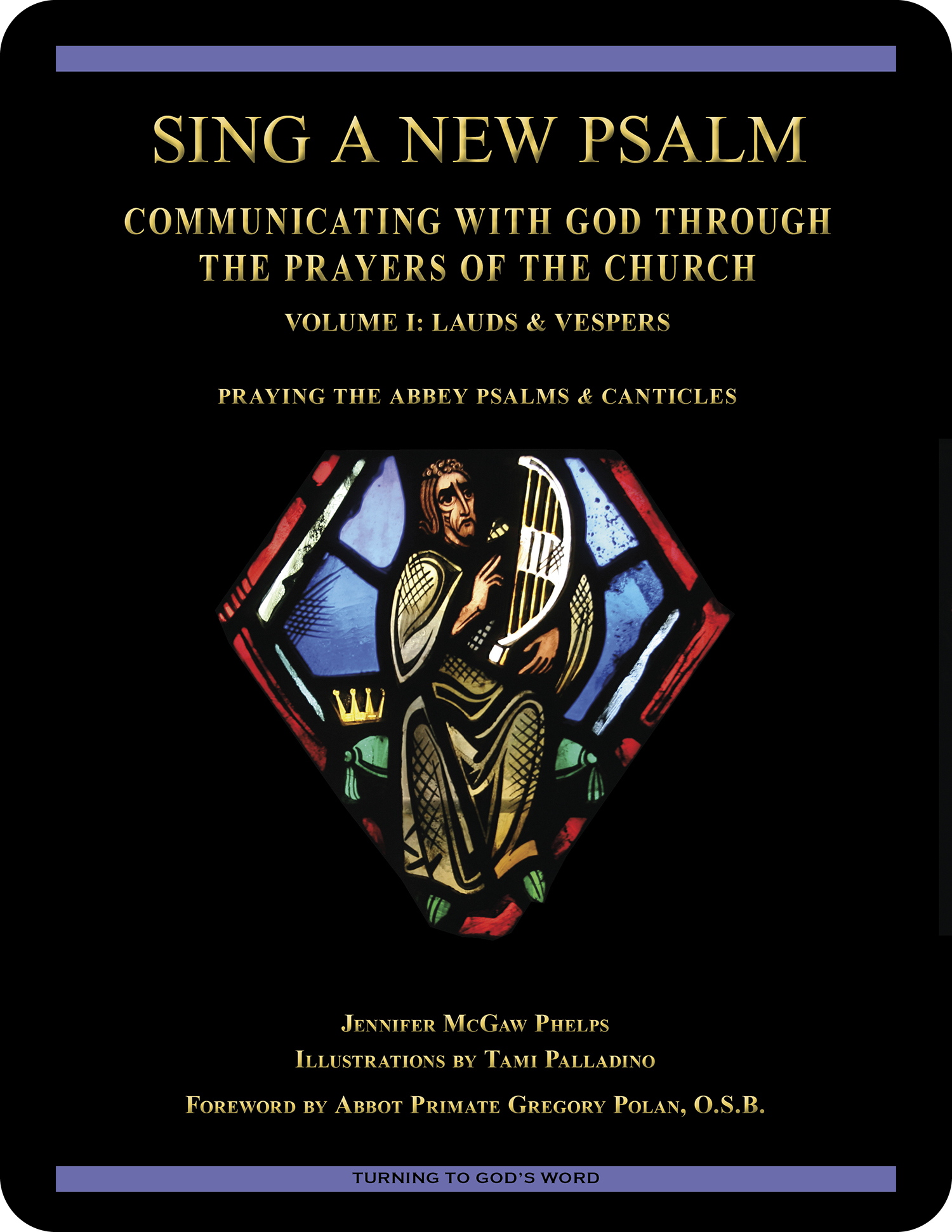
Volume I: Lauds & Vespers
Lesson 17 The LORD Has Sworn an Oath
Psalm 110, Psalm 113, and Psalm 114
Sunday 2nd Vespers (Week II)
Revised Standard Version Catholic Edition (RSVCE)*
New American Bible Revised Edition (NABRE)*
Catechism of the Catholic Church
ex libris (in our library)
next lesson: What God Is As Great As Our God?
This material coordinates with Lesson 17, “The LORD Has Sworn an Oath,” on pages 72–75 in Sing a New  Psalm: Communicating with God Through the Prayers of the Church—Volume I: Lauds & Vespers. Our Catholic Bible study is based on The Abbey Psalms and Canticles, a psalms translation prepared by the monks at Conception Abbey in 2010 and first published as The Revised Grail Psalms. The Abbey Psalms and Canticles is a revision of that work, finished in 2020 and now owned by the United States Conference of Catholic Bishops (USCCB). Wording and numbering of some psalms in other translations may differ. This translation is being added to all English-language Liturgy of the Hours books used in the United States.
“Unlike other prayers in sacred Scripture, the prayers contained in the psalms are not inserted into a narrative story that specifies their meaning and function. Instead, the psalms are given to the believer precisely as a text of prayer. Since they are the Word of God, the believer who prays the psalms speaks to God using the very words that God himself has given to us. Thus, in praying the psalms we learn to pray. The psalms are a school of prayer.”—Pope Benedict XVI
welcome to our in-depth study of the psalms
We invite groups and individuals to check out the sample Introduction and Lesson 1 from this 28- lesson Turning to
  God’s Word Catholic Bible study. Our online study pages include additional questions, commentary, and prayers based on the psalm texts. Sing a New Psalm: Communicating with God Through the Prayers of the Church—Volume I: Lauds & Vespers has been granted an imprimatur. A digital version of can be purchased from our website shop. Volume II covers psalms prayed at Vigils, Day Prayer, and Compline. If you have a Bible-related question or comment, click on one of the “ask us your question” or “what do you think” buttons on any online study page.
open with prayer
It’s always wise to begin any Bible study with prayer, whether reading the Scriptures alone or meeting with others in a discussion study group. You can pray using your own words, pray one of the psalms in this lesson, or use one of the opening prayers on our website. We especially like the following:
Lord Jesus, you promised to send your Holy Spirit
to teach us all things.
As we read and study your word today,
allow it to touch our hearts and change our lives. Amen.
 about the psalms in this lesson**
During Ordinary Time, the monks at Conception Abbey pray the following psalms for Sunday Second Vespers Week II: Psalm 110, a royal psalm attributed to David; and Psalm 113 and Psalm 114, both hymns by unknown composers.
a passage omitted from Liturgy of the Hours books
A difficulty for Christians who wish to incorporate the psalms into their prayers is that in some of these  ancient hymns the Psalmists blatantly curse their enemies and ask the LORD to deal harshly with those enemies. This is disturbing enough that the editors compiling the four-week Liturgy of the Hours books chose to leave out a few problematic verses. Psalm 110:6 is omitted from current four-week Liturgy of the Hours books but included among psalms prayed by the monks at Conception Abbey for Sunday Second Vespers Week I and Week II. Consider why the editors of Liturgy of the Hours books might have felt that this verse shouldn’t be included. Do you think they made the right decision?
all omissions are noted in this study
Omissions in the four-week Liturgy of the Hours books are addressed in Volume I and Volume II. For a complete list, click on this link, which includes a comparison of the two-week cursus (schedule) used at Conception Abbey and in both volumes of our study with the four-week Roman cursus followed by current Liturgy of the Hours books.
God’s oath has placed his Word at the heart of our faith
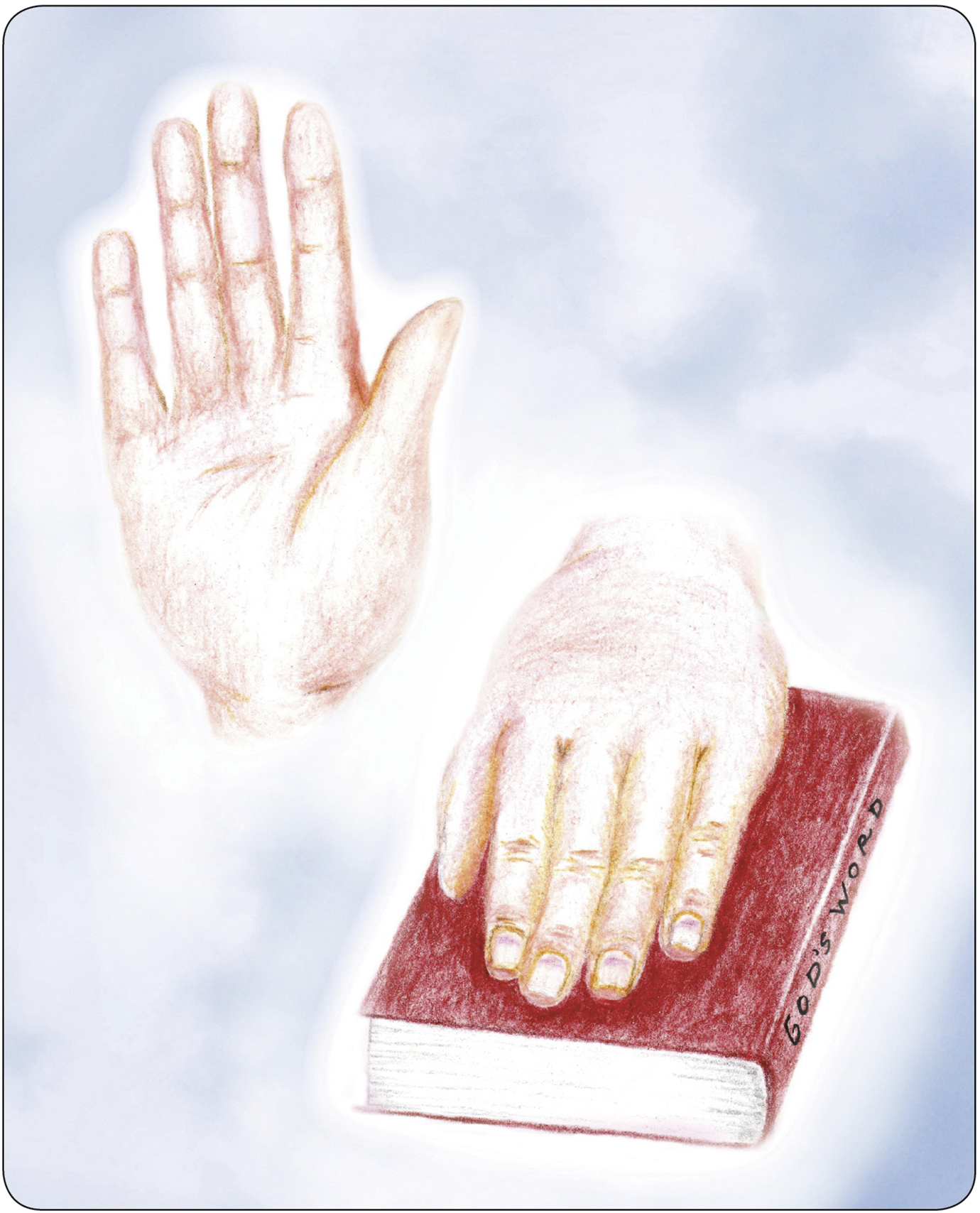 In Psalm 110, David announces that the LORD has taken an oath and won’t go back on his word. This illustration by Turning to God’s Word co-founder Tami Palladino depicts the mystery of God making such a promise. Our faith is built on understanding that—for reasons beyond comprehension—the Creator of the universe has chosen to bind himself in relationship with humanity. Even though Psalm 110 spells out what God has solemnly vowed, we take for granted the full impact of the eternal consequences. God has given us his Word. Long before the birth of Jesus, David foretold the significance of the Incarnation—God’s Son is an eternal priest. Click on Tami’s illustration to enlarge it. The illustration also is printed on page 73 in Sing a New Psalm: Communicating with God Through the Prayers of the Church—Volume I: Lauds & Vespers.
what do you think about God’s oath?
Even in the present day, sworn oaths remain an extremely serious way for people to enter into binding agreements.
? What are some important oaths that are common in our culture?
? Can you think of any sworn oaths that people regularly break?
? Consider what the fact that God’s sworn oath is eternal means to Christians.
? What responsibilities do you as a Christian have in upholding humanity’s end of God’s agreement made thousands of years ago?
? What are the consequences if humanity fails to uphold our end of the bargain?
? What’s in it for us if we do uphold our end of the agreement with God?
 the popes inspire us—God shares in our lowliness & poverty
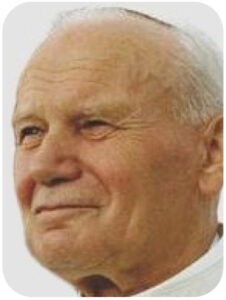
Take a few minutes to read “The LORD Stoops” on page 74 in Sing a New Psalm: Communicating with God Through the Prayers of the Church—Volume I: Lauds & Vespers. In this general audience, Pope St. John Paul II shares his reflections about what he considers the greatest honor that God bestows on the poor—loving concern for those who are needy and suffering. God goes so far as to become one with us in our humanity.
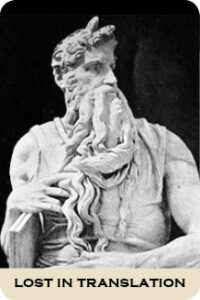 covenant—you could look it up in our archives
In biblical times, the word covenant had a different meaning than it does now. To consider how the Old Covenant influenced understanding of the New Covenant instituted by Jesus, read Lost in Translation, an online column in which Turning to God’s Word author Matthew Phelps helps readers connect with ideas expressed in the original languages of the Scriptures. New Lost in Translation entries are posted on Mondays, and past entries are archived on our website. Contact us if you’d like to receive Lost in Translation by email every week.
a translation difference: order vs. line
The Abbey Psalms and Canticles translation of Psalm 110:4 refers to a priest forever, “according to the order of Melchizedek.” The same verse in The Revised Grail Psalms refers to a priest forever “in the line of Melchizedek.” Both translations focus on what it is that enables Melchizedek to serve as a priest—his eternal nature. In the Church, an “order” refers to the religious community whose members are in some way set apart. Such an order sometimes also is referred to as a “blessed lineage” or “sacred lineage” as opposed to a “genetic lineage.” Which translation do you prefer, and why? (Note that it is not possible to link to either The Abbey Psalms and Canticles or The Revised Grail Psalms; all links on the online pages are to the Revised Standard Version Catholic Edition [RSVCE]).
a translation difference: at your right hand vs. standing at your right
The Abbey Psalms and Canticles translates Psalm 1105 : “The Lord at your right hand shatters kings in the day of his wrath.” The Revised Grail Psalms translates the same verse: “The Lord standing at your right shatters kings in the day of his wrath.” It is likely that editors of the The Revised Grail Psalms took meter into account to aid in chanting Psalm 110.
a translation difference: holy place vs. temple
The Abbey Psalms and Canticles translates Psalm 114:2: “Judah became his holy place, Israel became his domain.” The Revised Grail Psalms translates that same verse: “Judah became his temple, Israel became his domain.” The temple indeed can be understood to be a “holy place.” Consider whether other places might be considered “holy places” as well.
the best Catholic commentary about Scripture
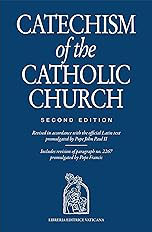 To find out more about how Church teaching is supported by passages in Sing a New Psalm: Communicating with God Through the Prayers of the Church—Volume I: Lauds & Vespers, check out the Index of Citations in the Catechism of the Catholic Church. Links to the primary Scripture passages in the lesson (Revised Standard Version Catholic Edition [RSVCE*]) and relevant paragraphs in the Catechism are provided here. Not every passage in the biblical text for this study is referenced in a Catechism paragraph, however, including Psalm 114 in this lesson.
Psalm 110:1—paragraph 447
Psalm 110:1–7—paragraph 659
Psalm 110:4—paragraph 1537
Psalm 113:1–2—paragraph 2143
don’t forget about our indexes & extra online material
If you’re trying to locate information about a specific Scripture passage, you can look it up in the index at the back of the study book. If you want to find a particular commentary, you can look up its title in the topics index. To learn more about another book of the Bible for which there’s a Turning to God’s Word study, visit the online study directories to read the commentaries and watch any accompanying videos. Finally, if you have a question or would like to make a comment about any of our studies, you can use one of the “ask us your question” or “what do you think” buttons to email our authors.
ex libris—Church documents & books about religious topics
Link to magisterial documents referred to in our Bible studies at ex libris—magisterial documents.  This listing includes significant recent encyclicals as well as a number of historical Church documents. Recommended books related to Scripture study can be found at ex libris—main bookshelf.
wondering how to pronounce some of these words?
The following links are to readings from the New International Version (NIV) Bible. To listen, open one of the links and click on the audio icon above the printed text. Although not taken from the translations used in our study materials, the NIV readings provide an audio guide to pronunciation of many words in this lesson’s primary biblical texts. A close online version of the translation of the Bible used in Catholic liturgy in the United States as well as an audio guide for daily Mass readings for the current month can be found on the website of the United States Conference of Catholic Bishops (USCCB).
Psalm 110 (NIV)
Psalm 113 (NIV)
Psalm 114 (NIV)
 close with a psalms-based prayer for Sunday 2nd Vespers Week II
Many of our Catholic study groups like to conclude their discussions with a prayer based on the scriptural focus of their lesson. If you’re uncomfortable composing your own Bible-based prayers, you can follow our four easy steps. If you prefer, you can pray any of the psalms in this lesson, or you can use the following short prayer.
O God, you exist outside of time and space,
and long ago you determined a plan that would open
the door of salvation for humanity.
Teach us to trust the mysteries of our faith
and to hope in the salvation they promise,
in order that we might follow your Son’s new commandment
to love others as he’s loved us.
Grant that we may use all the occasions of our life to praise you.
We ask this in the name of Jesus Christ. Amen.
Lesson 18 What God Is As Great As Our God? Monday Lauds (Week II)—Psalm 77, Psalm 87, and Psalm 96
Lesson 16 His Mercy Endures Forever, Sunday Lauds (Week II)—Psalm 118, Psalm 148, and Psalm 150
you also may like our study of the Letter to the Hebrews (digital only)
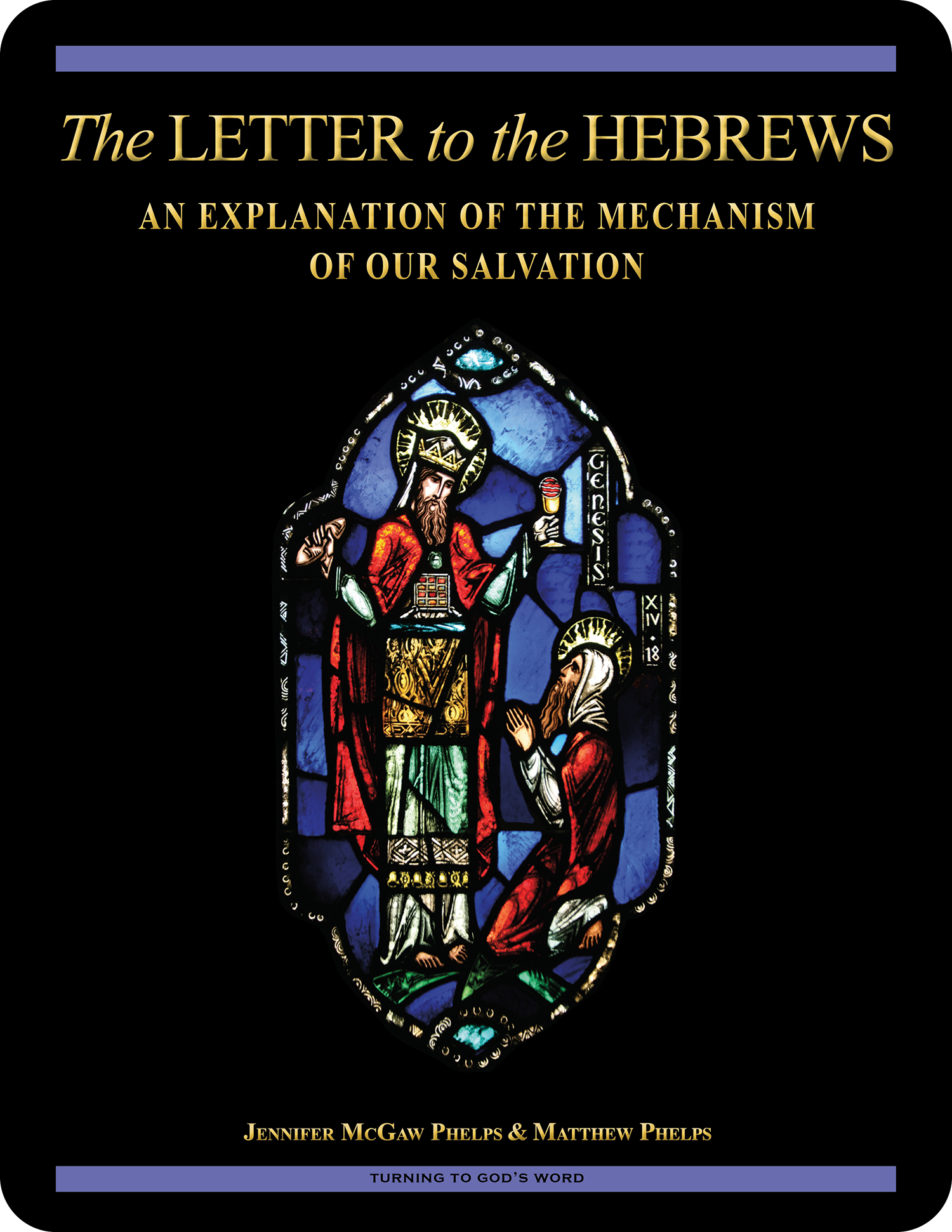 Many Christians struggle to understand one of the central mysteries of our faith: how Jesus can be both human and divine at the same time. The Letter to the Hebrews: An Explanation of the Mechanism of Our Salvation, an 18-lesson Catholic Bible study with an imprimatur, offers an in-depth look at the way in which Jesus’ dual nature allows for the salvation of humanity. The Letter to the Hebrews is designed to provide information that will encourage Christians to remain faithful. Click here to view a sample of the first lesson.
start a Turning to God’s Word Bible study
Thank you for your interest in Sing a New Psalm: Communicating with God Through the Prayers of the Church—Volume I: Lauds & Vespers. 
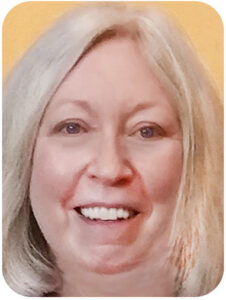 More information about beginning a Turning to God’s Word Bible study can be found on this website at start a Bible study, and Tami, Matthew, and I are available to answer questions or discuss concerns. Contact us to start this or one of our other studies or to have your schedule listed with other TtGW study groups on our website. —Jennifer
*There are seven deuterocanonical books in the Old Testament—Baruch, Judith, Sirach, Tobit, Wisdom, and First and Second Maccabees—and there are some deuterocanonical passages in the Books of Daniel and Esther. Protestants usually refer to these works as “apocryphal,” a word that means “outside the (Protestant) canon” because they’re excluded from most Protestant Bibles. Deuterocanonical means “second canon”; Catholics use that word to refer to any section of the Catholic Old Testament for which there are no extant, or existing, Hebrew manuscripts. All of the deuterocanonical books appear in the Septuagint, the earliest remaining versions of which date to the 1st century B.C. This Greek translation of the Old Testament was in common use by Jews at the time of Jesus. Learn more by reading How Do Catholic & Protestant Bibles Differ?
**You can learn more about the psalms by viewing a sample lesson from the Turning to God’s Word Catholic Bible study Sing a New Psalm: Communicating with God Through the Prayers of the Church. The first volume covers psalms prayed at Lauds and Vespers; the second covers psalms prayed at Vigils, Day Prayer, and Compline. Numbering of psalms and verses may vary in different translations.
Turning to God’s Word printed Bible studies use the 2006 Revised Standard Version Second Catholic Edition (RSV2CE) translation for all Scripture references except those to the psalms, which are taken from The Abbey Psalms and Canticles, prepared by the Benedictine monks of Conception Abbey and published in 2020 by the United States Conference of Catholic Bishops (USCCB). All Scripture links for the online study pages for Sing a New Psalm: Communicating with God Through the Prayers of the Church—Volume I: Lauds & Vespers are to the 1966 Revised Standard Version Catholic Edition (RSVCE) translation. The New International Version (NIV) audio recordings follow the same chapter and verse numbering as the RSV Catholic translations, but the NIV translation doesn’t include the deuterocanonical books and passages.
The 1966 RSVCE uses archaic pronouns and verb forms such as “thee,” “thou,” and “didst” in the psalms and in direct quotations attributed to God. The 2006 RSV2CE replaces these with more accessible English. The few significant translation changes in the RSV2CE include rendering almah as “virgin” in the Book of Isaiah 7:14 and restoring the term “begotten” in the Gospel According to John 3:16.
Numbering varies for some passages in this Bible study. Turning to God’s Word studies (print and digital) follow the numbering in the Revised Standard Version Catholic translations (RSV2CE and RSVCE). Discrepancies in the New American Bible Revised Edition (NABRE) are noted in the Index of Scripture Citations in the study book.