
whoever loves his life loses it
 In the Gospel According to John 12:25 (NABRE), Jesus presents a paradox: “Whoever loves his life loses it, and whoever hates his life in this world will preserve it for eternal life.” This seems like a challenging and even contradictory proposition, though looking at the original Greek does help to clear things up somewhat.
The word translated in this text at “life” is ψυχή (psyche). This word literally means “breath” and by extension can be seen to mean the soul or the animating aspect of humanity. This view of the soul can be traced in the Hebrew tradition back to the second account of Creation in the book of Genesis, in which God breathes into clay and it becomes a living person. Our soul or breath is seen as the force that animates us and makes us who we are.
If we continue the metaphor, as God demonstrated at Creation, breath isn’t meant to be held in. It becomes stale. It has to be refreshed and made new in order to continue to animate us. If we try to cling selfishly to that breath we have without ever letting it out to take in a new breath, its ability to keep us alive fades; we eventually will die.
Jesus here seems to view our souls the same as we see breath. Our life is meant to be given away so that it can be refreshed. This is the secret to making it last and to living eternally. Jesus models how this works in his Passion. He invites us to follow his example.
you also may like our study of the book of Revelation
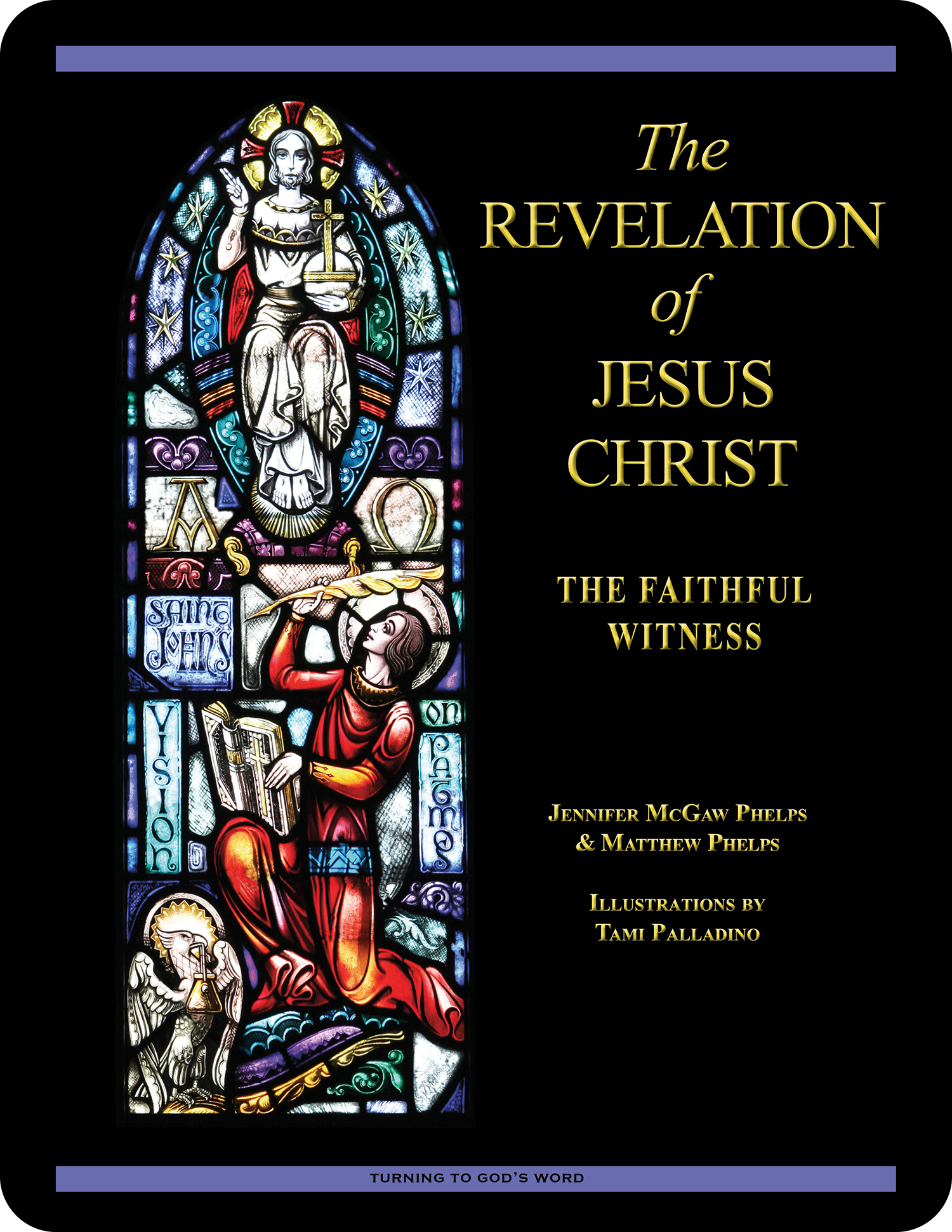 The Revelation of Jesus Christ: The Faithful Witness, a 23-lesson Catholic Bible study with an imprimatur, examines ways in which our traditional Christian view of heaven is built on Hebrew apocalyptic visions recorded in the Old Testament. This recently revised study includes maps and additional commentary and takes a close look at the role of the prophets in present-day Christianity. Illustrations by Tami Palladino depict the often-misunderstood images in the book of Revelation. Click here to view a sample of the first lesson.
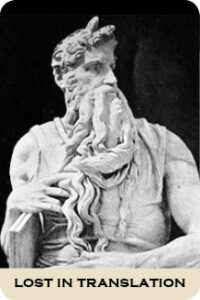
 Click on the picture of the statue of Moses with horns (above) to learn more about Lost in Translation. A new entry is archived each Monday. Contact us to receive Lost in Translation by email every week. You may use any of the contact links on our website to ask Matthew a question.