
wisdom
 The Book of Wisdom 6:12–16 (NABRE) describes many positive attributes of wisdom. This deuterocanonical book is one of the last written in the Old Testament and clearly shows the influence of Greek thought on the Jewish mindset. For many Greeks, wisdom was one of the deepest held and most highly valued attributes. Among other things, the book of Wisdom works to show the relationship between wisdom and the Hebrew God. Out of context, however, this reading appears to show wisdom almost as some sort of feminine deity.
The Greek word for wisdom, σοφία (sophia), is one of the roots of the word philosophy, which means a love of wisdom. As Greek nouns can have one of three different genders (masculine, feminine, or neuter), it’s also significant here that wisdom is a feminine noun, though that doesn’t necessarily make wisdom a feminine thing. The gender is an attribute of the word rather than of the thing itself. The continued references to wisdom in this passage as “her” are a necessity of the language. A pronoun (he/she/it) in Greek must necessarily match the gender of the noun to which it refers, and so the text correctly uses the pronouns she and her to refer to sophia.
We do see from this text that wisdom is given some degree of agency. This tone comes from the overarching project of the author of the book to reconcile the Greek notion of wisdom with Jewish thought of the time about God. Wisdom also traditionally is seen as one of the seven gifts of the Holy Spirit presented in the Book of Isaiah 11:1–3 (NABRE).
Consider where you think wisdom comes from and how we can go about gaining more of it.
you also may like our study of the Letter to the Hebrews (digital only)
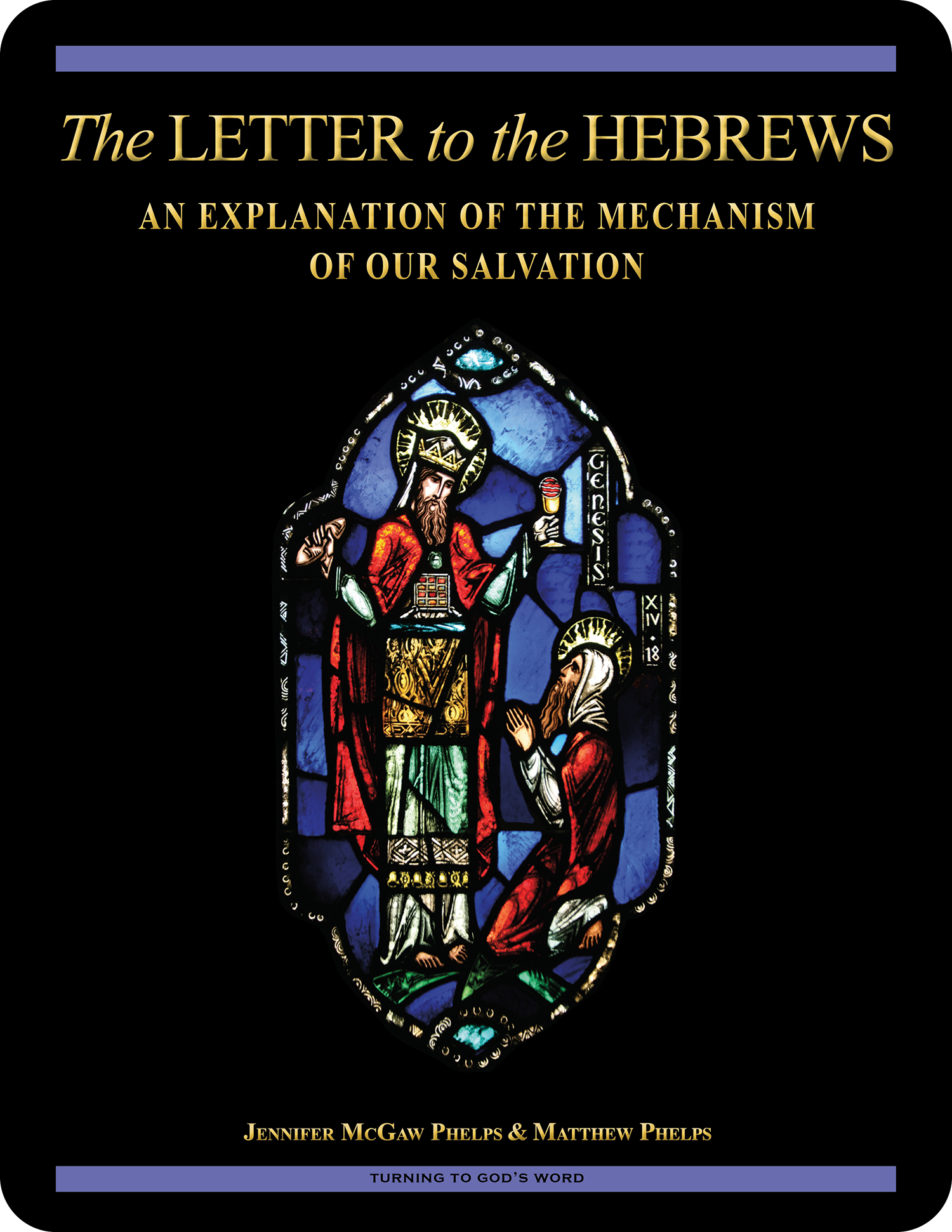 Many Christians struggle to understand one of the central mysteries of our faith: how Jesus can be both human and divine at the same time. The Letter to the Hebrews: An Explanation of the Mechanism of Our Salvation, an 18-lesson Catholic Bible study with an imprimatur, offers an in-depth look at the way in which Jesus’ dual nature allows for the salvation of humanity. The Letter to the Hebrews is designed to provide information that will encourage Christians to remain faithful. Click here to view a sample of the first lesson.
 Click on the picture of the statue of Moses with horns (above) to learn more about Lost in Translation. A new entry is archived each Monday. Contact us to receive Lost in Translation by email every week. You may use any of the contact links on our website to ask Matthew a question.