
 The Gospel According to Mark:
A Look at the Son of God
Lesson 14 The Institution of the Eucharist
the Gospel According to Mark 14:1–31
Revised Standard Version Catholic Edition (RSVCE)*
New American Bible Revised Edition (NABRE)*
Catechism of the Catholic Church
ex libris (in our library)
glossary for the Gospel According to Mark
cross references in the Gospel According to Mark
next lesson: Jesus Is Betrayed & Condemned
This material coordinates with Lesson 14, “The Institution of the Eucharist,” on pages 65–68 in The Gospel According to Mark: A Look at the Son of God.
Now after John was arrested, Jesus came into Galilee, preaching the gospel of God, and saying,
“The time is fulfilled, and the kingdom of God is at hand; repent, and believe in the gospel.”
—the Gospel According to Mark 1:14–15
welcome to our in-depth study of the Gospel According to Mark
We invite interested groups and individuals to check out the sample introduction and first lesson from this 17- lesson Turning to
  God’s Word Catholic Bible study based on Scripture that is the source of most of the Sunday Gospel readings for Liturgical Year B. These online study pages link to an online glossary and cross references in the biblical text. Other study aids include maps, additional commentary, and prayers based on the primary Scripture in each lesson. The Gospel According to Mark: A Look at the Son of God and the other two synoptic studies are being submitted for imprimaturs. This study will be available from our website shop about three months before the start of liturgical Year B in 2026. If you have a Bible-related question or comment, click on one of the “ask us your question” or “what do you think” buttons on any online study page.
open with prayer
It’s always wise to begin any Bible study with prayer, whether reading the Scriptures alone or meeting with others in a discussion study group. You can pray using your own words or use one of the opening prayers on our website. We especially like the following:
Lord Jesus, you promised to send your Holy Spirit to teach us all things.
As we read and study your word today,
allow it to touch our hearts and change our lives. Amen.
let’s review—the Gospel According to Mark 13:1–37
Lesson 13 ‘What I Say to You I Say to All: Watch’ contains Jesus’ prophetic description of the end of time. While it can be difficult to think of Jesus as a prophet, the thirteenth chapter in the Gospel According to Mark clearly presents Jesus in that light. Jesus cautions his disciples to be on the lookout for imposters professing to be speaking in his name, and he stresses the urgency of establishing a strong relationship with God before it’s too late. Jesus also warns that although these end times will be turbulent, the tribulation will pass and those who have survived will see Jesus himself coming “in clouds with great power and glory.” A similar message can be found in the more lengthy and final book of the New Testament, The Revelation to John (the Apocalypse). Jesus also tells his disciples that the actual day when all of this will occur is unknown to anyone except God the Father.
 from Matthew—there are some new discrepancies
Turning to God’s Word author Matthew Phelps notes some significant differences in the way that the Gospel According to Mark 14:3–9 retells the account of Jesus’ anointing at Bethany and the way that the other three Gospel writers record what is assumed to be the same event. [Those other accounts can be found in the Gospel According to Matthew 26:6–13, the Gospel According to Luke 7:36–39, and the Gospel According to John 12:1–8.]
“The Evangelist Mark doesn’t identify the objectors as disciples. The Evangelist Matthew does. The Evangelist Luke writes that it is a Pharisee named Simon who objects, but he does so because the woman who anoints Jesus is a known sinner—not because of the expense of the ointment. The Evangelist John identifies Judas Iscariot as the objector, and writes that Judas’ objection was motivated entirely by his own selfish interest as keeper of the group’s money box.
“The Evangelist Mark sets this event in Bethany in the home of Simon the leper. The Gospel According to Luke describes it occurring earlier in Jesus’ ministry, before the Transfiguration instead of near to the time of the Passover, and that Evangelist has Jesus’ anointing occurring at the home of a Pharisee. The Gospel According to John sets the event in Bethany at the home of Lazarus, Martha, and Mary; In that account, Lazarus’ sister Mary is identified by name as the woman who anoints Jesus.
“In short, if you’re confused, that should come as no big surprise. The four Evangelists recording this event can’t seem to agree on the details.”
 so Matthew asks—what’s in this for those who object?
Matthew also observes that the people who object to wasting money on anointing Jesus with costly ointment all seem to have selfish motives.
“Is the monetary value of selling the ointment all it’s good for? The Evangelist Mark’s version doesn’t mention that Judas is annoyed about the waste, but the  motives of the nameless objectors seem the same as those Judas expresses in the Gospel According to John. All of these objectors are concerned only about the monetary value; this well may be because anointing Jesus doesn’t benefit them in any way, but turning the ointment into cash could aid them directly or indirectly. While this motive seems silly in context, how often do we only care about God’s will when it benefits us—and assume that everything he wills must be for our good and benefit, usually as we choose to define those things?”
“Jesus’ response to the unnamed objectors in the Gospel According to Mark 14:6–7 is more snarky than he usually gets. To paraphrase, Jesus seems to be saying: ‘You who are so concerned about this money helping the poor, there always are tons of poor people—and you specifically can help them whenever you want. So why are you concerned about what I and this woman are doing? Have you been doing a lot to help the poor otherwise?’
“Present-day Christians do this same thing. We frequently concern ourselves with what good works other people may or may not be doing more than paying attention to what we ourselves are doing.”
Christian Connection—who is Jesus to you?
It’s no secret that Jesus represents many different things to many different people. It can help our relationship with God to consider some of the ways that men and women react to the idea of Jesus in their lives.
? Think about why there are so many different views of who Jesus is in the Gospels.
? Consider why so many views of Jesus permeate even the Catholic Church.
? Where can a present-day Catholic turn to ensure that he or she isn’t being misled about the true identity of Jesus?
? How is Jesus’ identity tied up with his primary mission?
? Why might so many people in Jesus’ time—and in the present day—be afraid to wholeheartedly accept Jesus?
? Who is Jesus to you?
? Why is it important to the well-being of humanity that all people accept the truth about Jesus?
more from Matthew—let’s look at Judas’ betrayal
Matthew comments on the way that the Evangelist Mark handles Judas’ betrayal of Jesus in the Gospel According to Mark 14:10–11.
“There are a couple of interesting points in the Evangelist’s Mark account of Judas’ going to the Jewish religious leaders to betray Jesus. First, Mark abandons the passive voice; his readers need to know who did this and that Judas was one of Jesus’ inner circle. Second, Mark provides no additional view of Judas’ motives other than the context that Judas goes to the chief priests after the previous section, which implies that Judas was involved in criticism about the costly ointment being used to anoint Jesus—but that’s far from a sure thing.
“Readers don’t see Judas ask for money (though we don’t see that he was opposed to being paid, either). This shows how principled—or not—everyone here is. This isn’t a matter of moral necessity; it’s a commercial transaction. It should be obvious that this isn’t behavior taken by people who can claim the moral high ground.
“In the Gospel According to Mark 14:18 Jesus announces: ‘One of you will betray me.’ This is weird because in this text the betrayal is already done, though I suppose Judas still has to actually do what he apparently already has accepted money to do.”
thanksgiving—you could look it up in our archives
 The Greek word for giving thanks is εὐχαριστέω (eucharisteo). This verb in its various forms appears nearly 40 times in the New Testament. The Catholic sacrament of the Eucharist specifically refers to offering thanksgiving to God. To learn more, read Lost in Translation, a weekly online column in which Turning to God’s Word author Matthew Phelps helps readers connect with ideas expressed in the original languages of the Scriptures. New Lost in Translation entries are posted on Mondays, and past entries are archived on our website. Contact us if you’d like to receive Lost in Translation by email every week.
ex libris—background of understanding the Eucharist
In the Gospel According to Mark 14:22–24, Jesus introduces the sacrament of the Eucharist to his 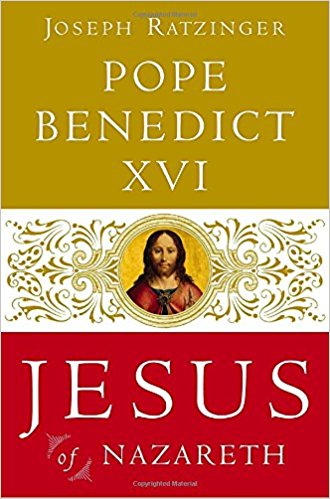
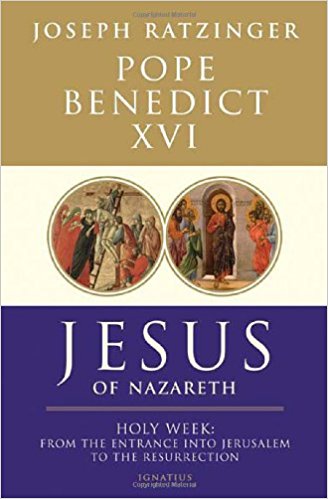 disciples. The late Pope Benedict XVI sees the Mosaic background [Jesus as the new Moses] as essential context for the claim that Jesus makes. The late Pope writes: “Moses struck the rock in the desert and out flowed water; Jesus promises the water of life. … The great gift though, which stood out in the people’s memory, was the manna. For a people who often went hungry and struggled to earn their daily bread, this was the promise of promises … . ” You can read more excerpts and learn more about the Jesus of Nazareth trilogy as well as about other works related to Bible study at ex libris—main bookshelf.
more from Matthew—about the Eucharist
Matthew comments on the concise way that the Evangelist Mark handles Jesus’ introduction of the Eucharist in the Gospel According to Mark 14:22–24.
“This early version is extremely concise, which indicates to present-day readers what the most essential early takeaways were. There’s no attempt to present this account of the institution of the Eucharist as any sort of metaphor, and it’s not explained like the parables—even though Jesus already has shown an inclination toward explaining symbolism and imagery to his followers. This direct version hits harder than some versions that contain a lot more explanation.
“The Gospel According to Mark 14:24 is similar to the mention of the bread becoming Jesus’ Body, but this is a bit wordier. What covenant is Jesus talking about? The verse reads to me like it’s about the blood of the Old Covenant—but effectively the final act under that covenant since it buys the way out of those terms and creates new ones. I suppose in a sense, it’s the blood of the Old and of a New Covenant, and being blood (life) goes back to much earlier covenants as well. Maybe it’s not necessary to specify which covenant because in a sense it’s the blood of all of the covenants and brings them all together in one act.
“It also is interesting that in the synoptic Gospels in which Jesus institutes the Eucharist that event happens on the Passover, while in the sixth chapter in the Gospel According to John, Jesus’ explanation of the Eucharist occurs at a different time, and there’s no other formal institution of the Eucharist.”
the best Catholic commentary about Scripture
To find out more about how Church teaching is supported by passages in the Gospel According to Mark, check out the Index of Citations in the Catechism of the Catholic Church. Links to each lesson’s primary Scripture passages (from the Revised Standard Version Catholic Edition [RSVCE*]) that are cited in relevant paragraphs in the Catechism are provided here. Not every passage in the Gospel According to Mark is referenced in a Catechism paragraph.
the Gospel According to Mark 14:12–25—paragraph 1339
the Gospel According to Mark 14:18–20—paragraph 474
the Gospel According to Mark 14:22—paragraph 1328
the Gospel According to Mark 14:25—paragraphs 1335, 1403
the Gospel According to Mark 14:26–30—paragraph 474
ways our glossary might prove helpful
In addition to providing extra information about geographical locations, our glossary also points out  persons or places mentioned in the biblical text under more than one name or more than one spelling. If you can remember a name but aren’t sure in which lesson it shows up, you can find it in the glossary, which lists every proper noun that appears in the biblical text for every lesson in The Gospel According to Mark: A Look at the Son of God. A few general terms also are included that may be unfamiliar or whose meaning may be unclear to readers.
to learn more, read more Scripture
If you’re having difficulty with a passage of Scripture, it can be helpful to read the relevant  cross references—but looking these up can take time. To make that easier, we’ve compiled the cross references from the Revised Standard Version Second Catholic Edition (RSV2CE)—the translation that we reprint in our study books. A link to these cross references can be found at the top of every online study page; the list includes each of the cross references in the primary biblical text for The Gospel According to Mark: A Look at the Son of God.
don’t forget about our indexes & extra online material
If you’re trying to locate information about a specific Scripture passage, you can look it up in the index at the back of the study book. If you want to find a particular commentary, you can look up its title in the topics index. (If you don’t have access to the study book, both indexes are in the sample.) To learn more about another book of the Bible for which there’s a Turning to God’s Word study, visit the online study directories to read the commentaries and watch any accompanying videos. Finally, if you have a question or would like to make a comment about any of our studies, you can use one of the “ask us your question” or “what do you think” buttons to email our authors.
ex libris—Church documents & books about religious topics
Link to magisterial documents referred to in our Bible studies at ex libris—magisterial documents.  This listing includes significant recent encyclicals as well as a number of historical Church documents. Recommended books related to Scripture study can be found at ex libris—main bookshelf.
wondering how to pronounce some of these words?
The following link is to a reading from the New International Version (NIV) Bible. To listen, open the link and click on the loudspeaker icon above the printed text. Although not taken from translations used in our study materials, the NIV reading provides an audio guide to pronunciation of many words in this lesson’s primary biblical text. A close online version of the translation of the Bible used in Catholic liturgy in the United States and an audio guide for daily Mass readings for the current month can be found on the website of the United States Conference of Catholic Bishops (USCCB).
the Gospel According to Mark 14:1–31 (NIV)
close with Bible-based prayer related to this lesson
Many of our Catholic study groups like to conclude their discussions with a prayer based on the scriptural focus of their lesson, and some participants include Scripture-specific prayer in their individual study. If you’re uncomfortable composing your own Bible-based prayers, you can follow our four easy steps. If you prefer, you can use the following prayer based on this lesson’s text from the Gospel According to Mark.
O God, your Son freely gave his life as a ransom for sinful humanity.
Help us to value the worth of the Eucharist,
in which Jesus continues to call all men and women
into union with him through the sacraments of his Church.
Grant us the grace to be vigilant as we wait for Jesus’ Second Coming,
and the courage to overcome our fears as we focus on God’s mercy. Amen.
Lesson 15 Jesus Is Betrayed & Condemned—the Gospel According to Mark 14:32–72
Lesson 13 ‘What I Say to You I Say to All: Watch‘—the Gospel According to Mark 13:1–37
you also may like our study of the Gospel According to John
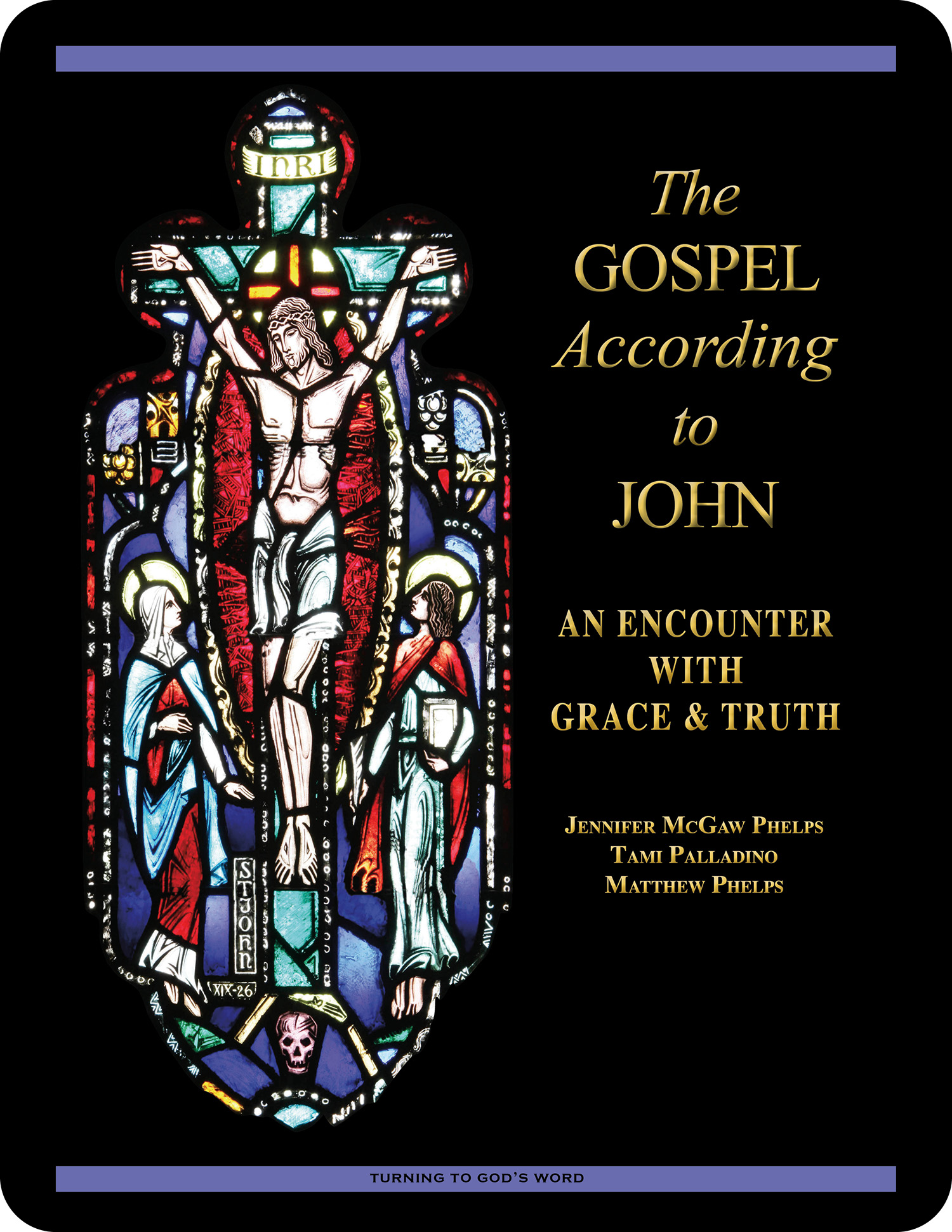 The Gospel According to John: An Encounter with Grace & Truth, a 25-lesson Catholic Bible study with an imprimatur, examines the Fourth Gospel’s view of Jesus Christ as the Son of God, with special emphasis on the institution of the sacraments of the Church as the means by which Christians are purified and made holy. This recently revised study includes maps and additional commentary, and takes a close look at the way in which Jesus relates to individual men and women. Click here to view a sample of the first lesson.
start a Turning to God’s Word Bible study
 Thank you for your interest in our three-part study of the synoptic Gospels.
  More information about beginning a Turning to God’s Word Bible study can be found at start a Bible study, and Tami, Matthew, and I are available to answer questions or discuss concerns. Contact us to start this or one of our other studies or to have your schedule listed with other TtGW study groups on our website. —Jennifer
*There are seven deuterocanonical books in the Old Testament—Baruch, Judith, Sirach, Tobit, Wisdom, and First and Second Maccabees—and there are some deuterocanonical passages in the Books of Daniel and Esther. Protestants usually refer to these works as “apocryphal,” a word that means “outside the (Protestant) canon” because they’re excluded from most Protestant Bibles. Deuterocanonical means “second canon”; Catholics use that word to refer to any section of the Catholic Old Testament for which there are no extant, or existing, Hebrew manuscripts. All of the deuterocanonical books appear in the Septuagint, the earliest remaining versions of which date to the 1st century B.C. This Greek translation of the Old Testament was in common use by Jews at the time of Jesus. Learn more by reading How Do Catholic & Protestant Bibles Differ?
Turning to God’s Word printed Bible studies use the 2006 Revised Standard Version Second Catholic Edition (RSV2CE) translation for all Scripture references except those to the Psalms, which are taken from The Abbey Psalms and Canticles, prepared by the Benedictine monks of Conception Abbey and published in 2020 by the United States Conference of Catholic Bishops (USCCB). All Scripture links for the online study pages for The Gospel According to Mark: A Look at the Son of God are to the 1966 Revised Standard Version Catholic Edition (RSVCE) translation. The New International Version (NIV) audio recordings follow the same chapter and verse numbering as the RSV Catholic translations.
The 1966 RSVCE uses archaic pronouns and verb forms such as “thee,” “thou,” and “didst” in the Psalms and in direct quotations attributed to God. The 2006 RSV2CE replaces these with more accessible English. The few significant translation changes in the RSV2CE include rendering almah as “virgin” in the Book of Isaiah 7:14 and restoring the term “begotten” in the Gospel According to John 3:16.
Numbering varies for some passages in this Bible study. Turning to God’s Word studies (print and digital) follow the numbering in the Revised Standard Version Catholic translations (RSV2CE and RSVCE). Discrepancies in the New American Bible Revised Edition (NABRE) are noted in the Index of Scripture Citations in the study book or toward the end of the sample.
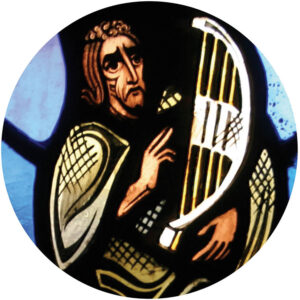 You can learn more about the biblical Psalms by viewing a sample lesson from the Turning to God’s Word Catholic Bible study Sing a New Psalm: Communicating with God Through the Prayers of the Church. The first volume covers Psalms prayed at Lauds and Vespers; the second volume covers Psalms prayed at Vigils, Day Prayer, and Compline. Numbering of Psalms and verses may vary in different translations.