 The Gospel According to Mark:
A Look at the Son of God
Lesson 17 Jesus Is Risen! Amen!
the Gospel According to Mark 16:1–20
Revised Standard Version Catholic Edition (RSVCE)*
New American Bible Revised Edition (NABRE)*
Catechism of the Catholic Church
ex libris (in our library)
glossary for the Gospel According to Mark
cross references in the Gospel According to Mark
This material coordinates with Lesson 17, “Jesus Is Risen! Amen!” on pages 77–81 in The Gospel According to Mark: A Look at the Son of God.
Now after John was arrested, Jesus came into Galilee, preaching the gospel of God, and saying,
“The time is fulfilled, and the kingdom of God is at hand; repent, and believe in the gospel.”
—the Gospel According to Mark 1:14–15
welcome to our in-depth study of the Gospel According to Mark
We invite interested groups and individuals to check out the sample introduction and first lesson from this 17- lesson Turning to
  God’s Word Catholic Bible study based on Scripture that is the source of most of the Sunday Gospel readings for Liturgical Year B. These online study pages link to an online glossary and cross references in the biblical text. Other study aids include maps, additional commentary, and prayers based on the primary Scripture in each lesson. The Gospel According to Mark: A Look at the Son of God and the other two synoptic studies are being submitted for imprimaturs. This study will be available from our website shop about three months before the start of liturgical Year B in 2026. If you have a Bible-related question or comment, click on one of the “ask us your question” or “what do you think” buttons on any online study page.
open with prayer
It’s always wise to begin any Bible study with prayer, whether reading the Scriptures alone or meeting with others in a discussion study group. You can pray using your own words or use one of the opening prayers on our website. We especially like the following:
Lord Jesus, you promised to send your Holy Spirit to teach us all things.
As we read and study your word today,
allow it to touch our hearts and change our lives. Amen.
let’s review—the Gospel According to Mark 15:1–47
Lesson 16 The Crucifixion lays the groundwork for the final chapter in the Gospel According to Mark, which focuses on truly amazing information about Jesus’ Resurrection. The fifteenth chapter in the Gospel According to Mark, however, looks at some grim details surrounding Jesus’ Crucifixion. These include Jesus’ appearance before Pilate, the crowd’s choice of Barabbas to be the prisoner released during the traditional Passover Amnesty, the Roman soldiers’ abuse of Jesus, and Simon of Cyrene helping to carry Jesus’ cross. In addition, the Evangelist records Jesus being mocked by passersby and by the religious leaders in Jerusalem, as well as the Roman centurion who witnesses Jesus’ death and announces that surely Jesus was the Son of God. The chapter ends with an account of Joseph of Arimathea placing Jesus’ dead body in a fresh tomb. Faithful women note where Jesus’ body is placed.
ex libris—one way secular history influences Christianity
In the Gospel According to Mark 16:1–8, three women are the first to see that Jesus’ body is not in 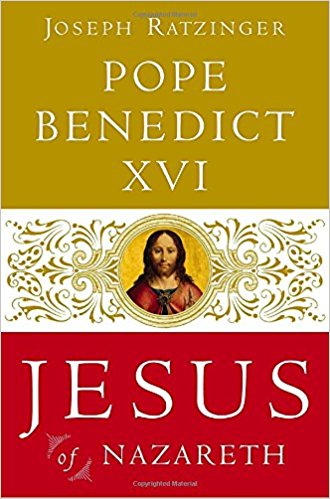
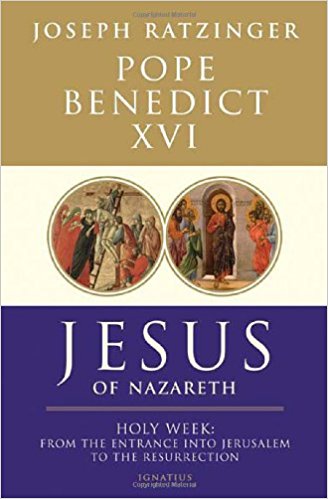
 the tomb, but the Evangelist Mark records that they tell no one because they are afraid. In the next passage—Gospel According to Mark 16:9–11—Jesus appears to Mary Magdalene. Although she attempts to tell the disciples, Mark records that they fail to believe her. In the second volume of Jesus of Nazareth, the late Pope Benedict XVI notes that there were two traditions that arose around Jesus’ Resurrection—the confessional and the narrative. The narrative tradition describes encounters with the risen Jesus, and the confessional tradition establishes key facts that confirm the faith. Only women are involved in the narrative tradition, while only men are named in the confessional tradition. The late Pope writes: “This may be linked to the fact that in the Jewish tradition only men could be admitted as witnesses in court—the testimony of women was considered unreliable.” You can read more excerpts and learn more about the Jesus of Nazareth trilogy as well as about other works related to Bible study at ex libris—main bookshelf.
Resurrection—you could look it up in our archives
 The Evangelist Mark keeps his account of Jesus’ Resurrection short and to the point. That’s fitting, since there is no evidence that this key Christian event involved anyone but Jesus. To learn more about the meaning of the word resurrection, read Lost in Translation, a weekly online column in which Turning to God’s Word author Matthew Phelps helps readers connect with ideas expressed in the original languages of the Scriptures. New Lost in Translation entries are posted on Mondays, and past entries are archived on our website. Contact us if you’d like to receive Lost in Translation by email every week.
Christian Connection—what does Jesus’ Resurrection mean to you?
Without the account of the Resurrection, there would be no Christianity. The idea that a human person could somehow manage to overcome death—even if, or perhaps because, Jesus also was divine—was unheard of at that time. With the exception of Jesus, it’s unheard of in the present day as well.
 ? What is the primary reason that you’re a Christian?
? What do you consider the foremost teaching regarding Jesus?
? How does this teaching impact the way that you live?
? What other Church teachings do you consider foundational to the Christian religion?
? When did you make a conscious choice to accept Catholic teachings?
? What, if any, effect did this Bible study have on your understanding about Jesus?
let’s look at what Paul wrote to the Corinthians
The First Letter of Paul to the Corinthians 15:12–19 doesn’t mince words about the significance of Jesus’ Resurrection. Given that Paul was knowledgeable about Jewish theology before he became a convert to Christianity, his viewpoint is extremely interesting: “Now if Christ is preached as raised from the dead, how can some of you say that there is no resurrection of the dead? But if there is no resurrection of the dead, then Christ has not been raised; if Christ has not been raised, then our preaching is in vain and your faith is in vain. We are even found to be misrepresenting God, because we testified of God that he raised Christ, whom he did not raise if it is true that the dead are not raised. For if the dead are not raised, then Christ has not been raised. If Christ has not been raised, your faith is futile and you are still in your sins. Then those also who have fallen asleep in Christ have perished. If for this life only we have hoped in Christ, we are of all men most to be pitied.”
 from Matthew—about the risen Jesus
Turning to God’s Word author Matthew Phelps points out that in the Gospel According to Mark 16:14 Jesus criticizes all of his disciples for failing to believe in his resurrection.
“What Jesus says when he upbraids his disciples for their lack of belief and hardness of heart still kind of sucks, but we know that they eventually get there. It seems better that Jesus criticize them all than that he single out Thomas.”
 so Matthew asks—who should be preached the Gospel?
Matthew observes that in the Gospel According to Mark 16:15 Jesus includes a question that usually gets ignored in the request that his followers preach the Gospel to the whole Creation.
“In this passage in the Gospel According to Mark, Jesus seems to be intent on specifying that the Gospel should be preached not just to all people but to ‘the whole creation.’ This odd phrasing introduces an interesting implication. What exactly does Jesus mean by ‘the whole creation?'”
be careful about how you interpret the meaning of ‘signs’
In the Gospel According to Mark 16:17–18, Jesus lists five “signs” that will accompany believers. In the Gospel According to Mark, the word “sign” has only been used by Jesus in response to a test by the Pharisees in the Gospel According to Mark 8:11–13 and in response to a question posed by Jesus’ disciples about how they can recognize beginning of the end times in the thirteenth chapter of the Gospel. The Evangelist Mark also describes Judas arranging a “sign” of betrayal with the Jewish religious authorities in the Gospel According to Mark 14:44.
It is only after his Resurrection that Jesus mentions “signs” in a positive light. In the Gospel According to Mark 16:17–18 and 16:20, Jesus suggests that very specific things can be used as evidence or proof that the Gospel message is divinely inspired. It’s in this same sense that the Evangelist John uses the word “sign” instead of “miracle” in the Fourth Gospel.
the best Catholic commentary about Scripture
To find out more about how Church teaching is supported by passages in the Gospel According to Mark, check out the Index of Citations in the Catechism of the Catholic Church. Links to each lesson’s primary Scripture passages (from the Revised Standard Version Catholic Edition [RSVCE*]) that are cited in relevant paragraphs in the Catechism are provided here. Not every passage in the Gospel According to Mark is referenced in a Catechism paragraph.
the Gospel According to Mark 16:1—paragraphs 641, 2174
the Gospel According to Mark 16:2—paragraph 2174
the Gospel According to Mark 16:5–7—paragraph 333
the Gospel According to Mark 16:7—paragraph 752
the Gospel According to Mark 16:11—paragraph 643
the Gospel According to Mark 16:12—paragraphs 645, 659
the Gospel According to Mark 16:13—paragraph 643
the Gospel According to Mark 16:14—paragraph 643
the Gospel According to Mark 16:15—paragraph 888
the Gospel According to Mark 16:15–16—paragraphs 977, 1223
the Gospel According to Mark 16:16—paragraphs 161, 183, 1253, 1256, 1257
the Gospel According to Mark 16:17—paragraphs 434, 1673
the Gospel According to Mark 16:17–18—paragraphs 670, 1507
the Gospel According to Mark 16:18—paragraph 699
the Gospel According to Mark 16:19—paragraph 659
the Gospel According to Mark 16:20—paragraphs 2, 156, 670
ways our glossary might prove helpful
In addition to providing extra information about geographical locations, our glossary also points out  persons or places mentioned in the biblical text under more than one name or more than one spelling. If you can remember a name but aren’t sure in which lesson it shows up, you can find it in the glossary, which lists every proper noun that appears in the biblical text for every lesson in The Gospel According to Mark: A Look at the Son of God. A few general terms also are included that may be unfamiliar or whose meaning may be unclear to readers.
to learn more, read more Scripture
If you’re having difficulty with a passage of Scripture, it can be helpful to read the relevant  cross references—but looking these up can take time. To make that easier, we’ve compiled the cross references from the Revised Standard Version Second Catholic Edition (RSV2CE)—the translation that we reprint in our study books. A link to these cross references can be found at the top of every online study page; the list includes each of the cross references in the primary biblical text for The Gospel According to Mark: A Look at the Son of God.
don’t forget about our indexes & extra online material
If you’re trying to locate information about a specific Scripture passage, you can look it up in the index at the back of the study book. If you want to find a particular commentary, you can look up its title in the topics index. (If you don’t have access to the study book, both indexes are in the sample.) To learn more about another book of the Bible for which there’s a Turning to God’s Word study, visit the online study directories to read the commentaries and watch any accompanying videos. Finally, if you have a question or would like to make a comment about any of our studies, you can use one of the “ask us your question” or “what do you think” buttons to email our authors.
ex libris—Church documents & books about religious topics
Link to magisterial documents referred to in our Bible studies at ex libris—magisterial documents.  This listing includes significant recent encyclicals as well as a number of historical Church documents. Recommended books related to Scripture study can be found at ex libris—main bookshelf.
wondering how to pronounce some of these words?
The following link is to a reading from the New International Version (NIV) Bible. To listen, open the link and click on the loudspeaker icon above the printed text. Although not taken from translations used in our study materials, the NIV reading provides an audio guide to pronunciation of many words in this lesson’s primary biblical text. A close online version of the translation of the Bible used in Catholic liturgy in the United States and an audio guide for daily Mass readings for the current month can be found on the website of the United States Conference of Catholic Bishops (USCCB).
the Gospel According to Mark 16:1–20 (NIV)
close with Bible-based prayer related to this lesson
Many of our Catholic study groups like to conclude their discussions with a prayer based on the scriptural focus of their lesson, and some participants include Scripture-specific prayer in their individual study. If you’re uncomfortable composing your own Bible-based prayers, you can follow our four easy steps. If you prefer, you can use the following prayer based on this lesson’s text from the Gospel According to Mark.
O God, you allowed your Son Jesus to die in order
to offer the possibility of redemption to all men and women.
Help us to value this great sacrifice,
and to live our lives in such a way
that others can recognize we are Christians.
Grant that we may be sincere when we regularly pray
the “Our Father” asking that your kingdom come,
and help us to prepare for that day. Amen.
Lesson 16 The Crucifixion—the Gospel According to Mark 15:1–47
(Lesson 17 is the final lesson in this Bible study.)
you also may like our study of the book of Revelation
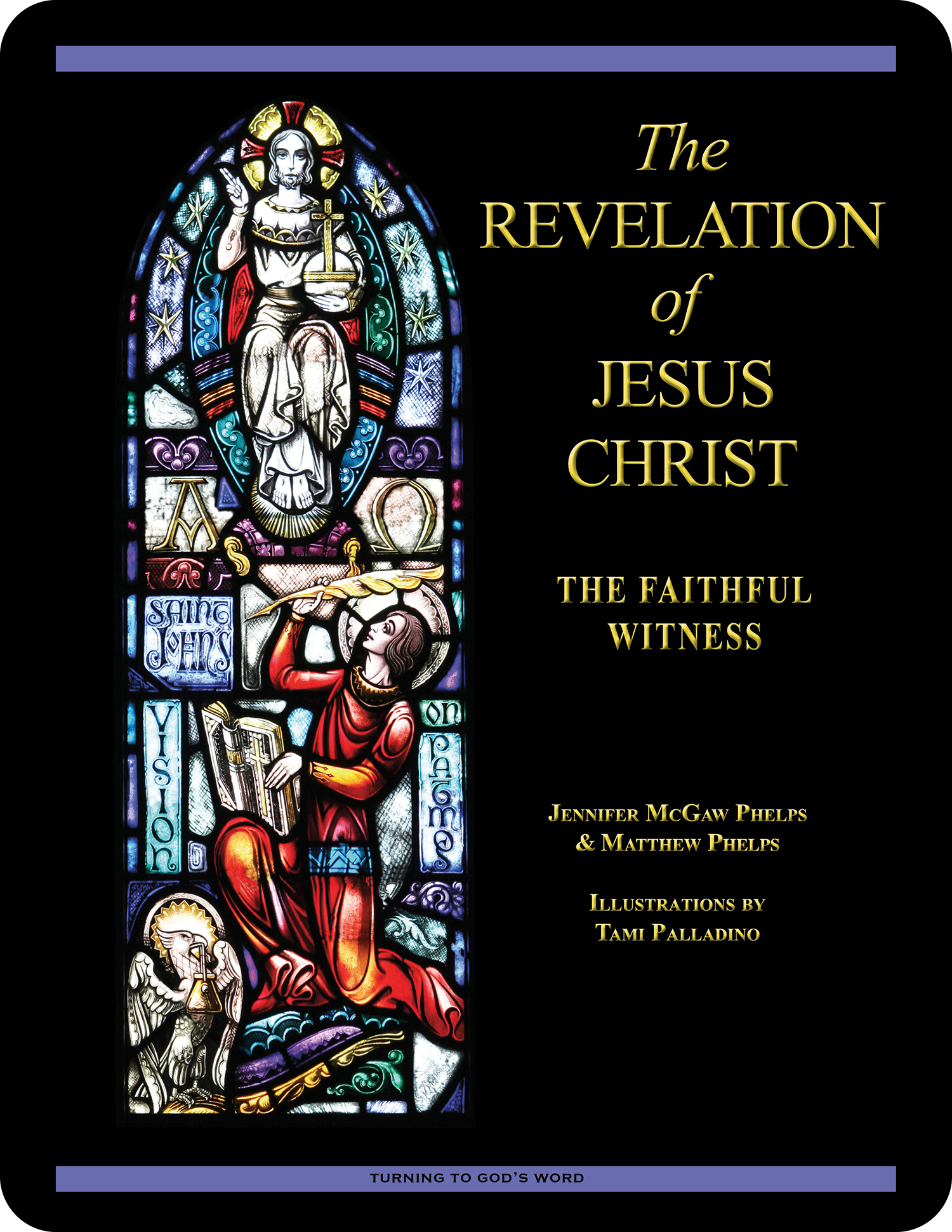 The Revelation of Jesus Christ: The Faithful Witness, a 23-lesson Catholic Bible study with an imprimatur, examines ways in which our traditional Christian view of heaven is built on Hebrew apocalyptic visions recorded in the Old Testament. This recently revised study includes maps and additional commentary and takes a close look at the role of the prophets in present-day Christianity. Illustrations by Tami Palladino depict the often-misunderstood images in the book of Revelation. Click here to view a sample of the first lesson.
start a Turning to God’s Word Bible study
 Thank you for your interest in our three-part study of the synoptic Gospels.
  More information about beginning a Turning to God’s Word Bible study can be found at start a Bible study, and Tami, Matthew, and I are available to answer questions or discuss concerns. Contact us to start this or one of our other studies or to have your schedule listed with other TtGW study groups on our website. —Jennifer
tell us what you think of this Catholic Bible study
Turning to God’s Word welcomes input from participants. Now that you’ve finished The Gospel According to Mark: A Look at the Son of God, take a few minutes to consider what effect thinking about this Scripture has made on your spiritual life.
? Did anything about the Gospel According to Mark surprise you?
? If so, what?
? What was your favorite lesson, and why?
? What was your least favorite lesson, and why?
? What are you most likely to share with someone who wasn’t part of your study group?
? Are you likely to participate in another Turning to God’s Word Bible study? Why, or why not?
? Would you recommend that friends or family members join a Turning to God’s Word Bible study?
? What book or books of the Bible would you like to see Turning to God’s Word authors address once the studies on the synoptic Gospels are completed?
*There are seven deuterocanonical books in the Old Testament—Baruch, Judith, Sirach, Tobit, Wisdom, and First and Second Maccabees—and there are some deuterocanonical passages in the Books of Daniel and Esther. Protestants usually refer to these works as “apocryphal,” a word that means “outside the (Protestant) canon” because they’re excluded from most Protestant Bibles. Deuterocanonical means “second canon”; Catholics use that word to refer to any section of the Catholic Old Testament for which there are no extant, or existing, Hebrew manuscripts. All of the deuterocanonical books appear in the Septuagint, the earliest remaining versions of which date to the 1st century B.C. This Greek translation of the Old Testament was in common use by Jews at the time of Jesus. Learn more by reading How Do Catholic & Protestant Bibles Differ?
Turning to God’s Word printed Bible studies use the 2006 Revised Standard Version Second Catholic Edition (RSV2CE) translation for all Scripture references except those to the Psalms, which are taken from The Abbey Psalms and Canticles, prepared by the Benedictine monks of Conception Abbey and published in 2020 by the United States Conference of Catholic Bishops (USCCB). All Scripture links for the online study pages for The Gospel According to Mark: A Look at the Son of God are to the 1966 Revised Standard Version Catholic Edition (RSVCE) translation. The New International Version (NIV) audio recordings follow the same chapter and verse numbering as the RSV Catholic translations.
The 1966 RSVCE uses archaic pronouns and verb forms such as “thee,” “thou,” and “didst” in the Psalms and in direct quotations attributed to God. The 2006 RSV2CE replaces these with more accessible English. The few significant translation changes in the RSV2CE include rendering almah as “virgin” in the Book of Isaiah 7:14 and restoring the term “begotten” in the Gospel According to John 3:16.
Numbering varies for some passages in this Bible study. Turning to God’s Word studies (print and digital) follow the numbering in the Revised Standard Version Catholic translations (RSV2CE and RSVCE). Discrepancies in the New American Bible Revised Edition (NABRE) are noted in the Index of Scripture Citations in the study book or toward the end of the sample.
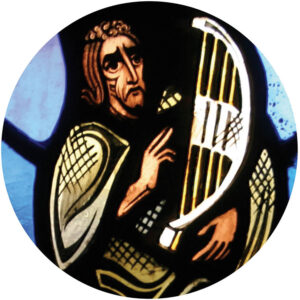 You can learn more about the biblical Psalms by viewing a sample lesson from the Turning to God’s Word Catholic Bible study Sing a New Psalm: Communicating with God Through the Prayers of the Church. The first volume covers Psalms prayed at Lauds and Vespers; the second volume covers Psalms prayed at Vigils, Day Prayer, and Compline. Numbering of Psalms and verses may vary in different translations.