
 The Gospel According to Mark:
A Look at the Son of God
Lesson 16 The Crucifixion
the Gospel According to Mark 15:1–47
Revised Standard Version Catholic Edition (RSVCE)*
New American Bible Revised Edition (NABRE)*
Catechism of the Catholic Church
ex libris (in our library)
glossary for the Gospel According to Mark
cross references in the Gospel According to Mark
next lesson: Jesus Is Risen! Amen!
This material coordinates with Lesson 16, “The Crucifixion,” on pages 73–76 in The Gospel According to Mark: A Look at the Son of God.
Now after John was arrested, Jesus came into Galilee, preaching the gospel of God, and saying,
“The time is fulfilled, and the kingdom of God is at hand; repent, and believe in the gospel.”
—the Gospel According to Mark 1:14–15
welcome to our in-depth study of the Gospel According to Mark
We invite interested groups and individuals to check out the sample introduction and first lesson from this 17- lesson Turning to
  God’s Word Catholic Bible study based on Scripture that is the source of most of the Sunday Gospel readings for Liturgical Year B. These online study pages link to an online glossary and cross references in the biblical text. Other study aids include maps, additional commentary, and prayers based on the primary Scripture in each lesson. The Gospel According to Mark: A Look at the Son of God and the other two synoptic studies are being submitted for imprimaturs. This study will be available from our website shop about three months before the start of liturgical Year B in 2026. If you have a Bible-related question or comment, click on one of the “ask us your question” or “what do you think” buttons on any online study page.
open with prayer
It’s always wise to begin any Bible study with prayer, whether reading the Scriptures alone or meeting with others in a discussion study group. You can pray using your own words or use one of the opening prayers on our website. We especially like the following:
Lord Jesus, you promised to send your Holy Spirit to teach us all things.
As we read and study your word today,
allow it to touch our hearts and change our lives. Amen.
let’s review—the Gospel According to Mark 14:32–72
Lesson 15 Jesus Is Betrayed & Condemned introduces the final events that lead to his Crucifixion. These include Jesus’ agony in the Garden of Gethsemane in which Peter, James, and John fall asleep while Jesus prays. The Evangelist Mark also writes about Judas’ betrayal of Jesus with a kiss. A mysterious young man, whose identity never is clearly established, escapes the crowd who’ve come to arrest Jesus—but the young man winds up naked. Jesus is taken to the high priest, who isn’t identified as either Annas or Caiaphas, where he admits to being the “Son of Power” (the Son of God), and is charged with blasphemy. The soldiers present mock Jesus; Peter, who has followed Jesus to the home of the unnamed high priest, three times denies knowing Jesus. When Peter realizes what he’s done—and that Jesus had predicted his behavior—Peter breaks down and weeps.
 from Matthew—about Jesus as ‘King of the Jews’
Turning to God’s Word author Matthew Phelps points out that the fifteenth chapter in the Gospel According to Mark offers several insights into what’s going on during Pilate’s interactions with Jesus.
“This is an interesting view of the situation from Pilate’s perspective for a few reasons. First, is this how an outsider views the idea of the Messiah? That’s what the Jewish religious leaders have on Jesus. To someone outside of Judaism, like Pilate, the implications that Jesus could be claiming to be God and not just a political king probably wouldn’t have been considered. But there’s also the theme we’ve seen of people accepting Jesus on the terms of their own capability of looking at the world. Pilate is concerned with political power and authority, so that’s the lens he tries to apply to Jesus. Again, we all do this—but our relationships with God will be much better if we can take that out of it as much as possible and try to shift ourselves and our viewpoints—rather than trying to change our idea of God—in order to encounter the Creator of the universe.
“It’s especially interesting that Jesus remains relatively silent in the Gospel According to Mark 15:2 when Pilate directly asks if Jesus is King of the Jews. Jesus knows that he’s going to be put to death—and he even seems to be encouraging it. The commentary box “Pilate’s Actions Back Him Into a Corner” on page 75 of The Gospel According to Mark: A Look at the Son of God hits the core concept. Jesus never acknowledges any guilt for any crime; this also seems to be important, though Pilate, in his attempt to deal with Jesus, does ultimately presume Jesus has some amount of guilt. That takes the situation down an uncontrollable path.”
 more from Matthew—let’s look at Jesus’ failure to respond
Matthew shares some thoughts about what’s happening in the Gospel According to Mark 15:4–5.
“Jesus responding truthfully to some of these questions would have resulted in him being rightly condemned‚ even if he didn’t actually commit a crime. It’s very hard for him to honestly get around the idea of blasphemy when he’s God and the Jews had no framework for accepting that God could be a human person. Jesus telling the truth would have resulted in him being found guilty rather than never being convicted.”
timing during Holy Week—you could look it up in our archives
 Interestingly, the timing during Holy Week events varies a bit between the three synoptic Gospels (which include the Gospel According to Mark) and the Gospel According to John. Because this story is being told in many cases after the fact by people struggling to recall all of the details, the exact timing remains somewhat unclear, but the overall meaning and import of events remains the same. To learn more, read Lost in Translation, a weekly online column in which Turning to God’s Word author Matthew Phelps helps readers connect with ideas expressed in the original languages of the Scriptures. New Lost in Translation entries are posted on Mondays, and past entries are archived on our website. Contact us if you’d like to receive Lost in Translation by email every week.
more from Matthew—the uncontrollable path
Matthew observes how Pilate’s attempt to use the Passover amnesty to free Jesus backfires.
“I really like in the Gospel According to Mark 15:9 that when Pilate asks to release Jesus to the crowd, this creates the inescapable presumption of Jesus’ guilt. Pilate ends up hoisted on his own petard. Once Pilate makes this move, he can’t go back.”
ex libris—who was this Barabbas?
In the Gospel According to Mark 15:6–13, Pilate attempts to persuade the crowd to ask for the release 
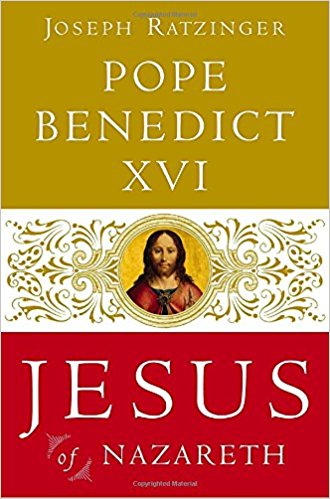
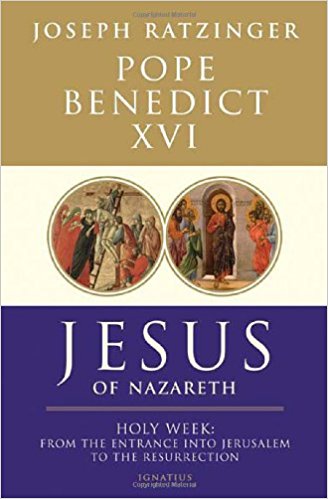 of Jesus. The person Pilate ends up releasing instead is named Barabbas. Most participants probably already are aware that the name Barabbas means “son of the father” and that Jesus also sometimes is referred to as “Son of the Father.” In the first volume of Jesus of Nazareth, the late Pope Benedict XVI notes that, according to Origen, a Father of the Church, some early manuscripts of the Gospels referred to Barabbas as “Jesus Barabbas.” The late Pope writes: “Barabbas figures here as a sort of alter ego of Jesus, who makes the same claim but understands it in a completely different way. So the choice is between a Messiah who leads an armed struggle [against Roman occupation of Judah]… and this mysterious Jesus who proclaims that losing oneself is the way to life. …” You can read more excerpts and learn more about the Jesus of Nazareth trilogy as well as about other works related to Bible study at ex libris—main bookshelf.
more from Matthew—earthly power is fickle
Matthew notes that the power attributed to Jesus is far superior—though less obvious on the face of things—than the power attributed to Pilate and the Jewish religious leaders.
“Power is an interesting thing, as can be seen in the Gospel According to Mark 15:15, which describes Pilate delivering Jesus to be crucified. The priests and Pilate both have a lot of power and also are totally beholden to the opinion of the crowd to keep it. Their power is fickle and subject to whims of others. Jesus demonstrates a wholly different kind of power. He has absolute control over what happens to him and how his mission unfolds—despite the whims of the crowd, though Jesus also does need them for this part of God’s plan to succeed.”
more from Matthew—the soldiers mock Jesus
Matthew points out that the Roman soldiers pile on more irony when they scourge and mock Jesus.
“The irony continues in the Gospel According to Mark 15:16–20. The Roman soldiers are mocking Jesus for the circumstances of his punishment—that he’s the Messiah, which is true—but the Romans also don’t care. While they are mocking Jesus, it’s not clear that they think it’s false. In some ways, they’re doing more to recognize who Jesus is than his own people are willing to do.”
Christian Connection—can you attend Jesus on the cross?
Perhaps the most moving account in all of Scripture is of Jesus’ Crucifixion. The Evangelist Mark records this in the fifteenth chapter in the Gospel According to Mark.
 ? None of the synoptic Gospel writers place any of Jesus’ disciples at the cross during his Crucifixion, although the Evangelist John does claim to be there. How do you think it possible that the three synoptic writers were familiar with details about Jesus’s death?
? Why might the synoptic writers fail to agree exactly about what happened at the time Jesus died?
? What benefit might have come to John if he did indeed witness Jesus’ death on the cross?
? Why might Jesus deem it important that his followers be willing to suffer?
? How would you describe what kind of cross exists in your life?
more from Matthew—the final charge against Jesus
Matthew observes that the final charge posted as a reason for Jesus’ Crucifixion in the Gospel According to Mark 15:26 is that Jesus claimed to be the “King of the Jews.”
“To further bring the point home, this is what the Jewish religious leaders managed to conjure up to justify Jesus’ death because it’s the one point Jesus did respond to. The study book notes that Pilate doesn’t seem to recognize this as a criminal offense. When Jesus claims to be the Jewish Messiah without also seeking political power or trying to overthrow the government, that doesn’t seem like much of a crime.”
so Matthew asks—what kind of people are these?
Matthew points out that in the Gospel According to Mark 15:29–30 passers-by taunt Jesus on the cross by asking him to save himself.
“This is just mean. Do these people really think he saved others among their people? Are they glad that Jesus is dying? What kind of people are these? How does this make their nation stronger or their people better? What is their responsibility as leaders, and how can this behavior possibly align with it?”
more from Matthew—’King of Israel’ versus ‘King of the Jews’
In the Gospel According to Mark 15:31–32, Matthew notes that the Jewish religious leaders also get into the act of mocking Jesus—but in a slightly different way.
“‘King of Israel’ versus ‘King of the Jews’ is interesting. The religious leaders have to create separation between Jesus and themselves even now. They can’t say ‘King of the Jews’ like Pilate did. Even if Jesus is a king somehow—or just in case he is—he can’t be seen to be their king.”
more from Matthew—the centurion’s final word
In the Gospel According to Mark 15:39, Matthew observes that the Roman centurion who witnessed Jesus’ death has no doubt about Jesus’ identity.
“Once again, the foreigners recognize more about who Jesus really is than Jesus’ own people. By now, this should come as no big surprise to readers”
the best Catholic commentary about Scripture
To find out more about how Church teaching is supported by passages in the Gospel According to Mark, check out the Index of Citations in the Catechism of the Catholic Church. Links to each lesson’s primary Scripture passages (from the Revised Standard Version Catholic Edition [RSVCE*]) that are cited in relevant paragraphs in the Catechism are provided here. Not every passage in the Gospel According to Mark is referenced in a Catechism paragraph.
the Gospel According to Mark 15:11—paragraph 597
the Gospel According to Mark 15:34—paragraphs 603, 2605
the Gospel According to Mark 15:37—paragraph 2605
the Gospel According to Mark 15:39—paragraph 444
ways our glossary might prove helpful
In addition to providing extra information about geographical locations, our glossary also points out  persons or places mentioned in the biblical text under more than one name or more than one spelling. If you can remember a name but aren’t sure in which lesson it shows up, you can find it in the glossary, which lists every proper noun that appears in the biblical text for every lesson in The Gospel According to Mark: A Look at the Son of God. A few general terms also are included that may be unfamiliar or whose meaning may be unclear to readers.
to learn more, read more Scripture
If you’re having difficulty with a passage of Scripture, it can be helpful to read the relevant  cross references—but looking these up can take time. To make that easier, we’ve compiled the cross references from the Revised Standard Version Second Catholic Edition (RSV2CE)—the translation that we reprint in our study books. A link to these cross references can be found at the top of every online study page; the list includes each of the cross references in the primary biblical text for The Gospel According to Mark: A Look at the Son of God.
don’t forget about our indexes & extra online material
If you’re trying to locate information about a specific Scripture passage, you can look it up in the index at the back of the study book. If you want to find a particular commentary, you can look up its title in the topics index. (If you don’t have access to the study book, both indexes are in the sample.) To learn more about another book of the Bible for which there’s a Turning to God’s Word study, visit the online study directories to read the commentaries and watch any accompanying videos. Finally, if you have a question or would like to make a comment about any of our studies, you can use one of the “ask us your question” or “what do you think” buttons to email our authors.
ex libris—Church documents & books about religious topics
Link to magisterial documents referred to in our Bible studies at ex libris—magisterial documents.  This listing includes significant recent encyclicals as well as a number of historical Church documents. Recommended books related to Scripture study can be found at ex libris—main bookshelf.
wondering how to pronounce some of these words?
The following link is to a reading from the New International Version (NIV) Bible. To listen, open the link and click on the loudspeaker icon above the printed text. Although not taken from translations used in our study materials, the NIV reading provides an audio guide to pronunciation of many words in this lesson’s primary biblical text. A close online version of the translation of the Bible used in Catholic liturgy in the United States and an audio guide for daily Mass readings for the current month can be found on the website of the United States Conference of Catholic Bishops (USCCB).
the Gospel According to Mark 15:1–47 (NIV)
close with Bible-based prayer related to this lesson
Many of our Catholic study groups like to conclude their discussions with a prayer based on the scriptural focus of their lesson, and some participants include Scripture-specific prayer in their individual study. If you’re uncomfortable composing your own Bible-based prayers, you can follow our four easy steps. If you prefer, you can use the following prayer based on this lesson’s text from the Gospel According to Mark.
O God, you sent your Son Jesus to suffer and die
in order that his innocence might allow
men and women to overcome all sin.
Teach us to appreciate this great gift more and more,
and help us to understand that the fullness of life
extends beyond our mortal lives.
Help us to trust and hope in the things we cannot see,
as we seek to increase our ability to love. Amen.
Lesson 17 Jesus Is Risen! Amen!—the Gospel According to Mark 16:1–20
Lesson 15 Jesus Is Betrayed & Condemned—the Gospel According to Mark 14:32–72
you also may like our free Lenten study of Jesus’ Passion (digital only)
 Jesus’ Passion: The Story of Redemptive Suffering is a five-lesson Catholic Bible study offering an in-depth look at the biblical foundations of the movie The Passion of the Christ. This revised study, which has been granted an imprimatur, contains all of the original material of the 2004 edition as well as many new features in an improved, reader-friendly format. Free digital lessons of Jesus’ Passion: The Story of Redemptive Suffering are available on our website all year long. Click here to view the entire study any time of the year.
start a Turning to God’s Word Bible study
 Thank you for your interest in our three-part study of the synoptic Gospels.
  More information about beginning a Turning to God’s Word Bible study can be found at start a Bible study, and Tami, Matthew, and I are available to answer questions or discuss concerns. Contact us to start this or one of our other studies or to have your schedule listed with other TtGW study groups on our website. —Jennifer
*There are seven deuterocanonical books in the Old Testament—Baruch, Judith, Sirach, Tobit, Wisdom, and First and Second Maccabees—and there are some deuterocanonical passages in the Books of Daniel and Esther. Protestants usually refer to these works as “apocryphal,” a word that means “outside the (Protestant) canon” because they’re excluded from most Protestant Bibles. Deuterocanonical means “second canon”; Catholics use that word to refer to any section of the Catholic Old Testament for which there are no extant, or existing, Hebrew manuscripts. All of the deuterocanonical books appear in the Septuagint, the earliest remaining versions of which date to the 1st century B.C. This Greek translation of the Old Testament was in common use by Jews at the time of Jesus. Learn more by reading How Do Catholic & Protestant Bibles Differ?
Turning to God’s Word printed Bible studies use the 2006 Revised Standard Version Second Catholic Edition (RSV2CE) translation for all Scripture references except those to the Psalms, which are taken from The Abbey Psalms and Canticles, prepared by the Benedictine monks of Conception Abbey and published in 2020 by the United States Conference of Catholic Bishops (USCCB). All Scripture links for the online study pages for The Gospel According to Mark: A Look at the Son of God are to the 1966 Revised Standard Version Catholic Edition (RSVCE) translation. The New International Version (NIV) audio recordings follow the same chapter and verse numbering as the RSV Catholic translations.
The 1966 RSVCE uses archaic pronouns and verb forms such as “thee,” “thou,” and “didst” in the Psalms and in direct quotations attributed to God. The 2006 RSV2CE replaces these with more accessible English. The few significant translation changes in the RSV2CE include rendering almah as “virgin” in the Book of Isaiah 7:14 and restoring the term “begotten” in the Gospel According to John 3:16.
Numbering varies for some passages in this Bible study. Turning to God’s Word studies (print and digital) follow the numbering in the Revised Standard Version Catholic translations (RSV2CE and RSVCE). Discrepancies in the New American Bible Revised Edition (NABRE) are noted in the Index of Scripture Citations in the study book or toward the end of the sample.
 You can learn more about the biblical Psalms by viewing a sample lesson from the Turning to God’s Word Catholic Bible study Sing a New Psalm: Communicating with God Through the Prayers of the Church. The first volume covers Psalms prayed at Lauds and Vespers; the second volume covers Psalms prayed at Vigils, Day Prayer, and Compline. Numbering of Psalms and verses may vary in different translations.