
 Sing a New Psalm:
Communicating with God Through
the Prayers of the Church
Volume II: Vigils, Day Prayer & Compline
Lesson 13 Praise the LORD Who Rides on the Heavens
Invitatory: Psalm 46 (RSVCE)
Psalm 68 (RSVCE) and Psalm 89 (RSVCE)
Saturday Vigils (Week I)
Revised Standard Version Catholic Edition*
New American Bible Revised Edition (NABRE)*
Catechism of the Catholic Church
ex libris (in our library)
glossary for Volume II of Sing a New Psalm
next lesson: Give Ear, O LORD, to My Prayer
This material coordinates with Lesson 13, “Praise the LORD Who Rides on the Heavens,” on pages 50–53 in Sing a New Psalm: Communicating with God Through the Prayers of the Church—Volume II: Vigils, Day Prayer & Compline. Our Catholic Bible study is based on The Abbey Psalms and Canticles, a translation of the psalms prepared by the monks at Conception Abbey in 2010 and first published as The Revised Grail Psalms. The Abbey Psalms and Canticles is a revision of that work, finished in 2020 and published by the United States Conference of Catholic Bishops (USCCB). Wording and numbering of some psalms and verses in other translations may differ. The Abbey Psalms and Canticles is being added to Liturgy of the Hours books used in the United States. While the Turning to God’s Word study book is based on The Abbey Psalms and Canticles translation, all online links to the psalms are to the Revised Standard Version Catholic Edition (RSVCE) translation. A separate copy of The Abbey Psalms and Canticles is needed to read the translation on which the psalms in this study are based.
“Unlike other prayers in sacred Scripture, the prayers contained in the psalms are not inserted into a narrative story that specifies their meaning and function. Instead, the psalms are given to the believer precisely as a text of prayer. Since they are the Word of God, the believer who prays the psalms speaks to God using the very words that God himself has given to us. Thus, in praying the psalms we learn to pray. The psalms are a school of prayer.”—Pope Benedict XVI
welcome to our continuing in-depth study of the psalms
We invite groups and individuals to check out the sample Introduction and Lesson 1 from this 29- lesson Turning to
  God’s Word Catholic Bible study. Our online study pages include additional questions, commentary, and prayers based on the psalm texts, plus an online glossary. Both Volume I and Volume II of Sing a New Psalm: Communicating with God Through the Prayers of the Church have been granted imprimaturs. A digital version of Volume I: Lauds & Vespers can be purchased from our website shop. Volume II: Vigils, Day Prayer & Compline is available in hard copy. If you have a Bible-related question or comment, click on one of the “ask us your question” or “what do you think” buttons on any online study page.
open with prayer
It’s always wise to begin any Bible study with prayer, whether reading the Scriptures alone or meeting with others in a discussion study group. You can pray using your own words, pray one of the psalms in this lesson, or use one of the opening prayers on our website. We especially like the following:
Lord Jesus, you promised to send your Holy Spirit
to teach us all things.
As we read and study your word today,
allow it to touch our hearts and change our lives. Amen.
think about praying Compline every night
In addition to the sample for this Bible study, Turning to God’s Word is providing a copy of Lesson 29 In Peace I Will Lie Down, which addresses the nightly Compline prayers based on Psalm 91, Psalm 4, and Psalm 134. The monks at Conception Abbey pray these short psalms each evening—Psalm 91 on Sunday, Tuesday, Wednesday, and Friday; Psalm 4 and Psalm 134 on Monday, Thursday, and Saturday.
about the psalms in this lesson**
There are several composers of the psalms prayed for Saturday Vigils Week I at Conception Abbey  vary. Psalm 46 (the Invitatory for Saturday Vigils for both Week I and Week II) is classified as a psalm honoring Zion and attributed to one of the Korahites. Psalm 68 is classified as a communal psalm of thanksgiving and gratitude attributed to David. Psalm 89 is a communal lament; many scholars think its composer is unknown, but some believe that the mention of Ethan in the superscript indicates that he may have been involved in writing Psalm 89.
classifying the psalms
The classification of the psalms, though somewhat standardized, retains an arbitrary nature. Some psalms are classified according to form or type; such forms include the hymn, the lament, and the song of thanksgiving. Psalms also may be classified according to subject matter—royal psalms, for instance, portray the political king of the descendants of Jacob as both the representative of God to the community and the representative of the community to God—or they may be classified according to their use; scholars generally think that hymns exalting Zion were part of a ritual reenactment of the great deeds of God in maintaining Mount Zion and Jerusalem as a home base. Turning to God’s Word is indebted to Fr. Felix Just, a Jesuit priest and biblical scholar, for his organized listing of the psalms by classification and author.
Psalm 46 (the Invitatory) is classified as a hymn to Zion
Zion or Mount Zion is the site of the ancient Jebusite fortress that David took by force before establishing his royal capital there. Zion came to refer to the city of Jerusalem. Mount Zion refers to the elevation upon which Solomon built his Temple, so in the psalms it has come to symbolize the dwelling place of God. Daughter Zion appears in the psalms as a metaphor for the descendants of Jacob, and Zion can refer to them as well. In Christianity, Mount Zion also can represent the eschatological city of God that is to come. In Psalm 46 in this lesson, the descendants of Jacob are encouraged to turn to God in times of trouble. Altogether, six of the 150 psalms are classified as hymns written in honor of Zion, God’s holy mountain. In addition to Psalm 46 (the Invitatory), they include Psalm 48, Psalm 76, Psalm 84, Psalm 87 and Psalm 122.
Psalm 68 is classified as a psalm of thanksgiving
Eight psalms, including Psalm 68 in this lesson, express communal gratitude to God. The other seven psalms of communal thanksgiving are Psalm 65, Psalm 66, Psalm 67, Psalm 75, Psalm 107, Psalm 118, and Psalm 124. An additional nine—Psalm 9, Psalm 10, Psalm 30, Psalm 32, Psalm 34, Psalm 41, Psalm 92, Psalm 116, and Psalm 138—are classified as individual psalms of thanksgiving.
the largest number of psalms are laments
Forty-three of the psalms are classified as individual laments. The word “lament” means “a passionate expression of regret.” An additional 18 psalms, including Psalm 89 in this lesson, are classified as communal laments, which means they were written to be used by an entire community. Refer to the above-mentioned work of Fr. Felix Just for a complete online listing of psalms classified as individual or communal laments.
what is a lament?
Because the word “lament” as a verb means to wail, moan, or sob in sorrow, when the same word “lament” is used as a noun it means an expression of mourning. It is this meaning that it holds in Psalm 89. In addition to the laments in the psalms, Scripture also includes a book called Lamentations (sometimes referred to as the Lamentations of Jeremiah, although many scholars contest the prophet Jeremiah’s authorship of that work). A lament frequently refers to a funeral dirge, elegy, or burial hymn.
doxology is a word that indicates praise of God
Related to the word for “glory,” the word “doxology” also is related to the English word for “orthodoxy.” You can learn more by reading the vocabulary boxes “Doxology” on page 53 and “Glory” on page 108 in Sing a New Psalm: Communicating with God Through the Prayers of the Church—Volume II: Vigils, Day Prayer & Compline. The psalms contain five doxologies (short hymns of praise), two of which are covered in Volume II—Psalm 89:53 (Psalm 89:52 in Revised Standard Version Catholic Editions) in this lesson and Psalm 106:48 in Lesson 21 Out of Zion, God Is Shining Forth. The remaining three are found in Psalm 72:18–19 in Lesson 11 God Will Ransom My Soul, Psalm 41:14 (Psalm 41:13 in Revised Standard Version Catholic Editions) in Lesson 13 Our Help Is in the Name of the LORD, and Psalm 150:1–6 in Lesson 16 His Mercy Endures Forever—all three in Volume I. Psalm 150:1–6 serves as a closing doxology for all 150 psalms.
who are the sons of Korah?
The superscript to Psalm 46 (the Invitatory for psalms prayed for Saturday Vigils Weeks I and II at Conception Abbey), associates the sons of Korah with the authorship of this psalm. The book of Exodus 6:24 lists the names of Korah’s sons as Assir, Elkanah, and Abiasaph, indicating that they followed Moses‘ command to depart from their father’s tent to avoid being destroyed because of Korah’s sin, which was challenging the authority of Moses and Aaron—and ultimately of God. This event is described in the book of Numbers 16:20–26. Various psalms mention the “sons of Korah” as their composers; the term refers to descendants of Korah and not to his literal children. In addition to Psalm 46 in this lesson, other psalms attributed to the Korahites in Volume II include Psalm 44 (in Lesson 5 Awake O LORD! Why Do You Sleep?) and Psalm 88 (in Lesson 14 Give Ear, O LORD, to My Prayer). In addition, Psalm 42, Psalm 45, Psalm 47, Psalm 48, Psalm 49, Psalm 84, Psalm 85, and Psalm 87 are covered in Volume I and also are attributed to descendants of Korah.
who is Ethan in the superscript to Psalm 89?
A few scholars suggest that Ethan and Jeduthun may have been the same person. Ethan is named in the superscript to Psalm 89 in this lesson and is considered the composer of that psalm.) Jeduthun appears in the Old Testament as one of three principal leaders of liturgical music during the reign of David. (The other two music leaders appointed by David are Asaph and Heman.) Jeduthun is named in The Abbey Psalms and Canticles translations of Psalm 39:1 in Lesson 4 I Wash My Hands in Innocence in this volume, and in Psalm 62:1 in Lesson 9 An Overflowing Heart and Psalm 77:1 in Lesson 18 What God Is As Great As Our God?—both in Volume I. These superscripts associate Jeduthun in some way with those three psalms. (David is considered the composer of Psalm 39 and Psalm 62, while Psalm 77 is attributed to Asaph.)
another Old Testament link to Emanuel
By three times repeating the phrase “the LORD of hosts is with us: the God of Jacob is our stronghold,” Psalm 46 (the Invitatory for psalms prayed for Saturday Vigils Weeks I and II at Conception Abbey) anticipates and foreshadows the Incarnation of God’s Son, Jesus. In the Book of Isaiah 7:14 (RSVCE), the prophet declares: “Therefore the Lord himself will give you a sign. Behold, a young woman shall conceive and bear a son, and shall call his name Immanuel.” This passage in the Book of Isaiah has caused much confusion in Christianity and Judaism, mostly over the idea of whether a “young woman” or a “virgin” is the one destined to bear a son. Most scholars hold that the passage can be interpreted in terms of its immediate future when Isaiah first issued the words, and in that case it would refer to the birth of Ahaz’s son Hezekiah; but it also can be interpreted as foreshadowing the much later virgin birth of God’s Son Jesus. The most recent translation Revised Standard Version Second Catholic Edition (RSVCE) substitutes “virgin” for “young woman.”
 read the Catechism—Church teaching insists on a virgin birth
Most commonly seen is Emanuel (or sometimes Emmanuel), which means exactly the same thing as Immanuel—”God with us.” The name “Jesus” means “the LORD saves” or “Yahweh is salvation,” both of which require the unique presence of God brought about through the Incarnation or virgin birth. Emanuel (or Emmanuel) is a transliteration of the Hebrew word “Immanuel.” Paragraph 484 and paragraph 485 in the Catechism of the Catholic Church introduce teaching about the virgin birth. The main section concerning that topic extends through paragraph 511.
484 The Annunciation to Mary inaugurates “the fullness of time,” the time of the fulfilment of God’s promises and preparations. Mary was invited to conceive him in whom the “whole fullness of deity” would dwell “bodily.” The divine response to her question, “How can this be, since I know not man?” was given by the power of the Spirit: “The Holy Spirit will come upon you.”
485 The mission of the Holy Spirit is always conjoined and ordered to that of the Son. The Holy Spirit, “the Lord, the giver of Life,” is sent to sanctify the womb of the Virgin Mary and divinely fecundate it, causing her to conceive the eternal Son of the Father in a humanity drawn from her own.
Psalm 68 is about praising God but it’s not part of the Egyptian Hallel
Hallel (sometimes called the Egyptian Hallel) is a name given to Psalm 113 through Psalm 118. The  word “hallel” means “praise” or “thanksgiving.” These six psalms are included in the liturgy on all major holy days celebrated in Judaism except Rosh Hashanah and Yom Kippur. Psalm 113 through Psalm 118 are covered in Sing a New Psalm: Communicating with God Through the Prayers of the Church—Volume I: Lauds & Vespers.
six psalms that honor Zion
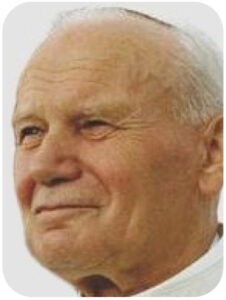 The Invitatory—Psalm 46—prayed at Conception Abbey for Saturday Vigils Week I is one of six psalms classified as hymns honoring God’s choice of Mount Zion and Jerusalem as his earthly base of operations. The other five psalms composed to honor Zion are Psalm 48, Psalm 76, Psalm 84, Psalm 87, and Psalm 122. In “A Reference to Immanuel” on page 51 in Sing a New Psalm: Communicating with God Through the Prayers of the Church—Volume II: Vigils, Day Prayer & Compline, Pope St. John Paul II notes that the primary thing that these psalms have in common is their emphasis on the steadfast love of God for humanity.
abba, father—you could look it up in our archives
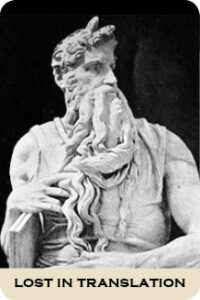 The composer of Psalm 89:27 (Psalm 89:26 in Revised Standard Version Catholic Editions), makes a point of saying that God’s favor rests with David, who will be able to address God as father. To learn more about the ancients’ idea of fatherhood, read Lost in Translation, an online column in which Turning to God’s Word author Matthew Phelps helps readers connect with ideas expressed in the original languages of the Scriptures. New Lost in Translation entries are posted on Mondays, and past entries are archived on our website. Contact us if you’d like to receive Lost in Translation by email every week.
about doxologies
Christian doxologies often focus on the trinity and repeat the phrase” “Praise Father, Son, and Holy Spirit” in recognition of the Blessed Trinity. The psalms, which were composed some time before the birth of Jesus, include five clear doxologies; none of these make mention of the Blessed Trinity, however. In this lesson, there’s a doxology (short expression of praise) in Psalm 89:53 (Psalm 89:52 in Revised Standard Version Catholic Editions). Because Christians recognize three persons in one God, they have no problem praying an Old Testament doxology that refers to the Lord instead of to the Father, Son, and Holy Spirit. The other four doxologies occur at the end of each of the “books” of psalms—in Psalm 41:14 (Psalm 41:13 in Revised Standard Version Catholic Editions), Psalm 72:18–19, Psalm 106:48, and all six verses of Psalm 150. The entirety of Psalm 150 also serves as an epilogue for all five books.
do you know what’s important about Bashan?
If not, you can refer to our online glossary. Bashan, a country frequently cited in the Old Testament and  later important in the Roman Empire; it was located in what is now Syria. Bashan was the northernmost of the three ancient divisions of eastern Palestine, and in the Old Testament it was known for rich pastures and thick forests. Along with Carmel, Bashan stood for the fruitfulness of the land (the Book of Isaiah 33:9); when the land associated with Bashan and Carmel languished, the ancients saw that as a mark of God’s displeasure (the Book of Nahum 1:4). The mountain of Bashan in Psalm 68:16 (Psalm 68:15 in Revised Standard Version Catholic Editions) symbolizes divine power and is presented in contrast to Mount Zion, God’s chosen dwelling. Bashan also is mentioned in Psalm 22, which is covered in Lesson 11 The Suffering Servant.
do you have any idea where Mount Zalmon is?
Psalm 68:15 (Psalm 68:14 in Revised Standard Version Catholic Editions) mentions another location that might be unfamiliar to most readers. If you’re among them, you can learn more in our online glossary. The exact location of Mount Zalmon (sometimes referred to in Scripture as Mount Ebal) is thought to be located near Shechem. The ninth chapter of the Book of Judges describes the ruler Abimelech and his men gathering brushwood on Mount Zalmon in order to burn all of the inhabitants of Shechem. In Psalm 68, Mount Zalmon is used in an image that describes the way that God destroys kings who rule nations in opposition to the Israelites.
it’s easy to get confused by Lord & LORD
Throughout the psalms, God usually is referred to by LORD or Lord, or by God. There actually is a difference between LORD and Lord, though one that isn’t easily apparent to most readers. Turning to God’s Word uses LORD (all caps) on the website to indicate Yahweh (sometimes spelled YHWH); in printed materials, Turning to God’s Word uses small caps for the same thing, but small caps are not readily available on our website, so we use the standard Internet substitution of all caps. Psalm 68:17–18 (The Abbey Psalms and Canticles, Psalm 68:16–17 in Revised Standard Version Catholic Editions) uses both LORD and Lord in back-to-back verses. To learn the significance of these style differences, read Lord & God in the Lost in Translation archives on this website.
a translation difference involving gender
 The Abbey Psalms and Canticles translates Psalm 46:6 (Psalm 46:5 in Revised Standard Version Catholic Editions): “God is in her midst, she cannot be shaken; God will help her at the dawning of the day.” The Revised Grail Psalms translates the same passage: “God is within, it cannot be shaken; God will help it at the dawning of the day.” Consider why the editors of the United States Conference of Catholic Bishops might have wanted to assign gender to Zion. Which translation do you prefer? (Note that it is not possible to link to either The Abbey Psalms and Canticles or The Revised Grail Psalms; all links on the online pages are to the Revised Standard Version Catholic Edition [RSVCE].)
a translation difference: upright vs. just
The Abbey Psalms and Canticles translates Psalm 68:4 (Psalm 68:3 in Revised Standard Version Catholic Editions): “But the upright shall rejoice at the presence of God; they shall exult with glad rejoicing.” The Revised Grail Psalms translates the same passage: “But the just shall rejoice at the presence of God; they shall exult with glad rejoicing.” A related change is reflected in The Abbey Psalms and Canticles translation of Psalm 89:15 (Psalm 89:14 in Revised Standard Version Catholic Editions). This change is consistent with a number of other changes made in Conception Abbey’s original translation. What do you think is the difference between the words “upright” and “just”?
a translation difference involving heritage & inheritance
The Abbey Psalms and Canticles translates Psalm 68:10 (Psalm 68:9 in Revised Standard Version Catholic Editions): “You poured down, O God, a generous rain; when your heritage languished, you restored it.” The Revised Grail Psalms translates the same passage: “You poured down, O God, a generous rain; when your people languished, you restored their inheritance.” Reflect on how this change might affect the meaning of Psalm 68. What is the inheritance of God’s people? What is their heritage? What is God’s heritage, and how might it be connected to humanity? Who were considered God’s people at the time this psalm was written? Who are God’s people now?
a translation difference that appears insignificant
The Abbey Psalms and Canticles translates Psalm 68:15 (Psalm 68:14 in Revised Standard Version Catholic Editions): “When the Almighty scatters kings on the mountain, it is like snow that whitens Mount Zalmon.” The Revised Grail Psalms substitutes the word “whitening” for “that whitens.” The difference in meaning appears minimal. Which translation do you prefer, and why?
a translation difference: command vs. summon forth
The Abbey Psalms and Canticles translates Psalm 68:29 (Psalm 68:28 in Revised Standard Version Catholic Editions): “Command your might, O God; your might, O God, which you have shown for us.” The Revised Grail Psalms translates the same passage: “Summon forth your might, O God; your might, O God, which you have shown for us.” What distinction might be made between the word “command” and the phrase “summon forth”? Which translation do you prefer, and why?
a translation difference: wondrous vs. awesome
The Abbey Psalms and Canticles translates Psalm 68:36 (Psalm 68:35 in Revised Standard Version Catholic Editions): “Wondrous is God in his holy place. He is God, the God of Israel.” The Revised Grail Psalms translates the same passage: “Awesome is God in his holy place. He is God, the God of Israel.” A related change is reflected in The Abbey Psalms and Canticles translation of Psalm 89:8 (Psalm 89:7 in Revised Standard Version Catholic Editions). Consider which translation most accurately reflects your idea of God.
two translation differences in one verse
The Abbey Psalms and Canticles translates Psalm 89:20 (Psalm 89:19 in Revised Standard Version Catholic Editions): “Then you spoke in a vision. To your faithful one you said, ‘I have bestowed my help on a warrior, I have exalted one chosen from the people.’” The Revised Grail Psalms translates the same passage: “Then you spoke in a vision. To your faithful ones you said, ‘I have set the crown on a warrior, I have exalted one chosen from the people.’” The first change involves to whom God is speaking in this passage. If singular, it can be interpreted that God is speaking to a single faithful person; if plural, then God is speaking to a group of faithful people about a single person. The second change considers God “bestowing his help” on a warrior as synonymous with “setting the crown” on the head of a warrior. What might be suggested by such a translation change? Which version do you prefer, and why?
two translation differences we’ve seen before
The Abbey Psalms and Canticles translates Psalm 89:48 (Psalm 89:47 in Revised Standard Version Catholic Editions): “Remember the shortness of my life, and how frail you have made the children of Adam.” This is followed in Psalm 89:49 (Psalm 89:48 in Revised Standard Version Catholic Editions), which asks: “What man can live and never see death? Who can save himself from the grasp of Sheol?” The Revised Grail Psalms translates the same passages substituting the word “men” for “Adam” and the words “the tomb” for “Sheol.” What might the USCCB editors be suggesting with these translation changes?
a translation difference: scorn vs. insult
The Abbey Psalms and Canticles translates Psalm 89:51 (Psalm 89:50 in Revised Standard Version Catholic Editions): “Remember, O Lord, the taunts to your servant, how I bear in my breast the scorn of many peoples.” The Revised Grail Psalms translates the same passage: “Remember, O Lord, the taunts to your servant, how I have to bear the insults of the peoples.” What might represent a slight difference between the words “scorn” and “insults”? Which translation do you prefer, and why?
the best Catholic commentary about Scripture
To find out more about how Church teaching is supported by passages in Sing a New Psalm: Communicating with God Through the Prayers of the Church—Volume II: Vigils, Day Prayer & Compline, check out the Index of Citations in the Catechism of the Catholic Church. Links to the primary Scripture passages in the lesson (Revised Standard Version Catholic Edition [RSVCE*]) and relevant paragraphs in the Catechism are provided here. Not every passage in the biblical text for this study is referenced in a Catechism paragraph, however, including Psalm 46 (the Invitatory) in this lesson.
Psalm 68:6—paragraph 238
Psalm 89:1–52—paragraph 709
Psalm 89:49—paragraph 633
ways our glossary might prove helpful
In addition to providing extra information about geographical locations, our glossary also points out persons or places mentioned in the biblical text under more than one name or more than one spelling. If you can remember a name but aren’t sure in which lesson it shows up, you can find it in the glossary, which lists every proper noun that appears in the biblical text for every lesson in Sing a New Psalm: Communicating with God Through the Prayers of the Church—Volume II: Vigils, Day Prayer & Compline.
don’t forget about our indexes & extra online material
If you’re trying to locate information about a passage in Scripture, you can look it up in the index at the back of the study book. If you want to revisit a particular commentary, you can look that up by title in the topics index. If you want to learn more about another book of the Bible for which there’s a Turning to God’s Word study, you can read the online commentaries and watch any accompanying videos by going to the online study directories. Finally, if you have a question or would like to make a comment about any of our studies, you can use one of the “ask us your question” or “what do you think” buttons to email our authors.
ex libris—Church documents & books about religious topics
You can find links to magisterial documents referred to in Turning to God’s Word Catholic Bible studies  at ex libris—magisterial documents. This page includes a listing of significant recent encyclicals as well as a number of historical Church documents. Recommended books related to Scripture study can be found at ex libris—main bookshelf.
wondering how to pronounce some of these words?
The following links are to readings from the New International Version (NIV) Bible. To listen, open one of the links and click on the audio icon above the printed text. Although not taken from the translations used in our study materials, the NIV readings provide an audio guide to pronunciation of words in this lesson’s primary biblical texts. An online version of the translation of the Bible used in Catholic liturgy in the United States as well as an audio guide for daily Mass readings for the current three months can be found on the website of the United States Conference of Catholic Bishops (USCCB).
Psalm 46, the Invitatory (NIV)
Psalm 68 (NIV)
Psalm 89 (NIV)
 close with a psalms-based prayer for Saturday Vigils (Week I)
Many of our Catholic study groups like to conclude their discussions with a prayer based on the scriptural focus of their lesson. If you’re uncomfortable composing your own Bible-based prayers, you can follow our four easy steps. If you prefer, you can pray any of the psalms in this lesson, or you can use the following short prayer.
O LORD our God, you are a God who saves.
Give mercy to all people who seek your protection,
especially those in most need of your help.
Grant that we continue to have faith
in the covenant you made with humanity,
particularly in the most difficult times of our lives.
We ask this in the name of Jesus Christ,
whose dying made the possibility of eternal life
available to everyone who seeks your will. Amen.
Lesson 14 Give Ear, O LORD, to My Prayer, Saturday Day Prayer (Week I)—Psalm 86 and Psalm 88
Lesson 12 Awaiting the Appointed Time, Friday Day Prayer (Week I)—Psalm 70, Psalm 75, and Psalm 82
you also may like our study of the Gospel According to John
 The Gospel According to John: An Encounter with Grace & Truth, a 25-lesson Catholic Bible study with an imprimatur, examines the Fourth Gospel’s view of Jesus Christ as the Son of God, with special emphasis on the institution of the sacraments of the Church as the means by which Christians are purified and made holy. This recently revised study includes maps and additional commentary, and takes a closer look at the way in which Jesus relates to individual men and women. Click here to view a sample of the first lesson.
start a Turning to God’s Word Bible study
 Thank you for your interest in Sing a New Psalm: Communicating with God Through the Prayers of the Church—Volume II.
  Information about beginning a Turning to God’s Word Bible study can be found at start a Bible study. Tami, Matthew, and I are available to answer questions. Contact us if you’d like to start one of our studies or have your schedule listed with other TtGW study groups on our website. —Jennifer
*There are seven deuterocanonical books in the Old Testament—Baruch, Judith, Sirach, Tobit, Wisdom, and First and Second Maccabees—and there are some deuterocanonical passages in the Books of Daniel and Esther. Protestants usually refer to these works as “apocryphal,” a word that means “outside the (Protestant) canon” because they’re excluded from most Protestant Bibles. Deuterocanonical means “second canon”; Catholics use that word to refer to any section of the Catholic Old Testament for which there are no extant, or existing, Hebrew manuscripts. All of the deuterocanonical books appear in the Septuagint, the earliest remaining versions of which date to the 1st century B.C. This Greek translation of the Old Testament was in common use by Jews at the time of Jesus. Learn more by reading How Do Catholic & Protestant Bibles Differ?
**You can learn more about the psalms by viewing a sample lesson from the Turning to God’s Word Catholic Bible study Sing a New Psalm: Communicating with God Through the Prayers of the Church. The first volume covers psalms prayed at Lauds and Vespers; the second covers psalms prayed at Vigils, Day Prayer, and Compline. Numbering of psalms and verses may vary in other translations.
Turning to God’s Word printed Bible studies use the 2006 Revised Standard Version Second Catholic Edition (RSV2CE) translation for all Scripture references except those to the psalms, which are taken from The Abbey Psalms and Canticles, prepared by the Benedictine monks of Conception Abbey and published in 2020 by the United States Conference of Catholic Bishops (USCCB). All Scripture links for the online study pages for Sing a New Psalm: Communicating with God Through the Prayers of the Church—Volume II: Vigils, Day Prayer & Compline are to the 1966 Revised Standard Version Catholic Edition (RSVCE) translation. The New International Version (NIV) audio recordings follow the same chapter and verse numbering as the RSV Catholic translations, but the NIV translation doesn’t include the deuterocanonical books and passages.
The 1966 RSVCE uses archaic pronouns and verb forms such as “thee,” “thou,” and “didst” in the psalms and in direct quotations attributed to God. The 2006 RSV2CE replaces these with more accessible English. The few significant translation changes in the RSV2CE include rendering almah as “virgin” in the Book of Isaiah 7:14 and restoring the term “begotten” in the Gospel According to John 3:16.
Numbering for some passages in this Bible study will vary. Turning to God’s Word studies (print and digital) follow the numbering in the Revised Standard Version Catholic translations (RSV2CE and RSVCE). Discrepancies in the New American Bible Revised Edition (NABRE) are noted in the Index of Scripture Citations in the study book.